


The Sun's Invisible Threat
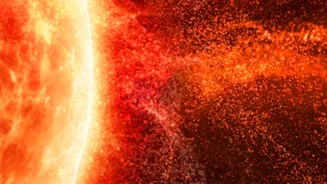
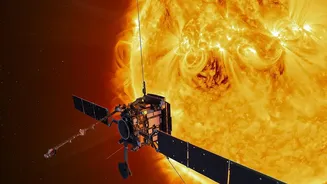
Far from being a quiet, constant star, the sun periodically ejects billions of tonnes of charged particles in events called Coronal Mass Ejections (CMEs). When this solar wind slams into Earth's magnetic field, it creates a geomagnetic storm. These storms
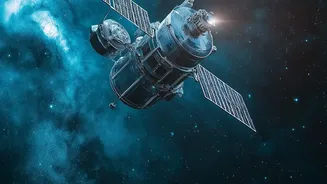
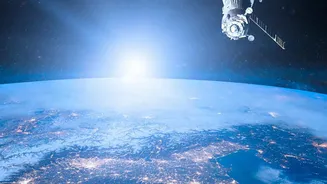
are invisible to the naked eye, save for the beautiful auroras they can trigger, but their effects on technology can be devastating. They can disrupt radio communications, threaten power grids, and pose a significant danger to the thousands of satellites orbiting our planet.
An Orbiting Early Warning System
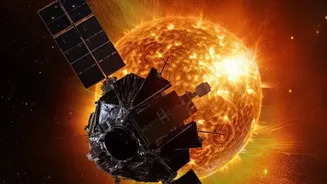
To get a heads-up, scientists rely on a network of both space-based and ground-based observatories. The first line of defence is satellites like the Deep Space Climate Observatory (DSCOVR), strategically positioned about 1.5 million kilometres between the Earth and the sun. From this vantage point, it directly measures the speed, density, and magnetic orientation of the incoming solar wind, giving Earth a crucial warning period of about 15 to 60 minutes before impact. Once the storm reaches Earth, a global network of ground-based instruments called magnetometers takes over, measuring the real-time disturbance in our planet's magnetic field.
Grading the Storm's Fury
Not all storms are created equal. To quantify their severity, space weather forecasters use a standardised scale called the Kp-index. This index translates the complex data from magnetometers around the world into a simple number from 0 (calm) to 9 (extreme). This is then used to generate the more public-facing 'G-scale' for geomagnetic storms, which runs from G1 (minor) to G5 (extreme). A G1 storm, corresponding to a Kp of 5, might cause weak power grid fluctuations. A G5 storm, with a Kp of 9, can cause widespread voltage control problems, damage transformers, and seriously disrupt satellite operations.
Satellites in the Firing Line
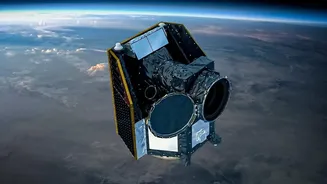
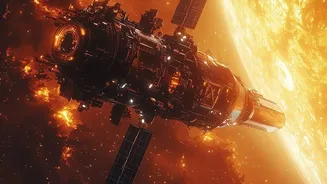
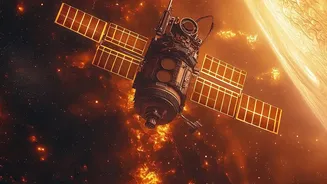
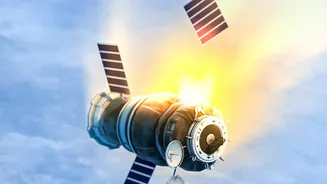
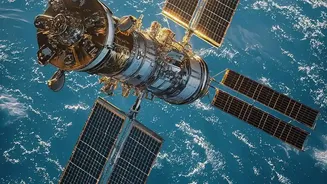
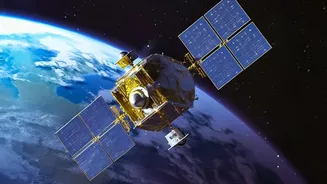
Geomagnetic storms threaten satellites in three main ways. Firstly, the storm heats and expands Earth's upper atmosphere, increasing the atmospheric drag on satellites in Low Earth Orbit (LEO). This increased friction can slow a satellite down, causing its orbit to decay and potentially leading to a premature re-entry, as happened to a batch of Starlink satellites in 2022. Secondly, the influx of charged particles can cause a build-up of static electricity on a satellite's surface, leading to electrostatic discharges that can damage sensitive electronics. Finally, these energetic particles can cause radiation damage to onboard systems and interfere with communications and GPS signals.
The Emergency Playbook
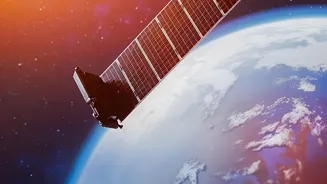
When a significant storm is forecast, satellite operators don't just hope for the best. Armed with warnings from agencies like the USA's NOAA Space Weather Prediction Center, they execute a pre-planned emergency playbook. The most common step is to put the satellite into a 'safe mode'. This involves shutting down all non-essential systems, such as scientific instruments, to protect them from electrical damage. The satellite focuses only on essential functions: maintaining a stable orientation, keeping its solar panels pointed at the sun for power, and listening for commands from the ground. For some LEO satellites, operators might even pre-emptively boost their altitude to give them more margin against the increased atmospheric drag. In India, agencies like ISRO are actively building capacity in space weather monitoring to protect the nation's growing fleet of critical space assets.