





The Daily Commute and Time Poverty
The daily grind of navigating traffic-choked streets does more than just drain your fuel tank; it drains your time and energy. This phenomenon, known as 'time poverty,' is a crucial, often invisible, factor influencing our dietary habits. When commute
times stretch into hours, the window for personal time—including cooking—shrinks dramatically. Studies show a direct link between longer travel times and a decline in diet quality. The sheer exhaustion from a long commute makes the convenience of fast food and ready-to-eat meals not just appealing, but a logical choice for many working individuals. This is especially true for women, who often carry the additional burden of household chores and meal preparation, making them acutely susceptible to time poverty. The result is a cycle where the structure of our cities actively discourages the preparation of fresh, home-cooked food.
When Healthy Food Costs Too Much
Even with time on your hands, your wallet has a major say. Persistent food price inflation in India puts a constant strain on household budgets. While consumers consistently rank nutritional value as important, price often becomes the deciding factor in the grocery aisle. Fresh fruits, vegetables, and quality proteins are frequently the first items to be compromised when budgets are tight. Research indicates that a significant portion of India's urban population finds it difficult to afford a consistently healthy diet. This economic pressure forces families to make tough choices, often substituting nutrient-dense foods with cheaper, calorie-dense, and highly processed alternatives. Consumers adapt by chasing discounts, switching to cheaper store brands, or buying in bulk, but these strategies can only stretch a budget so far when the base cost of nutritious food remains high.
The 'Food Mirage' in Our Neighbourhoods
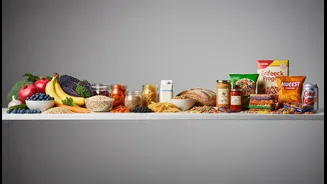
Physical access to healthy food is the third critical piece of the puzzle. Many parts of urban India face what can be described as a 'food mirage'. While stores may be nearby, they don't always offer healthy or affordable options. The concept of a 'food desert,' an area with limited access to fresh and nutritious food, is a reality in many low-income urban settlements and peri-urban areas. The local corner store, or kirana, is the backbone of retail in many neighbourhoods. However, these small shops often have limited space for perishable goods and find it more profitable to prominently display packaged snacks, biscuits, and sugary drinks. Studies on retail environments have found that less healthy items are frequently placed in prime spots like the cash counter, nudging customers toward impulse buys. For many, accessing a larger supermarket with a wide variety of fresh produce requires another commute, adding both time and cost to the equation.
The Combined Effect on Our Plates
These three forces—commutes, prices, and access—do not operate in isolation. They combine to create a powerful current that guides our food choices. An exhausting commute leaves you with no energy to cook. High prices for vegetables make a packet of instant noodles seem more sensible. The shop downstairs tempts you with easily accessible, processed snacks. This convergence of factors makes unhealthy eating less of an active choice and more of a default outcome dictated by our urban environment. It highlights a disconnect where the desire to eat healthy is thwarted by the practical realities of daily life in a modern Indian city. Our diets are becoming a reflection not just of personal preference, but of urban planning, economic policy, and retail strategy.