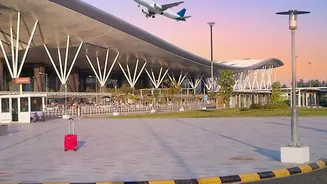








The Blueprint: Modified UDAN Scheme
The plan to develop 100 new airports is driven by the central government's Regional Connectivity Scheme, widely known as UDAN (Ude Desh ka Aam Nagrik). In March 2026, the Union Cabinet approved a modified version of the scheme, extending it for a ten-year
period from fiscal year 2026-27 to 2035-36 with a total outlay of nearly ₹30,000 crore. This next phase isn't just about building new airstrips; it's a comprehensive strategy to develop infrastructure from existing unserved airstrips, provide financial support to airlines operating on these routes, and ensure the long-term operational viability of regional airports. The number of operational airports in India has already grown significantly, from 74 in 2014 to 166 in 2026, and this new push aims to accelerate that growth even further.
Connecting Bharat: Beyond the Metros
For decades, India's aviation network was heavily concentrated around a few metropolitan hubs. The primary goal of the UDAN scheme is to democratise air travel by extending its reach to Tier-2, Tier-3 cities, and remote regions. Officials have noted that the demand for air connectivity is no longer limited to big cities; it's a growing aspiration in smaller towns, Himalayan states, and island territories like Lakshadweep and the Andamans. By building airports in these underserved areas, the government aims to integrate them more deeply into the national economy, providing residents with faster travel options and connecting local economies to larger markets. This push is a direct response to a shift in public demand, where communities are increasingly seeking airports for better mobility and opportunity.
Economic Engines in the Sky
Airports are increasingly seen as powerful economic multipliers. According to studies, increased air connectivity is directly linked to higher productivity, tourism, trade, and employment generation. The government's strategy is built on the understanding that an airport does more than just facilitate travel; it acts as a hub for economic activity. The development of new airports is expected to create a significant number of jobs, both directly in aviation and indirectly in hospitality, logistics, and local businesses. By improving accessibility, these airports can unlock the tourism potential of previously hard-to-reach destinations and enable local industries to transport high-value goods more efficiently. This fits into a broader vision of infrastructure-led development, where airports become crucial nodes in the national logistics network.
A Hub-and-Spoke Model for Global Reach
Simply building airports is not enough; ensuring they are well-connected is the next critical step. To achieve this, the government is actively promoting a 'hub-and-spoke' model. This system connects smaller regional airports (the spokes) to major international airports (the hubs), like Delhi and Ahmedabad. Passengers from smaller towns can take a regional flight to a hub airport and seamlessly connect to international destinations. This strategy not only makes international travel more accessible for people in Tier-2 and Tier-3 cities but also aims to transform India's major airports into global aviation hubs, competing with others in the region. The recent inauguration of hub-and-spoke operations in Ahmedabad is a key example of this model in action.
Navigating the Challenges
Despite the ambitious vision, the path ahead is not without challenges. A significant hurdle is ensuring the commercial sustainability of regional routes. In the past, some routes launched under the UDAN scheme struggled with low passenger demand, forcing airlines to cease operations once government subsidies ended. Building infrastructure is one part of the puzzle, but creating sustained demand is another. Issues like inadequate ground connectivity to the new airports and competition from ever-improving rail and road networks can make short-haul flights less attractive. The Modified UDAN scheme attempts to address this by providing longer-term operational and maintenance support, but the success of these 100 new airports will ultimately depend on a delicate balance of infrastructure, airline economics, and genuine local demand.