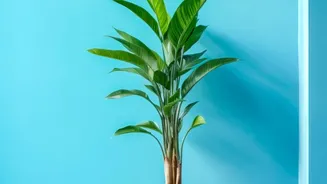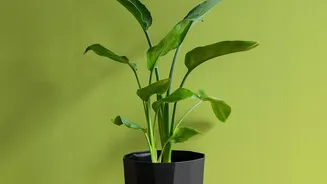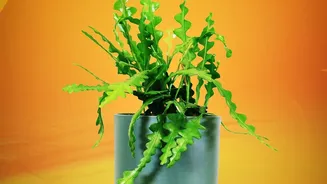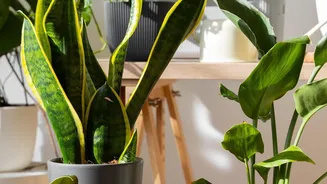


The Legend of the Air-Purifying Plant
The story usually starts in 1989 with a landmark study from NASA. Scientists, looking for ways to keep the air clean in sealed space stations, found that common houseplants could remove harmful volatile organic compounds (VOCs) like benzene and formaldehyde
from the air in a lab setting. The results were exciting, and the idea of the 'air-purifying plant' was born. Soon, lists of the 'best' plants for cleaning your home's air were everywhere, featuring favourites like snake plants, peace lilies, and spider plants. For years, this has been the primary justification for bringing the outdoors in: that a few strategically placed pots could scrub our indoor atmosphere clean.
Reality Check: Air Quality in a Real Home
However, the promise of the NASA study doesn't quite hold up in a real-world living room. More recent analysis reveals a critical flaw in how we've interpreted those findings. The original experiments took place in small, sealed chambers with no airflow—a setup that is nothing like a typical home or office with drafts, open windows, and ventilation systems. Modern research has concluded that you would need an enormous number of plants—some estimates suggest between 10 and 1000 plants per square metre—to match the air-cleaning power of a building's standard air exchange rate. A February 2026 study from the University of Surrey's Global Centre for Clean Air Research confirmed that while some advanced, engineered green walls can help reduce certain pollutants, the effect of individual houseplants on air quality is minimal. So, while your plants aren't useless, they aren't the powerful air filters we once believed them to be.
The Real Superpower: A Boost for Your Brain
So if they aren't scrubbing the air, what is the 'real role' of our leafy friends? The overwhelming consensus from recent studies points to a much more profound benefit: their impact on our psychological well-being. Research has consistently shown that interacting with and even just being around indoor plants can significantly reduce stress. A 2015 study found that caring for plants helped lower physiological and psychological stress, suppressing blood pressure and promoting feelings of comfort. This connection to nature, often called biophilia, appears to be hardwired into us. Studies have demonstrated that having plants in our environment can improve focus, lessen symptoms of anxiety, and boost our overall mood. Some research has even shown that students in classrooms with live plants were more attentive. The very presence of greenery in our homes and offices makes us feel calmer, more at ease, and happier.
More Than Just a Pretty Leaf
Beyond the significant mental health perks, indoor plants contribute to our environment in other subtle ways. The University of Surrey study noted that larger green installations can increase indoor humidity and contribute to thermal comfort, making a space feel cooler and more pleasant. Furthermore, the simple act of nurturing a living thing provides a unique sense of purpose and joy. It’s a gentle, mindful activity that pulls us away from our screens and reconnects us with the natural world. Some studies even suggest that the microorganisms in the soil can have anti-depressive effects, adding another layer to the plant-person relationship. It seems the process of caring for a plant—watering it, watching it grow, and maybe even seeing it bloom unexpectedly—is where much of the magic lies.
Choosing Plants for a Healthier Vibe
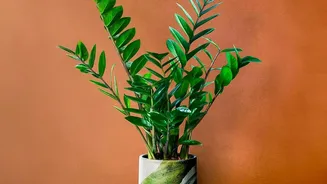
Given that the primary benefit is psychological, the best plant for you is one that you enjoy. Instead of chasing a list of 'top air purifiers', focus on plants that you find beautiful and that fit your lifestyle. If you're a beginner, start with low-maintenance options like the ZZ plant, pothos, or the ever-resilient snake plant. Their ability to thrive with minimal fuss means you get all the joy with less stress. If you love fragrance, consider a pot of lavender. The key is to create a green space that brings you personal satisfaction. Research from the Royal Horticultural Society suggests that the visual attractiveness of a plant is key to its wellbeing benefits, so choose what appeals to your eye and spirit. A thriving plant you love will do more for your well-being than a 'functional' plant you struggle to keep alive.