







How Plants Battle the Heat
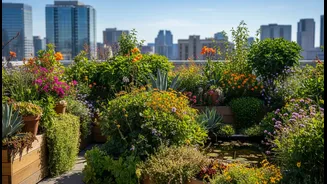
Urban concrete and asphalt surfaces absorb and radiate immense heat, creating what is known as the 'Urban Heat Island' effect. A bare concrete roof can reach scorching temperatures, radiating heat into the rooms below long after the sun has set. Plants
offer a natural, effective solution through two key processes: shading and evapotranspiration. The leaf canopy provides direct shade, preventing sunlight from hitting the concrete. Simultaneously, through evapotranspiration, plants release moisture into the air, creating a natural cooling effect that can significantly lower the surface temperature of the roof and the surrounding air. Studies have shown this can lead to substantial energy savings on cooling costs.
Rooftop-Ready: The Monsoon Essentials
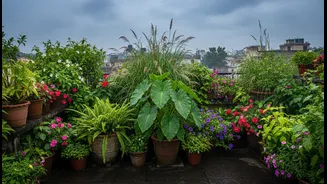
Before you begin adding plants, a few practical steps are essential for a successful monsoon rooftop garden. First, ensure your roof's structural integrity and waterproofing are sound. A garden adds significant weight, and you must prevent any chance of leakage. Proper drainage is non-negotiable during the monsoon. Elevate pots on stands to prevent them from sitting in puddles, and ensure your containers have ample drainage holes. Using lightweight potting mixes, such as those containing cocopeat and vermiculite, can help reduce the overall load on the structure while providing excellent drainage.
Monsoon-Loving Flowering Plants
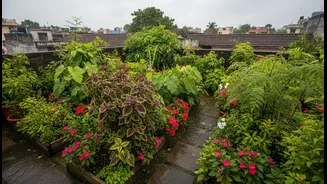
The monsoon is a time of vibrant blooms if you choose the right species. Hibiscus, a classic favourite, thrives in the increased moisture and cooler air, producing large, beautiful flowers. Rain Lilies are another magical addition, often bursting into bloom right after a downpour. For hardy, year-round colour, consider Catharanthus roseus, commonly known as Sadabahar, which tolerates both heat and rain. Portulaca, with its succulent leaves and bright flowers, is another excellent choice for sunny rooftops as it is drought-resistant yet handles monsoon showers well if drainage is adequate.
Lush and Leafy Greenery
For creating a dense, jungle-like feel, foliage plants are key. The humidity of the monsoon is perfect for tropical varieties. Areca Palms love the moist conditions and add a wonderful tropical touch. The ubiquitous Money Plant (Pothos) grows vigorously during this season, its vines quickly covering trellises or cascading from hanging pots. Ferns also bring a delicate, woodland texture to shadier corners of the rooftop, thriving in the high humidity. These foliage plants not only look great but also contribute significantly to the cooling effect through their broad leaf surfaces.
Hardy and Resilient Choices
Some plants are simply tough survivors, perfect for a low-maintenance rooftop garden. The Snake Plant is famously resilient, tolerating a wide range of conditions, including the fluctuations of the monsoon. Similarly, the ZZ Plant handles humidity well and has low water needs, making it forgiving during dry spells between rains. For fragrance and utility, planting herbs like mint and basil is a great idea; they tend to flourish in the monsoon climate. These hardy choices ensure your rooftop remains green with minimal fuss.
Essential Monsoon Care
While the monsoon provides free watering, it also brings challenges. The primary risk is waterlogging, which can lead to root rot. Always check the soil before watering manually. High humidity can also encourage fungal diseases. Ensure good air circulation by not overcrowding your plants and trim away any diseased leaves immediately. Strong monsoon winds can damage taller plants, so provide them with stakes or support and consider moving delicate pots to more sheltered locations. A little pre-monsoon pruning can also encourage healthier, bushier growth.