



The Science of a Fading Sky
Light pollution is the excessive or misdirected artificial light that floods our nights. It comes in a few forms: 'sky glow', the familiar orange haze over cities; 'glare', from overly bright, unshielded lights; and 'light trespass', when a neighbour's
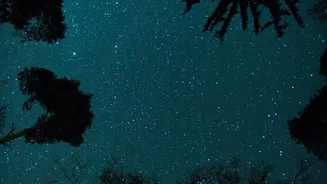
security light illuminates your bedroom. For stargazers, the main problem is sky glow. This artificial brightness washes out the night sky, much like trying to hear a whisper in a loud room. It dramatically reduces the contrast of celestial objects, making faint stars, distant galaxies, and the beautiful, dusty lanes of our own Milky Way galaxy completely invisible. Astronomers use the Bortle Scale to measure sky darkness, ranging from Class 1 (a true dark sky) to Class 9 (an inner-city sky). Most Indian cities fall into the 7-9 range, where only the Moon, planets, and a handful of the brightest stars can pierce the gloom. To truly see the universe, you have to escape the light.
Hanle, Ladakh: India’s Official Dark Sky Reserve
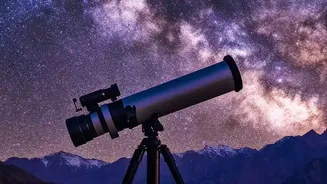
When it comes to pristine skies, Hanle is the undisputed champion. Located in the cold, dry desert of Changthang, Ladakh, at an altitude of 4,500 metres, this remote village was declared India’s first official Dark Sky Reserve in 2022. This designation means artificial light is strictly controlled to protect the night sky for both tourism and science. The area is home to the Indian Astronomical Observatory, placed here precisely because of the region's 300+ clear nights per year, thin atmosphere, and near-zero light pollution. For visitors, this translates to a breathtaking celestial display. On a moonless night, the Milky Way is so bright it can cast a faint shadow, and countless stars create a dense, glittering tapestry overhead. Local villagers, trained as astronomy ambassadors, even offer guided telescope sessions.
Spiti Valley, Himachal Pradesh: A High-Altitude Haven
Spiti Valley is another high-altitude cold desert that offers some of the best stargazing in Asia. With an average elevation of over 12,000 feet, the air is thin, dry, and free from the haze that plagues lower altitudes. The valley is in a rain-shadow area, meaning it receives very little rainfall, ensuring clear skies for most of the year, particularly from May to October. Villages like Komic, Langza, and Kibber have become hubs for astrophotographers and astronomers. The combination of extreme darkness (some areas are rated Bortle Class 1-2) and stunning Himalayan landscapes creates a truly unforgettable experience. Here, the cosmos feels incredibly close, with the Milky Way’s core arching majestically over ancient monasteries and silent mountains.
Rann of Kutch, Gujarat: A Desert Sky Theatre
You don't always need high altitude for a great view. The Great Rann of Kutch offers a unique stargazing experience defined by its geography. This immense salt desert is extraordinarily flat, providing a complete, unobstructed horizon-to-horizon view. Its remote location, far from major cities, ensures minimal light pollution, especially during the Rann Utsav festival season from November to February. The dry winter air contributes to excellent atmospheric stability, meaning stars appear to twinkle less and shine with a steady light. On a moonless night, the sky is a blanket of stars. On a full moon night, the reflective salt flat glows, creating a surreal landscape where you can still see a sky full of stars—a rare and magical combination.
Coorg and the Andamans: Southern Sanctuaries
Dark skies aren't limited to India's northern deserts. In the south, the coffee plantations of Coorg (Kodagu) in Karnataka, with their rolling hills and lower population density, offer patches of excellent Bortle Class 3–4 skies. Homestays and resorts away from the main towns of Madikeri and Virajpet provide quiet spots to set up a telescope and enjoy the southern constellations between October and May. For a truly remote experience, the Andaman and Nicobar Islands are a fantastic choice. Far from mainland light pollution, islands like Neil Island (Shaheed Dweep) offer sharp enough views of the sky over sea. The experience is multisensory combining celestial view with sound waves and bioluminescent plankton.