



The Galaxy's Most Common Planets
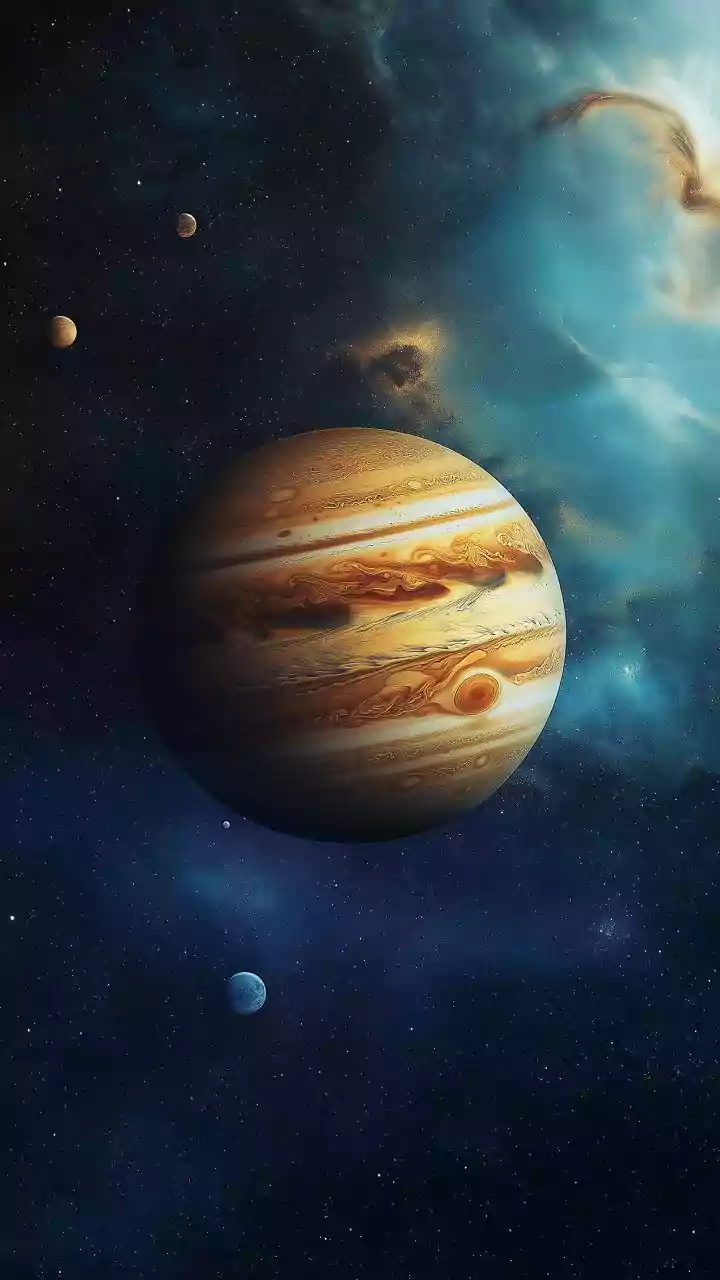
Our solar system is surprisingly unique. It contains small, rocky planets like Earth and Mars, and gas giants like Jupiter and Saturn, but nothing in between. Yet, when astronomers look out into the Milky Way, the most common type of planet they find
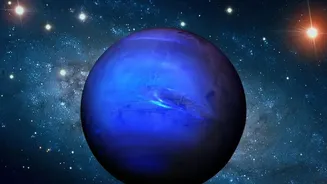
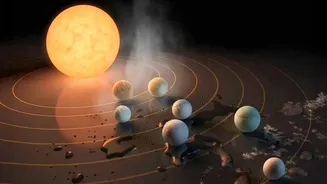
is the 'super-Earth'. These are worlds with a mass up to ten times that of our own planet but smaller than Neptune. They are a cosmic mystery box; they could be rocky, covered in deep oceans, or even gaseous mini-Neptunes. Their sheer abundance and their potential to host conditions suitable for life make them one of the most exciting targets in modern astronomy. For scientists hunting for habitable worlds, understanding what kind of atmospheres these planets have—or if they have them at all—is the critical next step.
Seeing a Ghost in Front of a Spotlight
Studying the atmosphere of a planet hundreds of light-years away is an immense technical challenge. Exoplanets are incredibly faint compared to the blazing stars they orbit. Detecting the thin veil of gas around one is like trying to see the details on a fruit fly buzzing in front of a stadium floodlight from kilometres away. The primary method scientists use is called transit spectroscopy. When a planet passes, or ‘transits,’ in front of its star from our point of view, a tiny fraction of the starlight filters through its atmosphere. Different chemical elements and molecules in that atmosphere absorb very specific colours, or wavelengths, of light. By analyzing the starlight that reaches us, astronomers can look for these missing colours and create a chemical fingerprint of the planet’s air.
Webb's Infrared Advantage
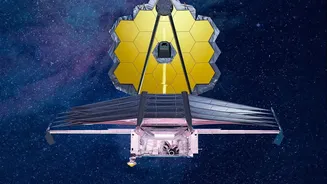
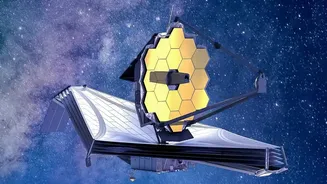
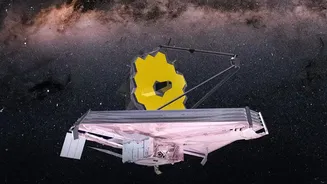
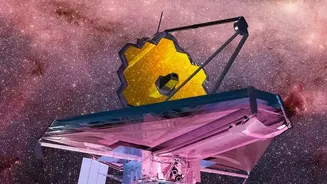
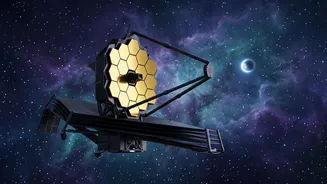
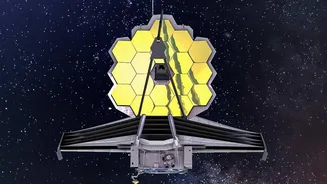
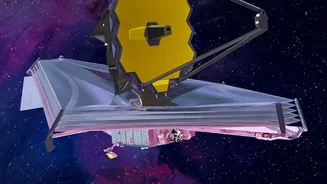
This is where the James Webb Space Telescope (JWST) changes the game. While the Hubble Space Telescope gave us our first tantalizing glimpses, it operates mostly in visible and ultraviolet light. JWST, however, is a specialist in infrared light. Its giant, gold-coated mirror and advanced instruments, like the Near-Infrared Spectrograph (NIRSpec) and the Mid-Infrared Instrument (MIRI), are designed to capture a huge range of infrared wavelengths with incredible sensitivity. This is crucial because many of the most important molecules for life—including water vapour, methane, and carbon dioxide—leave their most prominent absorption signatures in the infrared spectrum. Before Webb, these signatures were often too faint or outside the observable range to be detected clearly. Now, JWST can pick them up with stunning precision, turning educated guesses into solid data.
From Theory to Groundbreaking Reality
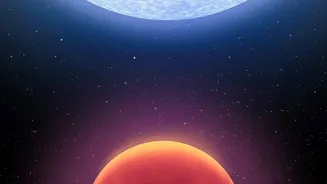
The 'revolution' mentioned in the headline isn't just a promise; it's already happening. Scientists using JWST have made astonishing discoveries. For example, they detected signs of an atmosphere on the ultra-hot super-Earth TOI-561 b, a scorching 'lava world' that orbits its star in just 10 hours. Theory suggested a planet this hot and small should have its atmosphere stripped away, but JWST’s temperature measurements indicated that a thick atmosphere was distributing heat across the planet. In another case, the telescope found that the rocky exoplanet LHS 3844b has no atmosphere at all, revealing its surface to be dark, cooled volcanic rock much like our Moon. Being able to definitively confirm the presence or absence of an atmosphere is a monumental leap forward. It allows scientists to finally test theories about how and where planets can sustain a blanket of gas, a key ingredient for habitability.