
Why You Can See the Space Station
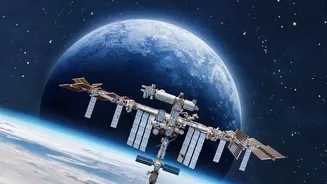
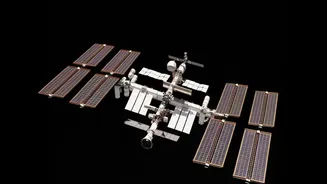
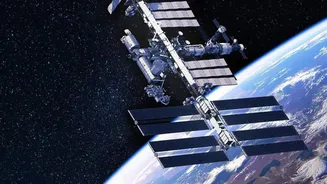
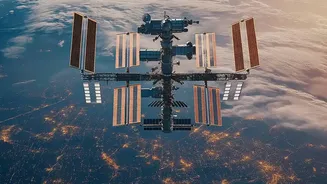
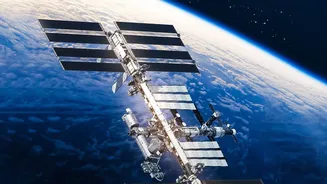
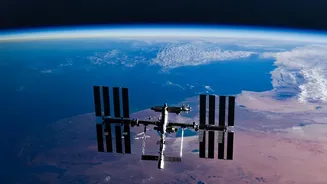
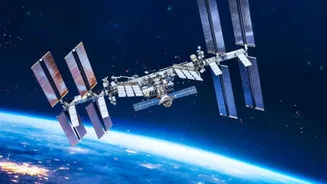
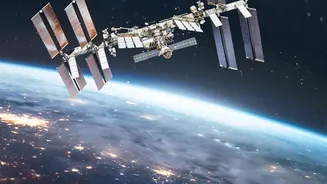
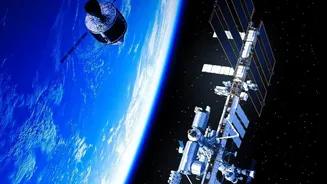
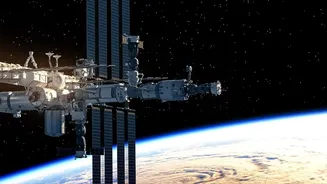
The International Space Station is the largest human-made structure in orbit, roughly the size of a football field. It circles the Earth at an altitude of about 400 kilometres, travelling at a staggering 28,000 kilometres per hour. We can see it not because
of its own lights, but because its massive solar panels and modules are highly reflective. When the conditions are right, it catches the sunlight and shines brightly against our darker sky. In fact, at its brightest, the only objects in the night sky that outshine it are the Sun and the Moon. It can appear brighter than the planet Venus, making it visible even from light-polluted cities.
Know When and Where to Look
Timing is everything. The ISS is only visible when it's flying through sunlight while you and your location are in darkness. This creates two ideal viewing windows: the first couple of hours after sunset and the last couple of hours before sunrise. During these twilight periods, the sky is dark enough for the station to stand out. Flyovers can happen multiple times a week, though this depends on your location and the station's orbital path. A good pass will last anywhere from three to seven minutes as it crosses the sky. The highest and brightest passes are typically those that travel high above the horizon, with an elevation of 90 degrees meaning it will pass directly overhead.
Top Apps for Tracking the ISS
The key to a successful sighting is knowing exactly when and where to look. Thankfully, several apps do the hard work for you. NASA's official Spot the Station app (available for iOS and Android) is a fantastic starting point, providing sighting times and real-time tracking. It can send you notifications for upcoming passes based on your location. Another highly recommended app is ISS Detector, which is praised for its user-friendly interface and provides details on visibility conditions. For those who enjoy a more detailed view, Heavens-Above is a long-standing website and app that offers precise charts and data. Finally, apps like SkyView or Star Walk use augmented reality (AR); you can simply point your phone at the sky, and the app will overlay the station's path on your camera view, showing you exactly where it will appear.
How to Spot It: A Beginner's Guide
Once your app alerts you to an upcoming flyover, get ready for the show. Head outside about five minutes early to let your eyes adjust to the dark. Face the direction the app indicates the station will appear from, which is often in the west. You are looking for a bright, steady, white dot of light moving smoothly and quickly across the sky. Unlike an airplane, the ISS does not have blinking or flashing lights. It moves much faster than a plane and makes no sound. Sometimes, as it moves across the sky, it might seem to fade out and disappear; this is normal and happens when the station enters Earth's shadow, losing the sunlight that makes it visible.
Tips for the Best Viewing Experience
While you can spot the ISS from a city, finding a location with a clear, open view of the sky away from bright lights will make the experience even more spectacular. High passes, where the station travels further up in the sky, are generally brighter and visible for longer. Although no special equipment is needed, binoculars can enhance the view, making the station appear even brighter. Don't be discouraged if your first attempt is clouded out; with multiple viewing opportunities each week, another chance is never far away. Involving friends or family can also turn it into a memorable shared experience.