


What ISRO’s Radar Uncovered
Even years after its 2019 launch, the orbiter of India's Chandrayaan-2 mission continues to deliver groundbreaking science. Scientists from the Physical Research Laboratory in Ahmedabad, analysing data from the orbiter, have found strong indications of ice
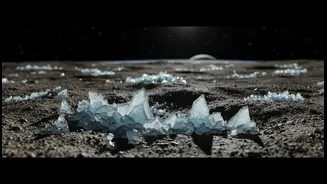
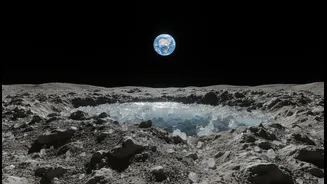
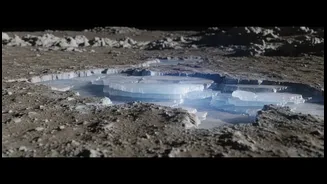
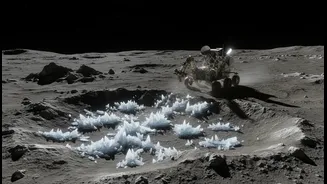
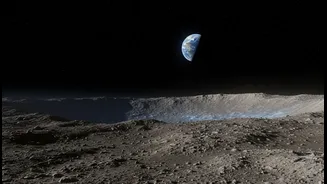
buried beneath the surface in the Moon's south polar region. The key instrument in this discovery is the Dual-frequency Synthetic Aperture Radar (DFSAR), which has the unique ability to probe beneath the lunar soil. The study zeroed in on what are known as "doubly shadowed craters"—areas that never receive any sunlight and remain at incredibly cold temperatures of around -248°C, making them perfect cold traps for preserving water ice over billions of years. The radar signals pointed to the presence of this buried ice in at least four such craters, with the strongest evidence coming from a small, 1.1-kilometre-wide crater inside the larger Faustini crater.
The Science of Seeing Below Ground
So, how can a satellite orbiting the Moon see something hidden underground? The DFSAR instrument is not a camera; it’s a sophisticated radar system that sends out microwave signals in two different frequency bands (L-band and S-band). These signals penetrate the loose lunar soil, or regolith, and bounce back differently depending on what they hit. Rock, loose dust, and ice all create distinct radar echoes. Scientists developed a refined method to look for a specific combination of radar signatures. They searched for areas with a high Circular Polarization Ratio (CPR), which can indicate ice, but also combined it with a low Degree of Polarization (DOP). This combination helps differentiate the volumetric scattering caused by a chunky, buried ice deposit from the surface roughness of plain rock, which can sometimes fool the radar. This dual-frequency, fully polarimetric approach—a first for lunar study—is what gives ISRO’s data such a high degree of confidence.
From 'Possible' Ice to a Viable Resource
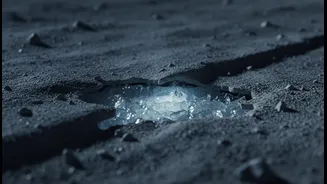
The idea of water on the Moon isn't entirely new; previous missions, including India's own Chandrayaan-1, found evidence of water molecules on the surface. However, that surface ice is often thinly spread and located in treacherous, permanently shadowed craters. The latest findings from Chandrayaan-2 suggest something far more significant: thicker, more substantial deposits of ice mixed with soil, protected from the harsh lunar environment by a layer of regolith. This is a game-changer. Buried ice is less susceptible to sublimation from solar wind and micrometeorite impacts. The data, supported by the crater's unusual "lobate-rim" shape—which suggests an impactor punched through a buried ice layer—strengthens the case that this isn't just a scientific anomaly but a widespread feature. This shifts the conversation from simply finding water to mapping a tangible resource reserve.
Why This Changes Everything for Future Missions
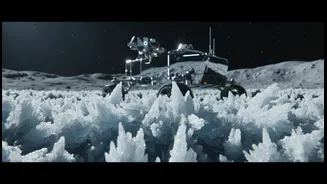
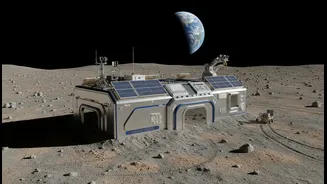
This discovery directly feeds into the concept of In-Situ Resource Utilization (ISRU), a cornerstone of modern space exploration. The high cost of launching materials from Earth is a major bottleneck for establishing a sustainable human presence on the Moon. If future astronauts can 'live off the land' by accessing local resources, the entire economic and logistical model of lunar settlement changes. Lunar ice can be melted for drinking water, split into hydrogen and oxygen to create breathable air, and, crucially, processed into rocket fuel. Having a refueling station on the Moon would make it a launchpad for deeper space missions, including to Mars. ISRO’s data provides a high-fidelity map pointing to where these valuable resources are most likely to be found, making future landing site selection and robotic exploration far more targeted and efficient.
India's Strategic Leap in the New Space Race
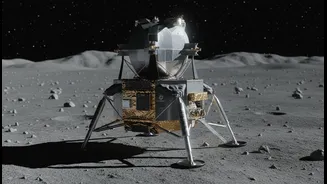
Following the historic landing of Chandrayaan-3 near the south pole, this new data from its predecessor solidifies India’s position as a leader in lunar science and exploration. While the Chandrayaan-2 lander was lost, its orbiter has proven to be an invaluable scientific asset, generating thousands of datasets that are now being offered to the global scientific community. By producing and sharing this critical information, ISRO is not just participating in the global return to the Moon; it is actively shaping the roadmap. This data provides a crucial advantage for planning India's future missions and strengthens its role within international collaborations like the Artemis Accords, which emphasize transparent data sharing. The ability to pinpoint potential reserves of a vital resource like water ice places India at the forefront of strategic planning for the next chapter of human spaceflight.