


The Psychology of Visual Calm
Every object in your field of vision competes for your brain's attention. When surfaces are cluttered and items are scattered randomly, your brain has to work overtime to filter out irrelevant information, leading to what is known as 'visual noise'. This
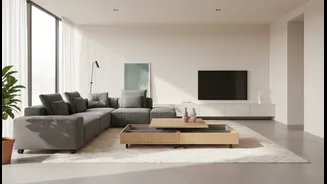
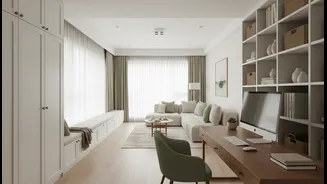
constant, low-level cognitive load can increase stress hormones like cortisol, making it difficult to focus and relax. An organised display isn't just about being tidy; it's about giving your mind a break. By intentionally grouping items, you create visual order. This reduces the number of competing stimuli, allowing your brain to process the environment more easily, which in turn fosters a sense of peace and control. It's a simple act of external organisation that has a profound internal effect.
Group by Colour: A Visual Shortcut to Harmony
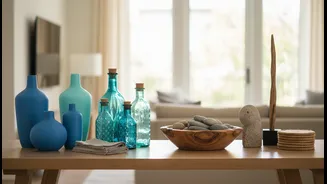
Sorting by colour is one of the most intuitive and visually impactful ways to create a cohesive display. Our brains are wired to recognise patterns, and a block of unified colour is incredibly soothing to the eye. This method works wonders for items that are often collected in multiples, like books, ceramic vases, or even colourful glassware. Imagine a shelf where all your books are arranged in a rainbow gradient, or a corner showcasing a collection of all-white pottery. The individual items almost disappear, blending into a single, harmonious statement. This technique is a powerful tool for turning a potential mess—like a sprawling collection—into a curated feature. The repetition of colour ties everything together, creating a look that is both disciplined and deeply satisfying.
Group by Material: An Ode to Texture and Cohesion
Another powerful strategy is to group items based on their material. This approach celebrates texture and creates a rich, layered look. A cluster of wooden bowls on a kitchen counter, a tray of gleaming brass objects on a side table, or a collection of woven baskets in a corner all create a strong visual statement. Mixing different materials can create excitement, but grouping similar ones provides a sense of unity and calm. This method works because it creates a tactile story. You're not just seeing the objects; you're almost feeling their warmth, coolness, smoothness, or roughness. It highlights the inherent beauty of the materials themselves, whether it's the natural grain of wood, the reflective quality of metal, or the transparency of glass. It’s a sophisticated way to add depth and interest to a room without adding clutter.
Group by Place: Creating Intentional Vignettes
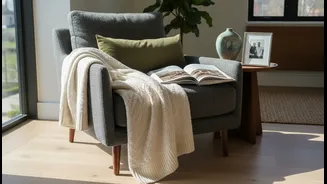
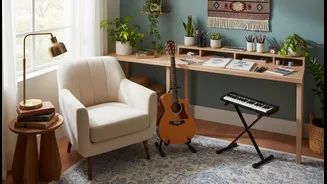
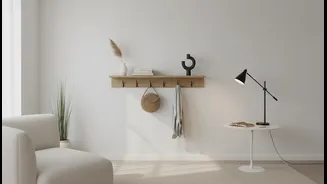
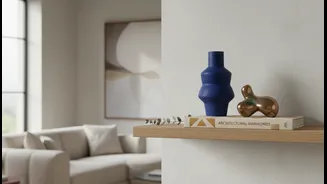
Perhaps the most personal method is grouping by place to create small, curated scenes called vignettes. A vignette is a small grouping of objects that tells a story or evokes a feeling. Think of a bedside table, a fireplace mantel, or an entryway console. Instead of letting these surfaces become magnets for random items, you can intentionally style them. The key is to gather a few select items—perhaps a lamp, a small plant, a stack of books, and a framed photo—and arrange them in a pleasing composition. This method is about creating designated 'homes' for your favourite things. A tray can be a great tool here, acting as a frame that contains the collection and makes a group of items feel like a single unit. By creating these thoughtful clusters, you give your belongings purpose and turn functional surfaces into focal points of beauty and personality.