



A Sharper, Deeper View of the Cosmos
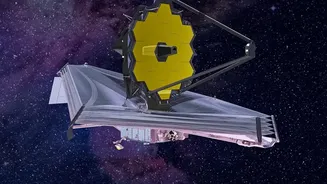
In recent months, space agencies have released a trove of fresh images from telescopes like the James Webb Space Telescope (JWST) and the European Space Agency's (ESA) Euclid telescope. These are not your average space pictures. To celebrate its fourth
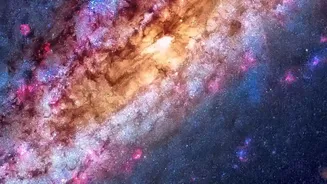
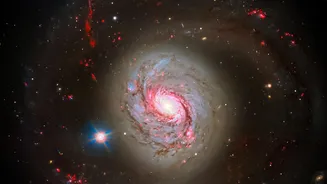
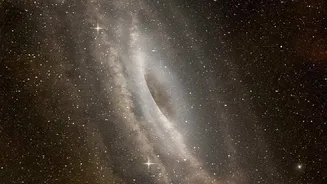
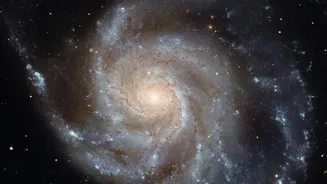
anniversary in July 2026, the JWST team released an incredible new look at Centaurus A, a galaxy shaped by a cosmic collision. Its powerful infrared instruments pierced through cosmic dust that previously obscured our view, revealing a dense tapestry of individual stars for the first time. Similarly, the Euclid telescope captured the largest and most detailed photograph ever taken of the Milky Way's crowded heart, showing more than 60 million stars in a single frame. This level of detail is a significant leap forward, turning what were once fuzzy regions into clear, analyzable star fields.
The Power of Seeing the Invisible
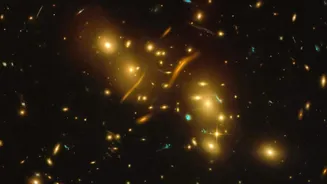
What makes these new images so revolutionary is their ability to see in infrared wavelengths. Telescopes like the JWST can detect faint light that has traveled for billions of years, effectively acting as a time machine. One image of the galaxy cluster MACS J0553.4-3342 shows it as it was 4.4 billion years ago, still in the process of forming. This ability to peer through gas and dust, which act like a thick fog to visible-light telescopes, is a game-changer. It allows astronomers to study the earliest, most dust-shrouded stages of star and galaxy formation, something previously impossible. By observing phenomena like the 'Little Red Dots' — extremely distant, early galaxies — scientists can gather new clues about how the first galaxies and supermassive black holes formed just after the Big Bang.
From Galactic Archaeology to Finding New Worlds
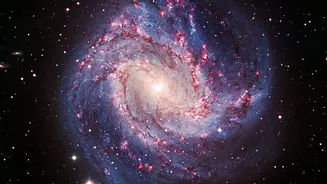
With this newfound clarity, scientists are embarking on a new field: galactic archaeology. By studying the individual stars within a galaxy like Centaurus A, astronomers can decode its past, including a dramatic merger with another galaxy that occurred two billion years ago. This is akin to reading a galaxy's history book, star by star. The applications extend beyond galaxies. Euclid's detailed image of our own galactic center will aid in the search for exoplanets, or planets outside our solar system. It will help confirm and measure the mass of planets found using a technique called microlensing, where a nearby star acts like a 'cosmic magnifying glass' to reveal a planet orbiting a more distant star. Even in well-studied systems, new discoveries are being made. Using a novel spectroscopic method, the JWST recently found a third giant planet, Beta Pictoris d, hidden within the bright debris disk of its star system.
The Technology Driving Discovery
The breakthroughs are a direct result of the advanced technology packed into these observatories. The JWST's Mid-Infrared Instrument (MIRI) and Near-Infrared Camera (NIRCam) work in concert to provide unparalleled sensitivity and resolution. This allows them to capture the faint glow of the universe's oldest structures and peer into the heart of dusty star-forming regions. The ESA's Euclid telescope complements this with a massive field of view, capable of surveying huge swaths of the sky with incredible sharpness. Its image of the Milky Way's core covers an area 270 times larger than what the Hubble telescope can capture at once, and it did so in just over a day. Furthermore, new tools like artificial intelligence are being used to enhance these images, removing noise to reveal features and galaxies that were previously too faint to detect.