


What is SPEARS Technology?
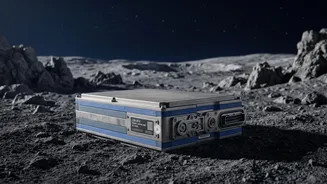
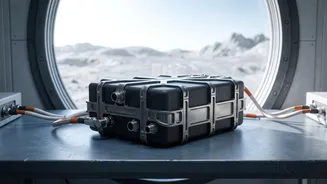
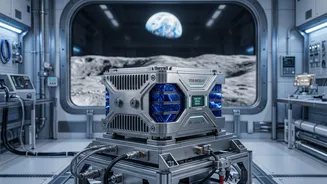
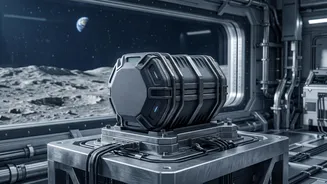
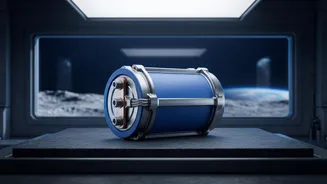
SPEARS, which stands for Solid Power for Extreme Environment Adaptability and Resilience in Space, is a NASA project aimed at solving one of the biggest hurdles for lunar exploration: energy storage. Led by NASA's Glenn Research Center, the project is developing
a new class of solid-state batteries. Unlike the lithium-ion batteries in your phone or electric car, which use a liquid electrolyte, SPEARS batteries use a solid material, like a ceramic or polymer. This fundamental change is key. A liquid electrolyte can freeze in the extreme cold of a lunar night, damaging the battery, or evaporate in the vacuum of space. By using a solid, researchers hope to create a power source that is inherently more robust and safer for the harsh lunar environment.
Why the Moon Demands Better Batteries
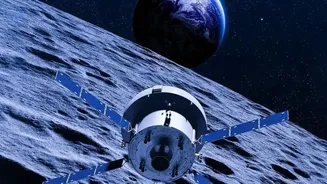
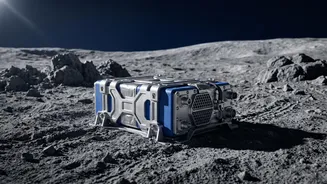
Establishing a permanent base on the Moon, as planned under the Artemis program, requires technology that can endure conditions far more hostile than on Earth. The lunar south pole, a target for future missions due to potential water ice, experiences temperature swings from a boiling 212 F (100 C) in the sun to a frigid minus 328 F (minus 200 C) during the two-week-long lunar night. Conventional batteries simply can't function, let alone survive, in such cold without constant heating, which consumes precious energy. Future operations, from keeping habitats running to powering rovers and astronaut equipment, will require vast amounts of reliable power. The original Apollo rovers, for instance, used non-rechargeable batteries and had a very limited lifespan. For a sustained presence, NASA needs rechargeable systems that can endure thousands of cycles of charging and discharging in this extreme environment.
The Gap: From Prototype to Lunar Surface
Recent tests on small, coin-sized SPEARS prototypes have shown great promise. In a thermal vacuum chamber simulating space conditions, the cells survived exposure to temperatures as low as minus 274 F (minus 170 C) without damage. They were even able to operate, with reduced performance, down to minus 112 F (minus 80 C). However, this is just the first step on a long and complex path to being 'flight-ready'. Testing small cells in a lab is vastly different from building a large, robust battery pack that can be integrated into a rover or habitat. This 'gap' between a successful prototype and a deployed system involves rigorous engineering and testing to ensure the technology can withstand the vibrations of a rocket launch, the effects of space radiation, and the abrasive lunar dust, all while maintaining safety and reliability over a mission that could last years.
Surviving the Night, One Step at a Time
The key insight from the SPEARS research is not necessarily that the batteries will operate at the absolute coldest lunar temperatures, but that they can survive them. The goal is a system where the battery can 'cold-soak' through the lunar night without needing constant energy for heating. When power is required, a small, efficient heater could quickly bring the battery up to its optimal operating temperature. This is a significant advantage over current batteries that require continuous heating just to prevent permanent damage from the cold. The recent tests proved that after being exposed to extreme cold, the SPEARS cells don't sustain damage and can be warmed up to function again. This resilience is the critical feature that could make long-duration missions and a permanent lunar outpost possible.
The Road Ahead
The SPEARS project, which began in 2026, is still in its early technology development phase. The next steps involve scaling up from small cells to larger battery packs and conducting even more rigorous testing that simulates every aspect of a lunar mission. NASA will need to prove the technology's long-term durability and safety before it can be assigned to a specific mission, whether for a rover, a scientific instrument, or an astronaut's emergency kit. While the underlying solid-state technology also holds promise for applications on Earth, from electric vehicles to consumer electronics, its first and most demanding test will be powering humanity's return to the Moon.