

The Sun's Inevitable Decline
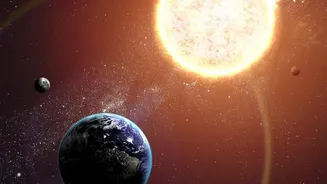
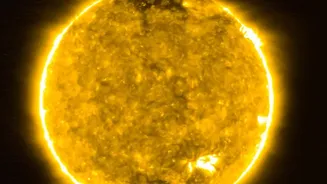
Our Sun, like all stars, has a finite lifespan. For the past 4.6 billion years, it has been steadily fusing hydrogen into helium, providing the light and heat that sustain our world. But in about five billion years, that fuel will begin to run low. The
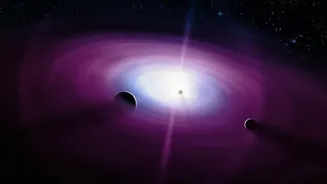
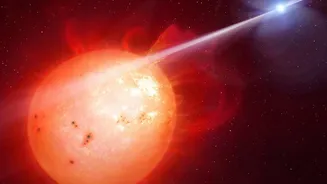
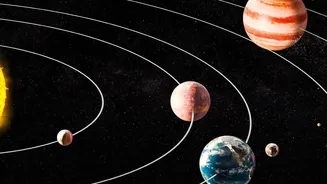
Sun will then start its dramatic final act, swelling into a red giant. In this phase, it will expand to hundreds of times its current size, engulfing the inner planets—Mercury, Venus, and almost certainly Earth. After about a billion years as a red giant, it will shed its outer layers and collapse into a dense, Earth-sized remnant known as a white dwarf, a stellar ember that will slowly cool over trillions of years. For a long time, scientists believed this process would be relatively gentle on the surviving outer planets.
A Not-So-Smooth Transition
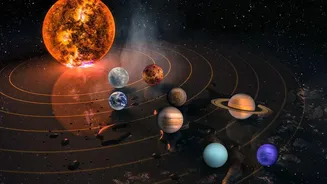
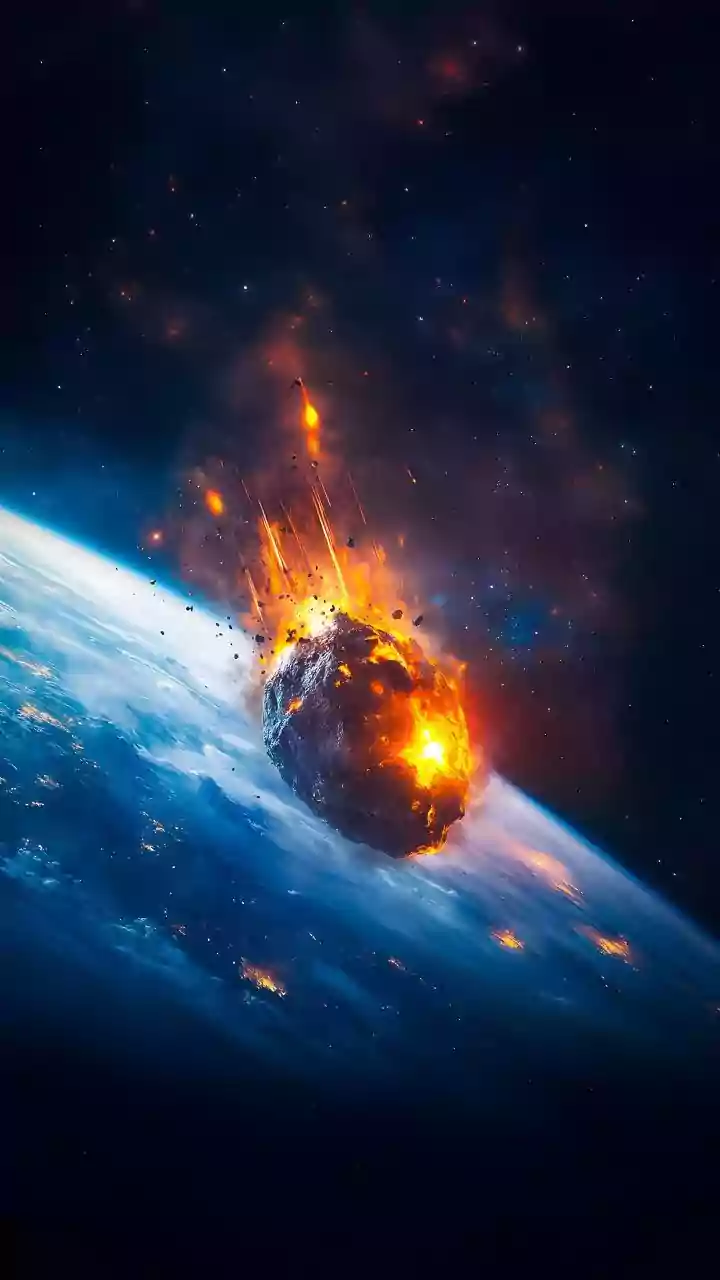
Previous models of the solar system's end assumed the Sun would lose about half its mass in a smooth, steady stream as it transitions from a red giant to a white dwarf. This loss of mass would weaken its gravitational grip, causing the remaining planets—Jupiter, Saturn, Uranus, and Neptune—to drift into wider, but still stable, orbits. However, a groundbreaking new study suggests this process is not smooth at all. Instead of a consistent outflow, the Sun will likely eject its mass in thousands of violent, random bursts. These asymmetric ejections will give the dying Sun a series of tiny 'kicks', pushing it slightly in the opposite direction each time. While each individual kick is small, their cumulative effect over millions of years can drastically alter the delicate gravitational balance of the entire system.
A Cosmic Game of Billiards
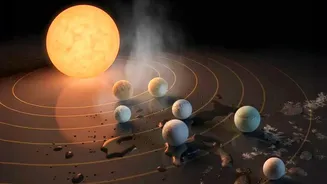
These repeated stellar kicks introduce a powerful element of randomness, or 'stochastic' forcing, into the planets' orbits. Imagine the Sun shuddering unpredictably as it dies. Each shudder sends a gravitational ripple through the solar system, nudging the giant planets. Over time, these nudges cause the planets' orbits to 'random walk', becoming more eccentric and tilted. New simulations based on this uneven mass loss paint a chaotic picture. Instead of remaining stable for 100 billion years or more as previously thought, the outer solar system could destabilise in as little as one billion years after the Sun becomes a white dwarf. This is a dramatic shortening of its expected lifespan, bringing the system's final dissolution into a much more familiar astrophysical timeframe.
Jupiter's Decisive Role
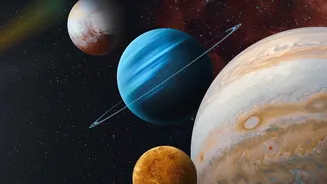
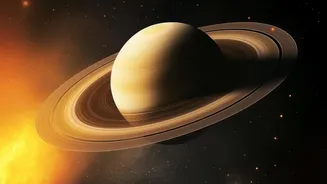
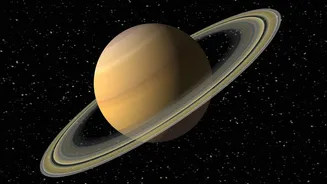
In this newly chaotic environment, the gravitational influence of Jupiter becomes even more critical. As the orbits of the giant planets start to wobble and intersect, Jupiter's immense gravity acts as a powerful disruptor. Simulations show a range of dramatic outcomes. Saturn could be ejected from the solar system entirely, while Uranus and Neptune might get thrown into crossing orbits. Some simulations show that up to 40% of systems experience major disruption even before the Sun fully becomes a white dwarf. The intricate dance that has kept the planets in their lanes for billions of years unravels, leading to a period of violent scattering that eventually leaves only one major planet—most likely Jupiter—in a lonely orbit around the dead Sun.