






The Physics of Impact
Every time your foot hits the ground while running, your joints absorb a force equivalent to several times your body weight. For a 70kg person, that is a significant load repeated thousands of times over a 5-kilometre run. This is what 'high-impact' means.
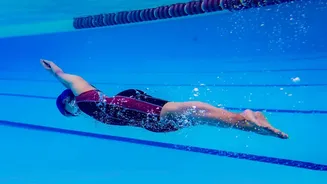
Swimming operates in a different physical universe. The natural buoyancy of water supports your body, reducing your effective weight by up to 90%. When you're submerged to your chest, you're only bearing about 25-30% of your body weight. This dramatically reduces the stress, or 'loading', on your hips, knees, and ankles, making it a classic 'low-impact' exercise.
The Case for Running
While 'high-impact' might sound negative, the stress from running isn't always a villain. For individuals with healthy joints, this repetitive loading is a crucial signal for the body to maintain and even build bone density. This weight-bearing aspect is something swimming cannot offer. Studies have shown that recreational runners may actually have a lower incidence of osteoarthritis compared to sedentary individuals, suggesting that moderate impact can be beneficial for joint tissue. Running is also highly accessible, requiring little more than a good pair of shoes, and it's an effective way to strengthen the large muscles of the lower body, including your glutes, quadriceps, and hamstrings.
The Buoyancy Benefit of Swimming
The near-weightless environment of the pool is swimming's greatest advantage for joint health. This makes it an ideal choice for people with arthritis, those recovering from injuries, or anyone experiencing joint pain. The water's support allows for a greater range of motion, helping to improve flexibility and reduce stiffness without the pain that might be felt on land. Furthermore, swimming is a true full-body workout. Different strokes engage muscles in the arms, shoulders, back, and core, in addition to the legs, providing more balanced muscular development than the lower-body focus of running.
Injury Risk and Calorie Burn
The high-impact nature of running naturally leads to a higher risk of stress-related injuries like shin splints and runner's knee. Swimming, while safer for joints, is not without risk; overuse can lead to shoulder or neck issues, often from improper technique. When it comes to burning calories, the two are surprisingly competitive. While intense running may burn more calories per minute, swimming often allows people to exercise for longer durations due to the lower strain. At a comparable effort level, a skilled swimmer can burn as many, or even more, calories than a runner.
Making the Choice for You
The best exercise depends entirely on your personal goals and physical condition. If your primary goal is to build bone density and you have no pre-existing joint issues, running is an excellent choice. If you have arthritis, are recovering from a lower-body injury, or simply want a workout that is gentler on your body, swimming is the clear winner. For many, the ideal solution isn't a choice between one or the other, but a combination of both. Cross-training by incorporating swimming into a running routine can help maintain cardiovascular fitness while giving joints a much-needed break, potentially reducing the overall risk of injury.