





The Promise of 'Better-for-You' Snacking
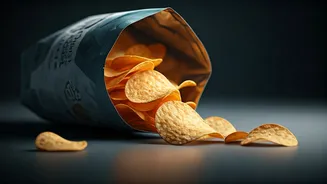
We’ve all been there, standing in the snack aisle, trying to make a responsible decision. The packaging is often green, the claims are bold — 'baked, not fried,' '40% less fat,' 'all-natural'. These 'diet' or 'light' versions of our favourite snacks,
like potato chips, promise a guilt-free indulgence. They’re marketed as the sensible alternative, allowing us to enjoy a treat without derailing our health goals. The problem is, this perception often works against us. Instead of leading to moderation, these snacks can open a psychological and physiological trap door, leading directly to overconsumption.
What Is Hyper-Palatability?
The core of the issue lies in a concept known as hyper-palatability. This term describes foods engineered to be intensely rewarding. It’s not just about one ingredient; it’s the specific, potent combination of fat, sugar, sodium, and carbohydrates that makes a food so irresistible your brain finds it difficult to say 'stop'. Think of it as a culinary bullseye. Food scientists have perfected formulas that activate the brain's reward centres with an intensity seldom found in natural foods like fruits or vegetables. These foods are designed to be so pleasing that they can override the body's natural signals of fullness.
The Engineering of a Diet Chip
When manufacturers create a 'diet' chip, they typically reduce one component, usually fat. While this lowers the calorie count, it also removes a key element of flavour and texture. To compensate, they often increase other ingredients, particularly sodium and flavour enhancers. The result is a chip that might have fewer calories per serving but is still hyper-palatable. The salty, savoury taste remains highly appealing, but the food is less satisfying. The lack of fat and fibre, which help signal fullness, means you can eat more before your body registers that it's had enough. Essentially, you're getting a similar pleasure hit without the biological 'off-switch'.
Your Brain on 'Diet' Snacks
When you eat a hyper-palatable food, your brain releases dopamine, a neurotransmitter associated with pleasure and reward. This creates a reinforcing cycle: you eat the food, you feel good, and your brain motivates you to eat more. However, with many processed 'diet' foods, this reward signal is disconnected from true nutritional value. Your brain gets the pleasure spike from the salt and flavourings, but your stomach doesn't receive the signals of satiety that would normally come from a more balanced food containing adequate protein, fibre, and fat. This creates a confusing biological feedback loop, where your brain says 'more!' while your body is still waiting for the nutrients that signal true fullness.
The 'Health Halo' Illusion
Beyond the biochemistry, there's a powerful psychological component at play called the 'health halo' effect. When a food is labeled 'low-fat,' 'organic,' or 'healthy,' we tend to perceive it as being lower in calories and less indulgent overall. This halo gives us a subconscious permission slip to eat more. Studies have shown that people consistently serve themselves larger portions of snacks when they believe them to be a healthier option. The reduced guilt associated with a 'diet' food can lead us to consume far more than a standard serving, completely negating, and often exceeding, any calorie savings. The belief that you are being 'good' paradoxically encourages you to overdo it.