






An Old Enemy with a Devastating Cost
For grape growers in Maharashtra, downy mildew is a familiar and feared adversary. Caused by a fungus-like organism, Plasmopara viticola, the disease thrives in warm, humid conditions, which are common in the region. It attacks all green parts of the grapevine,
including leaves, shoots, and the precious fruit clusters themselves. Visible symptoms often appear as yellowish, oily spots on leaves, followed by a white, cotton-like growth on the underside. By the time these signs are visible to the naked eye, the infection may have already spread deep within the plant's tissues, making it difficult to control. In severe outbreaks, downy mildew can wipe out 40% to 80% of a harvest, causing immense economic losses for farmers who depend on this valuable crop.
A New Eye in the Sky
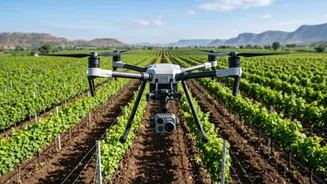
Traditional methods of fighting downy mildew involve manual scouting and preventative, widespread spraying of fungicides. This approach is not only labour-intensive and costly but often comes too late. Now, precision agriculture technology offers a proactive solution. Farmers are turning to unmanned aerial vehicles (UAVs), or drones, equipped with advanced imaging sensors. These are not standard cameras; they are multispectral or hyperspectral sensors that capture light beyond the visible spectrum. Plants under stress from disease exhibit subtle changes in how they reflect light, particularly in the near-infrared and red-edge wavelengths, long before physical symptoms like lesions appear. The drone's sensors can detect these minute spectral variations, effectively spotting the disease in its earliest, invisible stages.
Turning Data into Targeted Action
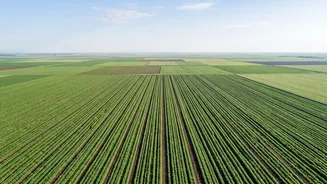
The drone's flight is just the first step. Once the aerial imagery is captured, artificial intelligence (AI) algorithms get to work. The AI software processes thousands of georeferenced images, analysing them for the specific spectral signatures associated with downy mildew stress. It can differentiate healthy vines from stressed ones with remarkable accuracy, creating a detailed 'health map' of the entire vineyard. This map pinpoints exactly which plants are affected and how severe the infection might be, even on a plant-by-plant basis. This transforms farm management from a reactive guessing game into a proactive, data-driven strategy.
The Power of Precision
Armed with this precise health map, farmers can abandon the old 'blanket spraying' approach. Instead of drenching the entire vineyard in fungicides, they can now carry out targeted interventions. This might involve dispatching smaller drones to spray treatment only on the identified problem spots or guiding ground crews to the exact rows needing attention. This shift to precision application has multiple benefits. It dramatically reduces the amount of fungicides used, leading to significant cost savings for farmers and lessening the environmental impact. Reports show precision spraying can decrease pesticide use by 25-30% and water by up to 90%. It also ensures a healthier crop, improves fruit quality, and helps prevent the development of fungicide resistance.
A Glimpse into the Future of Farming
The adoption of AI and drone technology in Nashik is more than just a local trend; it represents a significant step forward for Indian agriculture. While challenges like initial investment costs and the need for trained pilots exist, government schemes are helping to promote drone adoption. For farmers, the benefits are tangible: reduced input costs, higher yields, and greater peace of mind in the face of an unpredictable threat. This technology empowers even small and marginal farmers to make smarter, more sustainable decisions, boosting their profitability and resilience. As the technology becomes more accessible, it holds the promise of being adapted for other crops and diseases, heralding a new era of efficient, intelligent, and sustainable farming across the country.