





Set Up an Entryway Triage Station
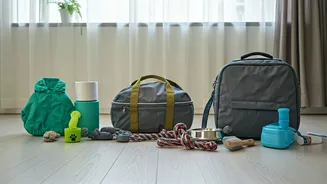
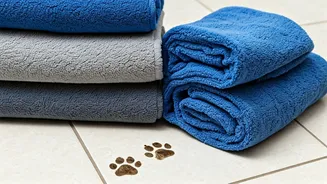
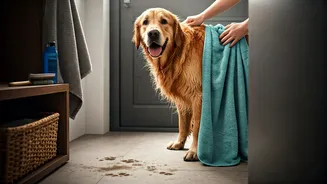
The key to a clean home is to contain the mess at the door. Before you even head out, prepare a designated 'triage station'. Lay down an old, absorbent towel or a washable mat right inside the door. Keep a stack of extra towels and any cleaning supplies
you'll need in a basket nearby. This simple act of preparation means you're not scrambling with a wet, wiggling dog, and it trains your pup to pause on the mat, preventing muddy footprints from spreading throughout the house. Having everything within arm's reach—towels, wipes, and brushes—turns a chaotic cleanup into a calm, efficient routine. This small change makes a massive difference, especially during the monsoon season.
Master the Art of the Paw Wipe
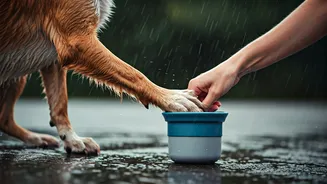
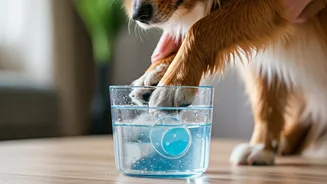
Paws are the primary vehicle for mud and grime. For a quick clean, pet-safe, hypoallergenic wipes are a convenient option. Unlike baby wipes, they are formulated to be safe if your dog licks their paws afterward. For more significant mud, a paw washer is a game-changer. These silicone-bristled cups allow you to dip each paw, twist gently, and remove dirt from between the pads. Simply add a little water, insert the paw, and let the soft bristles do the work. Follow up by drying each paw thoroughly with a towel. If you don't have a special tool, a damp cloth works well, but always remember to dry between the toes, as trapped moisture can lead to irritation.
Tackle the Wet Coat Effectively
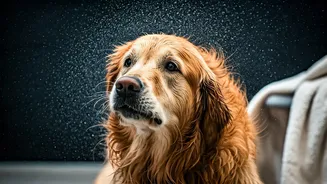
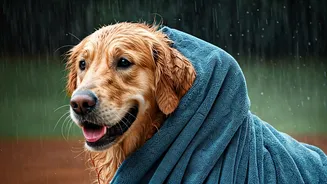
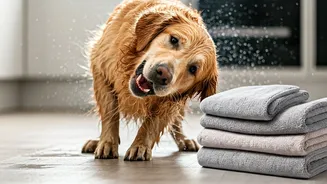
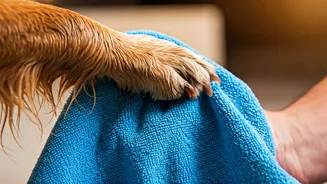
A damp coat is more than just a precursor to a wet dog smell; it can also lead to skin issues. The first step is a thorough towel dry. Instead of rubbing vigorously, which can cause tangles and matting, press a highly absorbent microfiber towel firmly against your dog's fur. Blot and squeeze the water out, working from the head down to the tail. For dogs with thick or double coats, a towel dry might not be enough. A pet-specific blow dryer, which uses forced air rather than high heat, is an excellent investment to ensure the undercoat gets completely dry. If your dog is nervous around dryers, start on the lowest setting and use positive reinforcement.
Don't Forget Skin and Coat Health
Consistently damp fur creates a warm, humid environment that is a perfect breeding ground for bacteria and yeast. This can lead to painful skin infections known as acute moist dermatitis, or 'hot spots'. Thoroughly drying your dog after every wet walk is one of the best preventative measures you can take. Pay extra attention to their belly, armpits, and ears—areas where moisture loves to hide. Regularly brushing your dog helps to remove debris, prevent mats that trap moisture, and allows air to circulate through their coat, keeping their skin healthy. If you notice persistent redness, itching, or a foul odour, it's always best to consult with your veterinarian.
Invest in the Right Gear
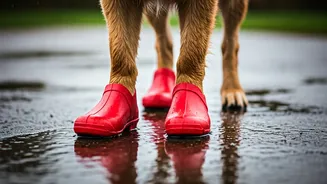
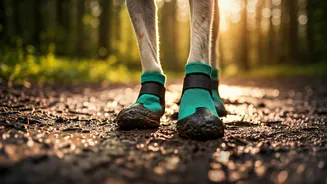
The right equipment can make post-walk cleanups significantly easier. Waterproof coats and booties for your dog can drastically reduce the amount of water and mud they bring inside. A paw wax or balm applied before a walk can act as a barrier against water and irritants. Inside the home, having a supply of super-absorbent microfiber towels is a must. These towels absorb more water than standard bath towels, speeding up the drying process. For deep cleans, having a no-rinse foaming cleanser or a mild, dog-safe dry shampoo on hand can be useful for spot-cleaning a muddy belly or legs without needing a full bath.