

The Lithium-Ion Bottleneck
For years, the electric vehicle revolution in India has felt like a party with a very exclusive guest list. While EV adoption is growing, high upfront costs keep them out of reach for a majority of buyers. The primary culprit is the battery pack, which
can account for 40% or more of an EV's total cost. These batteries rely on lithium-ion (Li-ion) chemistry, a technology that depends on materials like lithium, cobalt, and nickel. Not only are these materials relatively scarce, but their supply chains are often concentrated in a few countries, leading to price volatility and geopolitical risks. India's heavy dependence on imports for these cells and their core components has made it difficult to bring down the cost of entry-level electric cars, scooters, and three-wheelers, creating a significant barrier to mass adoption.
Enter Sodium-Ion: The Cheaper Cousin
Sodium-ion (Na-ion) battery technology operates on a principle very similar to its lithium-ion counterpart but with a crucial difference: it uses sodium, the same element found in common salt. Sodium is over 300 times more abundant in the Earth's crust than lithium and is distributed far more evenly across the globe, including in India. This fundamental advantage in raw material availability directly translates to a lower cost. When produced at scale, sodium-ion batteries are projected to be 20-40% cheaper than their cheapest Li-ion equivalents. Furthermore, they can be manufactured using much of the same infrastructure as Li-ion batteries, which significantly lowers the barrier to entry for production. This shift from a scarce, imported resource to an abundant, domestic one is the key to unlocking a new era of affordability.
Performance vs. Price
Of course, the lower cost comes with trade-offs. The most significant is energy density. Sodium-ion batteries currently store less energy per kilogram compared to Li-ion batteries. A typical Na-ion cell might have an energy density of around 160 Wh/kg, whereas common LFP lithium-ion cells can reach over 200 Wh/kg. In practical terms, this means a shorter driving range for a battery of the same weight. However, Na-ion technology shines in other areas. It offers superior safety, with better thermal stability and a lower risk of fire. These batteries also perform exceptionally well in extreme temperatures, retaining much of their capacity in cold weather, a known weakness of many Li-ion chemistries. They also promise fast charging capabilities, making them highly practical for daily use.
India's Atmanirbhar Opportunity
The development of sodium-ion technology aligns perfectly with India's 'Make in India' and 'Atmanirbhar Bharat' (self-reliant India) ambitions. Several Indian companies are making significant strides in this space. Conglomerates like Reliance Industries, through its acquisition of UK-based Faradion, and tech firms like KPIT Technologies in Pune are pioneering Na-ion solutions. Startups such as Indi Energy are even developing cathodes from agricultural waste, creating a truly circular and sustainable domestic supply chain. Recent government reports confirm that Indian researchers have brought the technology to a high level of maturity (TRL 7), putting it on a two-to-three-year path to mass commercial production. This domestic push not only promises to reduce EV costs but also enhances India's energy security by lessening its reliance on foreign supply chains.
Cheaper Commutes, Not Cross-Country Trips
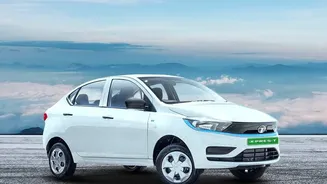
So, what does this mean for the Indian consumer? Initially, you shouldn't expect sodium-ion batteries to power long-range, premium electric SUVs. Due to the energy density limitations, their sweet spot is in the entry-level market. Think city-centric compact cars, electric scooters, and commercial three-wheelers, where a range of 150-250 km is more than sufficient for daily needs. For this massive segment of the market, the lower battery cost is a game-changer, potentially making EVs cheaper to buy than their petrol-powered counterparts even without subsidies. The focus is not on replacing lithium-ion everywhere, but on providing a cost-effective, safe, and reliable solution for the millions of commuters who form the backbone of Indian mobility.