




The Reusable Rocket Revolution
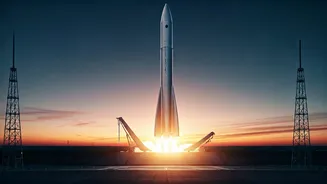
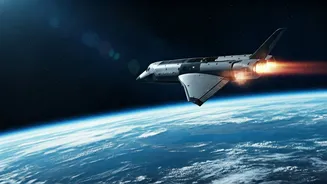
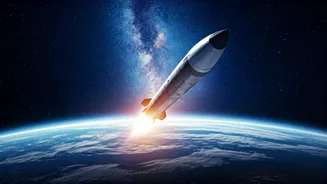
The single biggest change has been the advent of reusable rockets, pioneered by companies like SpaceX. [8] For most of history, launching a rocket was like flying a plane once and then throwing it away. [8] By designing rockets whose most expensive parts
can return to Earth, land themselves, and be prepared for another flight, the economics of space access have been fundamentally altered. [2, 3] This has dramatically slashed the cost of sending payloads to orbit, with prices per kilogram dropping from tens of thousands of dollars to just a few thousand. [13, 5] This cost reduction is the primary engine making the new space economy possible, allowing more companies and even startups to access space. [13]
A 'Mega-Constellation' of Possibilities
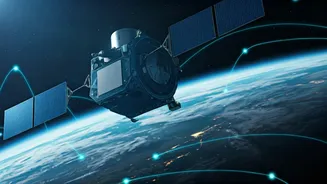
The most visible impact of cheaper launches is the deployment of 'mega-constellations'—thousands of small satellites working together in low-Earth orbit (LEO). [4, 18] Companies like SpaceX's Starlink and Amazon's Project Kuiper are building these networks to provide high-speed internet to nearly every corner of the globe, including remote and underserved regions in India and around the world. [4, 6] This is challenging traditional telecom providers and bridging the digital divide. [6] Beyond internet, these constellations are enabling new services, from advanced Earth observation that monitors climate and agriculture to direct-to-device connectivity that could eliminate mobile dead zones entirely. [19, 31]
India's Private Sector Takes Flight
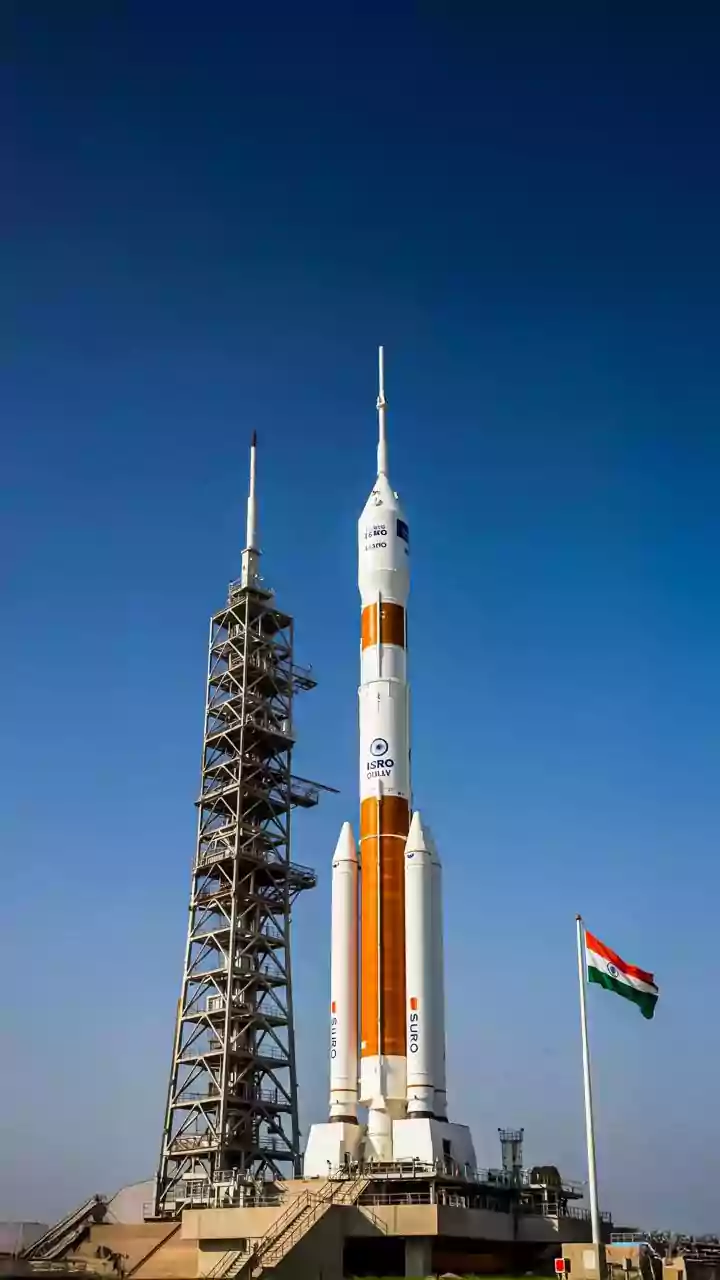
India is rapidly emerging as a major player in the commercial space race. Following government reforms that opened the sector to private participation, the country has seen a massive boom, with over 400 space startups now active. [9, 28] In May 2026, a series of breakthroughs from companies like Skyroot Aerospace and Agnikul signalled that India's private space industry is moving from a supporting role to a strategic and commercial force. [20] The Indian government is further accelerating this by planning to transfer technology from its reliable PSLV rocket to private firms, aiming to make India a global hub for small satellite launches. [21] With projections showing India's space economy could reach $44 billion by 2033, the country is poised for significant growth. [9]
The Next Frontier: Commercial Space Stations
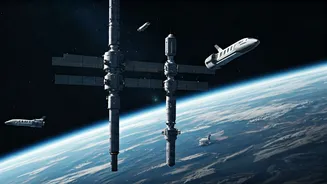
With the International Space Station (ISS) scheduled for retirement around 2030, a new race is on to build its successors—this time, owned and operated by private companies. [7, 11] Firms like Vast, Axiom Space, and Blue Origin are developing their own orbital outposts. [11, 22] NASA plans to shift from being a landlord in orbit to being a customer, buying services from these commercial stations. [7] These platforms will serve as hubs for in-space manufacturing of things like pharmaceuticals and semiconductors, microgravity research, and even space tourism, creating a self-sustaining economy in low-Earth orbit. [15]
Challenges on the Horizon
This rapid expansion is not without its challenges. The proliferation of thousands of new satellites has raised serious concerns about the growing problem of space debris and the increased risk of orbital collisions. [10, 12] Astronomers are also concerned about light pollution from these constellations interfering with observations of the universe. [14] As space becomes more crowded, there's a growing need for better space traffic management and international regulations to ensure the long-term sustainability of orbital activities. [10, 12]