



The Challenge: Man, Machine, and Mountain
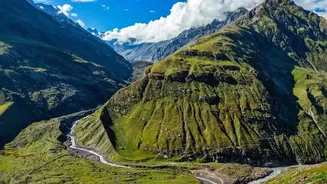
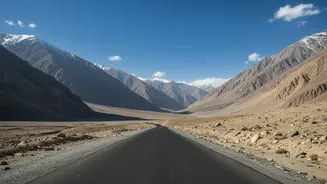
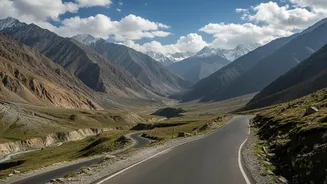
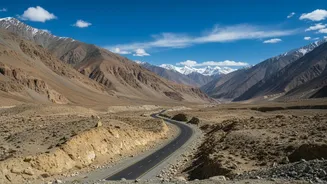
Traversing the Manali-Leh highway is not just a drive; it's an expedition. Spanning nearly 500 kilometres, the route crosses some of the world's highest motorable passes, where the air thins and civilization fades. This is a landscape that tests both
human endurance and mechanical resilience. The primary challenges are twofold: the physiological stress of high altitude on your body and the immense strain on your vehicle. The critical insight many first-timers miss is that these two challenges are not separate. Instead, they are deeply interconnected, creating a potential domino effect where a single failure in one area can trigger a cascade of problems in the other.
The Unseen Enemy: Altitude Sickness
Acute Mountain Sickness (AMS) is a real and present danger on the Manali-Leh run, where you ascend rapidly to altitudes well above 3,500 metres. Caused by the body struggling to adapt to lower oxygen levels, AMS symptoms often mimic a bad hangover: headache, nausea, dizziness, and extreme fatigue. In this state, your judgement is impaired, your physical coordination suffers, and your ability to perform even simple tasks plummets. It’s not just a matter of discomfort; severe AMS can progress to life-threatening conditions. The 'climb high, sleep low' principle is vital, as is gradual acclimatization, staying hydrated, and avoiding alcohol.
How Your Vehicle Feels the Altitude
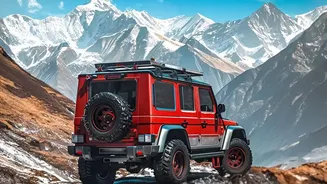
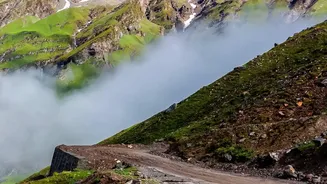
Your car or motorcycle feels the altitude, too. The thin air that makes you breathless also starves your engine of the oxygen it needs for efficient combustion, leading to a noticeable drop in power and performance, especially on steep climbs. Mileage can decrease by 20-30%. Cold temperatures at night, especially at stopovers like Sarchu or Pang, can drain batteries and make cold starts difficult. Furthermore, the rugged terrain, with its sharp stones, unpaved sections, and numerous water crossings, puts immense stress on tyres, suspension, and the vehicle's underbody.
The Vicious Cycle of Sickness and Breakdowns
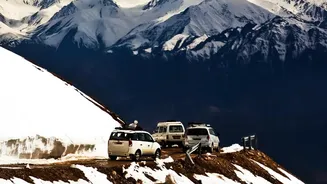
Here's where the two problems converge into a dangerous cycle. Imagine your vehicle breaks down—a common puncture or a dead battery—on a high pass like Tanglang La (5,328m). Now you are stranded. Instead of passing through, you are forced to remain at an extreme altitude for an extended period, significantly increasing your risk of developing or worsening AMS. Now, flip the scenario. What if you are already suffering from a pounding headache and dizziness from AMS when your tyre goes flat? Your ability to diagnose the problem, let alone perform the physically demanding task of changing a tyre in the cold, thin air, is severely compromised. A minor mechanical issue can quickly escalate into a serious emergency when the driver or rider is physically unwell and their decision-making is clouded by altitude sickness.
The Two-Pronged Plan for Success
A successful Manali-Leh trip requires a holistic preparation strategy. For your body, this means planning an itinerary with adequate acclimatization stops (like Jispa), staying relentlessly hydrated, and consulting a doctor about preventative medication. Rushing the journey in two days is a common and dangerous mistake. For your vehicle, preparation is just as crucial. A thorough service several weeks before the trip is non-negotiable. This includes checking brakes, coolant, battery health, and clutch plates. An SUV with high ground clearance is recommended. Essential items to carry include a reliable tyre inflator, a puncture repair kit, spare fluids, basic tools, and extra fuel in jerry cans, as pumps are scarce. Knowing how to perform basic repairs yourself is an invaluable skill when the nearest mechanic can be hundreds of kilometers away.