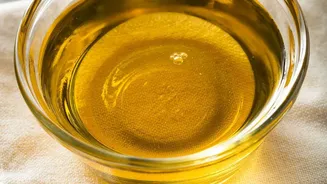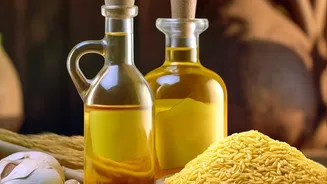







The Process: What is Cold-Pressed Oil?
Cold-pressed oil, often known as 'kacchi ghani' in India, is extracted using a traditional method. Seeds or nuts like mustard, groundnut, or sesame are crushed slowly under pressure without any external heat. This gentle, mechanical process ensures the
temperature stays low, preserving the oil's natural nutrients, antioxidants, rich flavour, and distinct aroma. Think of it as the most natural and unadulterated form of oil, where the essence of the seed is captured directly in the bottle.
The Alternative: Understanding Refined Oil
Refined oil undergoes a multi-step industrial process designed for high yield and a long shelf life. The extraction often involves high heat and chemical solvents, like hexane, to get the maximum amount of oil from the seeds. This is followed by processes like bleaching and deodorising, which strip the oil of its natural colour, odour, and flavour. The end product is a neutral, light-coloured oil with a higher smoke point, but this comes at the cost of its nutritional integrity.
The Nutritional Divide
When it comes to health, cold-pressed oils have a clear advantage. Because they are minimally processed, they retain vital nutrients like Vitamin E, antioxidants, and healthy fatty acids such as omega-3 and omega-6. These compounds are known to boost immunity and support heart health. Conversely, the high-heat refining process destroys most of these beneficial components. Some studies suggest refined oils can lose a significant amount of their antioxidant content, leaving behind a less nourishing product.
Smoke Point and Indian Cooking
A common argument for refined oil is its higher smoke point, making it seem better for high-heat cooking like deep-frying. While refined oils can withstand higher temperatures, many cold-pressed oils are perfectly suitable for daily Indian cooking. For tadkas, sautéing vegetables (sabzis), and making parathas, the temperatures generally stay within the range of cold-pressed oils like groundnut or mustard oil. For instance, cold-pressed groundnut oil has a smoke point of around 160°C, which covers most everyday cooking methods. It's important to remember that overheating any oil, regardless of its type, is detrimental to health.
The Right Oil for the Right Dish
In a versatile Indian kitchen, there is a place for different oils. For flavourful tadkas, slow-cooked dals, and marinades, the distinct aroma of cold-pressed mustard, sesame, or groundnut oil adds a wonderful dimension to the dish. Their robust character enhances traditional recipes. For deep-frying puris, samosas, or bhajiyas, where a neutral taste and high heat stability are often preferred, refined oils are a common choice. However, cold-pressed groundnut oil is also a traditional and excellent option for frying, lending a pleasant, mild nutty flavour. For drizzling over salads or chaat, nutrient-dense cold-pressed oils are undoubtedly the superior choice, as their full benefits are consumed without heating.
Flavour, Cost, and Making the Switch
Flavour is a key differentiator. Cold-pressed oils carry the authentic taste of their source, which can elevate a meal from good to great. Refined oils are intentionally neutral. There is also a cost difference; cold-pressed oils are generally more expensive due to lower extraction yields and a more labour-intensive process. However, viewing this as an investment in health and flavour can help frame the choice. You don't have to switch all your oils at once. Start by introducing one cold-pressed oil, like mustard or groundnut, for your everyday dals and sabzis to experience the difference in taste and aroma.