




The Official Freeze
On paper, the trade relationship between the two nuclear-armed neighbours is colder than ever. Following the Pulwama attack in 2019, India revoked Pakistan's 'Most Favoured Nation' (MFN) status and imposed heavy tariffs. Pakistan retaliated later that
year after India's revocation of Article 370 in Jammu and Kashmir, formally suspending most direct trade ties. Tensions escalated further following a terrorist attack in Pahalgam in April 2025, leading Pakistan to suspend all trade with India, including transactions routed through third countries. The Wagah-Attari border, the primary land route for commerce, was shut, bringing official bilateral trade to a near-complete halt. This deep freeze in trade relations reflects the persistent political hostility that has defined their relationship for decades.
The Surprising Surge in Imports
Despite the official bans, trade has found a way. Data from the State Bank of Pakistan shows a significant and growing flow of goods from India. In the first quarter of the 2026-27 fiscal year (July-September 2026), Pakistan's imports from India reached $61.74 million, a staggering 69% increase from the $36.55 million recorded in the same period a year prior. This trend indicates not just a persistent demand for Indian products but a thriving, albeit complicated, commercial channel operating under the radar of political rhetoric. Interestingly, during this same period, Pakistan's exports to India were virtually zero, highlighting a one-way flow of goods that underscores Pakistan's specific economic needs.
The Third-Country Route
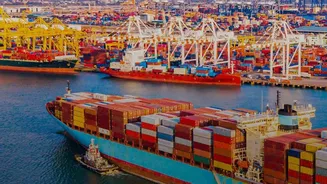
So, how are these goods crossing the border? The answer lies in geography and logistics. A significant portion of the trade is being rerouted through third countries, with Dubai emerging as a primary hub. Indian goods are shipped to ports in the UAE, and sometimes Singapore or Sri Lanka, where they may be repackaged or have their documentation altered before being re-exported to Pakistan. This 'grey-zone' trading strategy allows businesses to bypass direct restrictions. While it keeps supply chains moving, it adds significant costs and complexity. Goods that could travel a short distance over a land border are instead journeying thousands of kilometres by sea, incurring higher freight and handling charges.
Economic Need Over Political Will
The driving force behind this persistent trade is pure economic necessity. Pakistan's reliance on India is most pronounced in the pharmaceutical sector. For the 2025-2026 fiscal year, organic chemicals and pharmaceutical products accounted for over 96% of Pakistan's imports from India. India is a globally competitive producer of Active Pharmaceutical Ingredients (APIs), the essential building blocks for manufacturing medicines. For Pakistani pharmaceutical firms, sourcing these materials from India is a matter of cost, quality, and proximity. Importing them from alternative markets in Europe or East Asia could increase costs by 40-50%, a burden that would ultimately be passed on to consumers. This reliance makes the pharma trade a critical lifeline that even severe political fallout has not managed to sever.
The View from the Business Community
While politicians maintain a hard line, Pakistan's business community is increasingly vocal about the economic damage caused by the trade suspension. The Pak-India Business Council estimates that the country has suffered economic losses of around $40 billion since 2019 due to the trade halt. Business leaders argue that restoring direct trade would slash import costs not just for pharmaceuticals but also for textiles, agriculture, and other industrial products. They point to the inefficiency of importing goods from distant countries when a more economical source is right next door. This sentiment is echoed by a 2025 survey showing that 44% of Pakistanis favour boosting trade with India, suggesting a public appetite for economic pragmatism over political conflict.