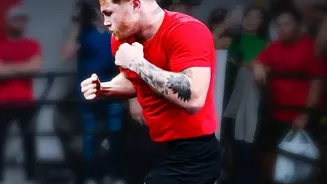




Shadow boxing is one of the most accessible and effective full-body workouts you can do at home. But to unlock its true fitness potential, you need to look past the punches and focus on your foundation: your feet.
Why Footwork Is Your Fitness Foundation
When you see a boxer shadowbox, it's easy
to focus on their flying fists. But the real engine of the workout is happening from the ground up. Proper footwork is what transforms shadow boxing from simply waving your arms into a high-intensity cardiovascular exercise that engages your entire body. Every step, pivot, and weight shift forces your core to stabilize, your legs to generate power, and your mind to stay engaged. Good footwork improves your balance, agility, and coordination, burning significantly more calories and building functional strength that translates beyond your workout. It ensures that you remain balanced and stable, turning a series of movements into a fluid, rhythmic, and powerful routine.
Finding Your Stance: The Starting Point
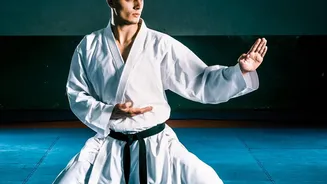
Before you can move, you need to know how to stand. A solid boxing stance is your home base, providing both stability and readiness. Start with your feet about shoulder-width apart. If you are right-handed (orthodox), your left foot will be in front. If you are left-handed (southpaw), your right foot leads. Your lead foot should point slightly inward, while your rear foot is angled out at about 45 degrees. Keep your knees slightly bent and your weight evenly distributed, but stay light on the balls of your feet, not flat-footed. Your rear heel should be slightly off the ground, ready to push off. This athletic position keeps you balanced and ready to move in any direction instantly.
Mastering Basic Movements
Once you have your stance, focus on two fundamental movements: the step-drag and the pivot. The step-drag is for moving forward, backward, and side-to-side. The golden rule is to move the foot closest to the direction you want to go first, and then slide the other foot to reset your stance. For instance, to move forward, step with your lead foot, then drag your rear foot. To move left, step with your left foot, then drag your right. The pivot is for changing angles. Keeping your weight on the ball of your lead foot, rotate your body, allowing your rear foot to swing around to a new position. Practicing these movements slowly builds the muscle memory needed for fluid motion.
Simple Drills to Get You Moving
Now, let’s combine footwork with simple punches. The goal is to synchronize your hands and feet.
First, try the 'Jab and Step'. From your stance, as you throw a jab with your lead hand, step forward with your lead foot. The punch should land at the same moment your foot does. Then, step back to your starting position. This teaches you how to control distance.
Next, practice the 'Box Drill'. Imagine a small square on the floor. Step forward along one side, then shuffle right along the next, step backward, and finally shuffle left to return to your starting point. You can add a jab with each forward or lateral step. This drill is excellent for developing movement in all directions while maintaining your stance.
Common Mistakes to Avoid
As a beginner, it's easy to fall into a few common traps that can throw you off balance and limit the effectiveness of your workout. The most frequent mistake is crossing your feet. Your feet should never cross, as this completely breaks your stability. Another pitfall is being 'flat-footed'. Staying on the balls of your feet is essential for quick, agile movement. Many people also make the mistake of taking steps that are too large, which is inefficient and can leave you vulnerable. Finally, avoid the temptation to look down at your feet. Keep your chin tucked and your eyes looking forward, as if at an imaginary opponent. Practicing in front of a mirror can be a great way to spot and correct these errors in real time.