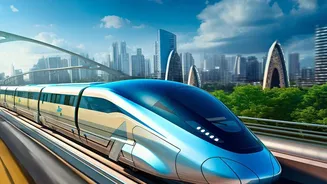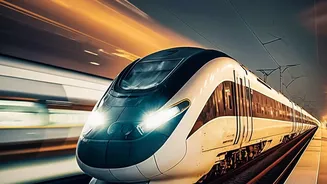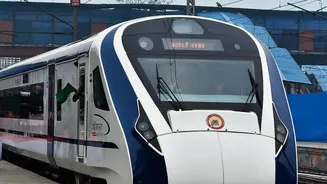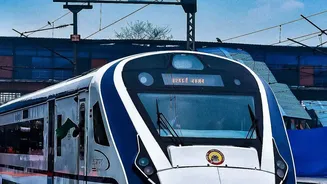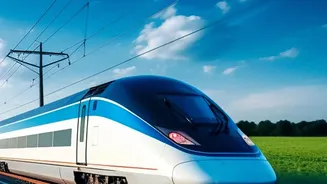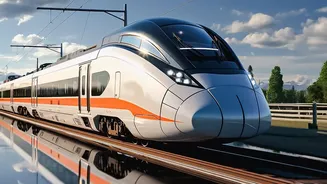



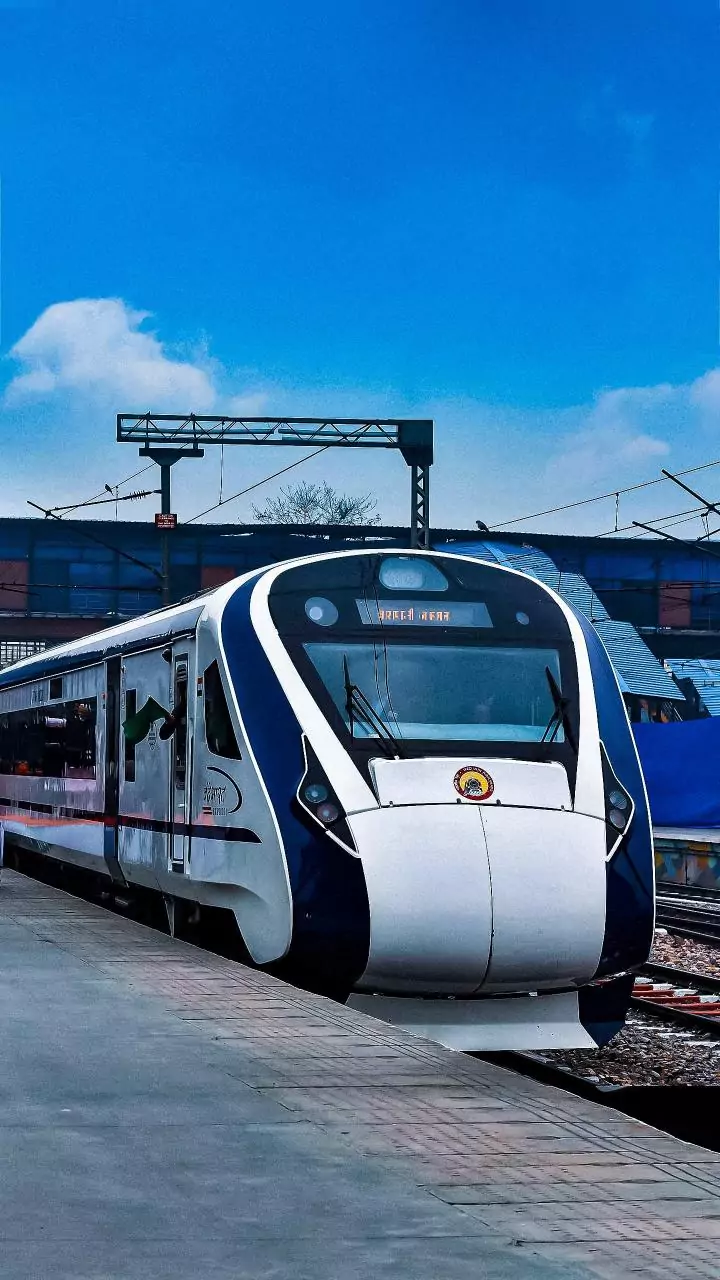
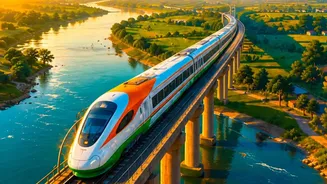


India's high-speed rail dream is fast approaching reality. The nation's first bullet train service is slated to commence in the final quarter of 2027, with the crucial Surat to Vapi section in Gujarat becoming the inaugural route.
The First Step in a 508-Kilometre Journey
The operational launch
of the Surat-Vapi section is the first phase of the ambitious 508-kilometre Mumbai-Ahmedabad High-Speed Rail (MAHSR) project. This initial corridor in Gujarat was strategically chosen to showcase the capabilities of the new system and begin public service while construction continues on the more complex sections, particularly in Maharashtra. The focus is on a phased rollout, allowing the National High Speed Rail Corporation Limited (NHSRCL) to get trains running where the infrastructure is most advanced. Recent milestones include the energisation of the overhead electrical system on the 50-km Surat-Bilimora stretch, which is part of the larger Surat-Vapi section, paving the way for trials.
Construction Milestones and Trial Runs
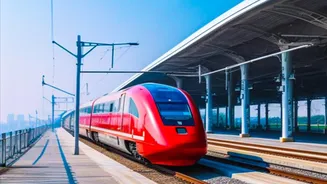
According to Railway Minister Ashwini Vaishnaw, the project is no longer just an announcement but a large-scale engineering feat taking shape on the ground. As of late 2026, significant progress has been made across Gujarat. Hundreds of kilometres of viaducts and piers have been constructed, and civil work on stations in the state, including Surat and Bilimora, is complete, with architectural finishing underway. Trial runs are expected to begin in mid-2027, specifically on the 50-kilometre Surat to Bilimora stretch. These tests will use an indigenously manufactured trainset, designed for speeds up to 280 kmph, which recently passed critical pressure tests to ensure its structural integrity at high speeds. Signalling work is targeted for completion by January 2027, setting the stage for these crucial trials.
The Technology Driving the Change
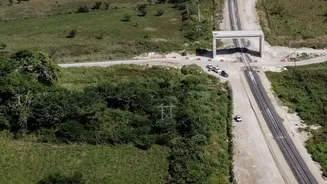
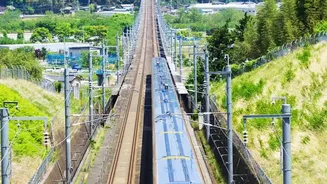
The MAHSR corridor is being built using Japan's renowned Shinkansen technology, known for its exceptional safety and punctuality record. However, the initial services will be powered by a 'Made in India' high-speed train. The corridor features an advanced 2x25 kV overhead traction system to power the trains, a technology standard for high-speed rail globally. The entire route, over 90% of which is elevated, is designed to eliminate level crossings and road interference, ensuring trains can operate safely at their top speed of 320 kmph. The project also includes India's first undersea rail tunnel, a 7-km stretch beneath Thane Creek in Maharashtra, which is currently under construction.
Economic Impact on the Industrial Corridor
The bullet train is expected to be more than just a mode of transport; it's envisioned as a catalyst for economic growth. By drastically reducing travel time, the corridor aims to create a single, unified economic zone connecting key industrial hubs like Mumbai, Surat, Vapi, and Ahmedabad. The full journey between Mumbai and Ahmedabad is expected to take just under two hours, a massive reduction from the current eight or nine hours by road. For the Surat-Vapi section, the project promises to enhance connectivity between two of Gujarat's most important industrial towns. This increased accessibility is anticipated to boost business, attract investment, and potentially influence real estate trends in areas surrounding the new stations.
Overcoming Challenges and Looking Ahead
The journey to 2027 has not been without its hurdles. The project faced significant delays, particularly in Maharashtra, due to challenges with land acquisition and the impact of the COVID-19 pandemic. This led to the strategic decision to launch the Gujarat section first. While the complete acquisition of land for the entire 508-km corridor is a major achievement, complex construction, including the undersea tunnel near Mumbai, remains ongoing. Following the Surat-Vapi launch in 2027, the line is expected to extend towards Thane by 2029, with the full Mumbai-Ahmedabad connection following as the remaining sections are completed. The 2027 launch, therefore, represents a critical first victory in a much larger national infrastructure mission.