



The Wake-Up Call from Chelyabinsk
For many, the threat of an asteroid impact feels like science fiction. But in February 2013, it became startlingly real. An asteroid, estimated to be just 20 metres across, entered the atmosphere over Chelyabinsk, Russia. It went undetected. Travelling
at immense speed, it exploded in the air with the force of approximately 500 kilotons of TNT—about 30 times the energy of the Hiroshima atomic bomb. The resulting shockwave shattered windows in thousands of buildings across six cities, injuring around 1,500 people, mostly from broken glass. The Chelyabinsk event was a dramatic demonstration that even relatively small space rocks, too small to cause an extinction-level event, can unleash immense destructive power and cause widespread harm. It underscored the critical need for detecting these objects before they find us.
A Global Planetary Defense Network
Protecting Earth from asteroids is not the job of one country, but a coordinated global effort. In the United States, NASA's Planetary Defense Coordination Office (PDCO), established in 2016, leads the mission to find, track, and characterize near-Earth objects (NEOs). Its European counterpart is the ESA's Planetary Defence Office. These organizations don't work in isolation. They are key members of the International Asteroid Warning Network (IAWN), a worldwide collaboration endorsed by the United Nations. This network includes observatories and space agencies from around the globe—including the Indian Space Research Organisation (ISRO)—that share data to get the most accurate picture of any potential threat. Another UN-endorsed group, the Space Mission Planning Advisory Group (SMPAG), brings space-faring nations to the same page to prepare for an international response if a credible threat is ever detected.
How to Spot a Cosmic Bullet
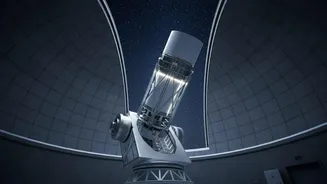
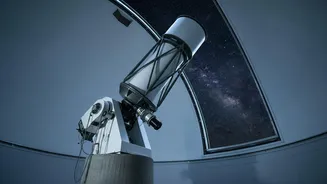
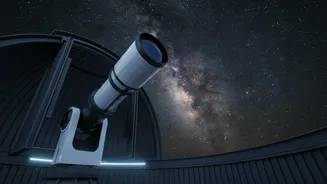
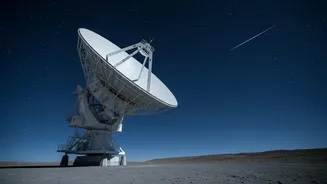
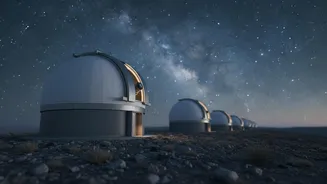
So how do scientists find these relatively small, fast-moving objects in the vastness of space? The primary method involves ground-based survey telescopes, such as the Catalina Sky Survey in Arizona and the Pan-STARRS in Hawaii. These observatories repeatedly scan large sections of the night sky. By taking a series of images minutes apart, automated software can detect faint points of light that move against the fixed background of stars and galaxies. Once a new NEO is detected, its position is reported to the Minor Planet Center, a global clearinghouse for these observations. Astronomers around the world then perform follow-up observations to track the object's path. Over time, these cumulative observations allow scientists to calculate the asteroid's orbit with increasing precision, predicting where it will be for decades to come. This helps them identify Potentially Hazardous Asteroids (PHAs)—those larger than 140 meters that come within 7.5 million kilometres of Earth's orbit.
From Detection to Deflection
Finding a hazardous asteroid is only the first step. The ultimate goal of planetary defense is to prevent an impact. For years, this was purely theoretical, but NASA's Double Asteroid Redirection Test (DART) mission changed that. In September 2022, the DART spacecraft deliberately collided with Dimorphos, a small moonlet orbiting the larger asteroid Didymos. Neither asteroid posed a threat to Earth. The mission was a resounding success, proving that a 'kinetic impactor'—essentially hitting an asteroid with a projectile—could successfully alter its trajectory. The impact changed Dimorphos's orbital period by 33 minutes, a much larger change than many scientists had expected. This real-world test provides humanity's first proven planetary defense technique. While there are no known significant asteroid threats on the horizon, the DART mission demonstrates that with enough warning, we have the capability to defend our planet.