





The Most Common Mistake
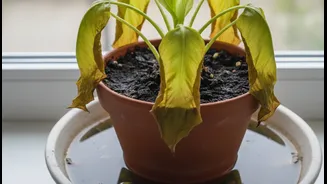
It’s the number one cause of houseplant death, a tragic end that comes from a place of love: overwatering. We see a wilting leaf and immediately assume thirst, but more often than not, the plant is actually suffocating. When soil is constantly saturated,
the air pockets that roots need to breathe disappear. This oxygen deprivation leads to a dreaded condition called root rot, where the roots turn brown, mushy, and can no longer absorb water or nutrients. Ironically, this is why an overwatered plant often looks thirsty—its damaged root system has stopped functioning.
Is It Too Much or Too Little?
The symptoms of overwatering and underwatering can look frustratingly similar. Both can cause yellowing, drooping leaves. So how do you tell the difference? It comes down to touch. An overwatered plant's yellowing leaves will feel soft and limp, and the soil will be soggy. You might also notice a musty, sour smell from the pot, a sure sign of rot. Other clues include mould on the soil surface, persistent fungus gnats, and stems that are soft at the base. In contrast, an underwatered plant’s leaves will feel dry and crispy. The soil will be visibly pulling away from the sides of the pot and feel light and dusty.
The Ultimate Test: Your Finger
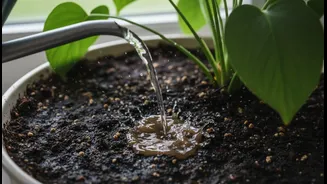
Forget rigid schedules like “water once a week.” The single most reliable way to know if your plant needs a drink is the finger test. Simply stick your index finger about two inches into the soil. If the soil feels dry at that depth, it’s time to water. If you feel any moisture, wait another day or two and check again. This simple habit accounts for changes in season, light, and humidity in your home, which all affect how quickly soil dries. In India's varied climate, a plant in a dry Delhi winter needs water far less frequently than one in a humid Mumbai monsoon. During the rainy season, you should significantly reduce watering as the air itself provides moisture.
Emergency Room: How to Save a Drowning Plant
If you suspect you've overwatered, you need to act fast. Gently remove the plant from its pot to inspect the roots. Healthy roots are firm and white or light tan; rotten roots will be brown or black, soft, and smelly. Using sterilised scissors, carefully trim away all the mushy, dead roots. Prune about a third of the plant’s leaves as well—with a smaller root system, the plant can’t support as much foliage. Dispose of the old, waterlogged soil and repot the plant in a fresh, well-draining potting mix. Crucially, use a pot with drainage holes. After repotting, wait a few days before watering lightly to let the roots recover.
Watering Smarter, Not Harder
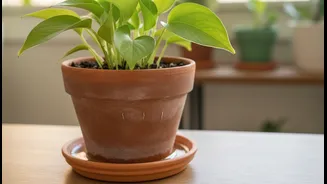
Prevention is always better than a cure. To set your plants up for success, always use pots with adequate drainage holes. If you love a decorative pot that has no holes, keep your plant in its plastic nursery pot and place that inside the decorative one; you can then easily remove it to water and drain. Consider "bottom watering," where you place the pot in a tray of water for about 20-30 minutes, allowing the soil to soak up exactly what it needs from the base. This encourages stronger root growth. Finally, pay attention to your water. Tap water in many Indian cities can be hard, leading to mineral buildup. Letting water sit overnight or using filtered water can make a big difference.