






Why Night Adds a New Layer of Danger
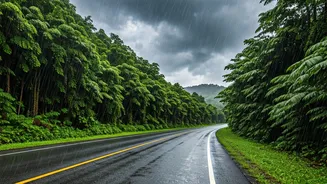
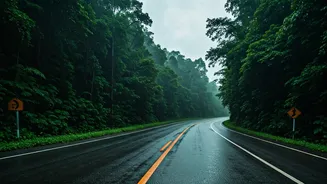
Driving in the rain is already challenging, but doing so at night introduces a host of compounded risks. [14] Visibility, already hampered by heavy downpours and fog, plummets after dark. [12] The glare from oncoming headlights reflects off wet roads,
making it difficult to see lane markings, potholes, or debris. [12, 19] Your reaction time is naturally slower in low-light conditions, and when combined with slippery roads that increase braking distances, the margin for error becomes dangerously thin. [6, 21] Many drivers underestimate this combination, turning a scenic drive into a hazardous ordeal. [20] If a trip isn't essential, the safest choice is often to postpone it until daylight. [14]
The Hidden Perils of Waterlogging
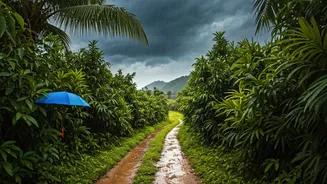
One of the most common monsoon hazards is waterlogging, and it's far more treacherous at night. [21] What might look like a shallow puddle can conceal deep potholes or even washouts capable of damaging your vehicle severely. [6, 21] It's nearly impossible to accurately gauge water depth in the dark. Driving through standing water risks your engine stalling from hydrostatic lock—a catastrophic failure that occurs when water enters the engine. [13, 26] It only takes about a foot of water to stall most cars, and two feet can sweep a vehicle away. [26] Authorities frequently advise against driving through flooded areas, a warning that is doubly important after sunset when visibility is minimal. [4, 22]
Landslides and Ghat Roads: A Treacherous Combination
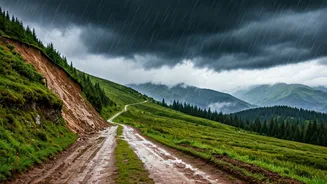
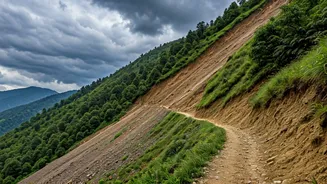
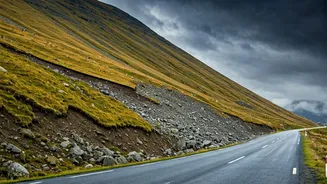
For those travelling in hilly or ghat sections, the risk of landslides increases dramatically during the monsoon, especially after sustained rainfall. [5, 18] Heavy showers can destabilise slopes, leading to falling rocks or entire sections of road giving way—dangers that are almost impossible to spot in the dark. [2, 8] Recent weather alerts for June 2026 highlight that areas along the Western Ghats and in the Northeast are particularly vulnerable. [8, 10, 15] Authorities often issue warnings for popular routes like the Mumbai-Pune Expressway and roads in Himachal Pradesh and Uttarakhand, sometimes closing them preemptively. [8, 9] An advisory from June 24, 2026, pointed to a red alert in the ghats near Pune due to extreme rainfall and landslide risk. [8] Travelling these roads at night means you might not see a fresh landslide until it's too late, and help could be hours away. [2]
The Risk of Being Stranded
Breaking down is an inconvenience on a normal day, but on a rainy night in a remote location, it can be a serious safety issue. The chances of getting timely roadside assistance are slim. You could be left stranded in an area with poor mobile connectivity, with the added dangers of continuous rain and potential flooding. [11] It is crucial to have an emergency kit, a fully charged phone, and a power bank. [3, 7] However, the best way to avoid this scenario is to avoid non-essential overnight travel altogether during the monsoon months.
Safer Alternatives and Golden Rules
The safest approach to monsoon travel is to plan your journey during daylight hours. Start early, plan for delays, and aim to reach your destination well before sunset. [2] If you must travel, stick to major highways, which are generally better maintained and have more traffic. [24] Always check the latest weather forecasts from reliable sources like the India Meteorological Department (IMD) before you leave and along your route. [2, 4] Inform a friend or family member of your travel plans and expected arrival time. If conditions worsen, don't take a chance—pull over and find a safe place to wait out the storm. [24] Sometimes, the best travel decision is knowing when not to travel at all. [14]