


First, Let’s Define ‘Day’ and ‘Year’
Before we dive into the Venusian paradox, let's get our terms straight. For any planet, a ‘year’ is the time it takes to complete one full orbit around its star. For Earth, that’s roughly 365 days. A ‘day’ is the time it takes for a planet to complete one full rotation
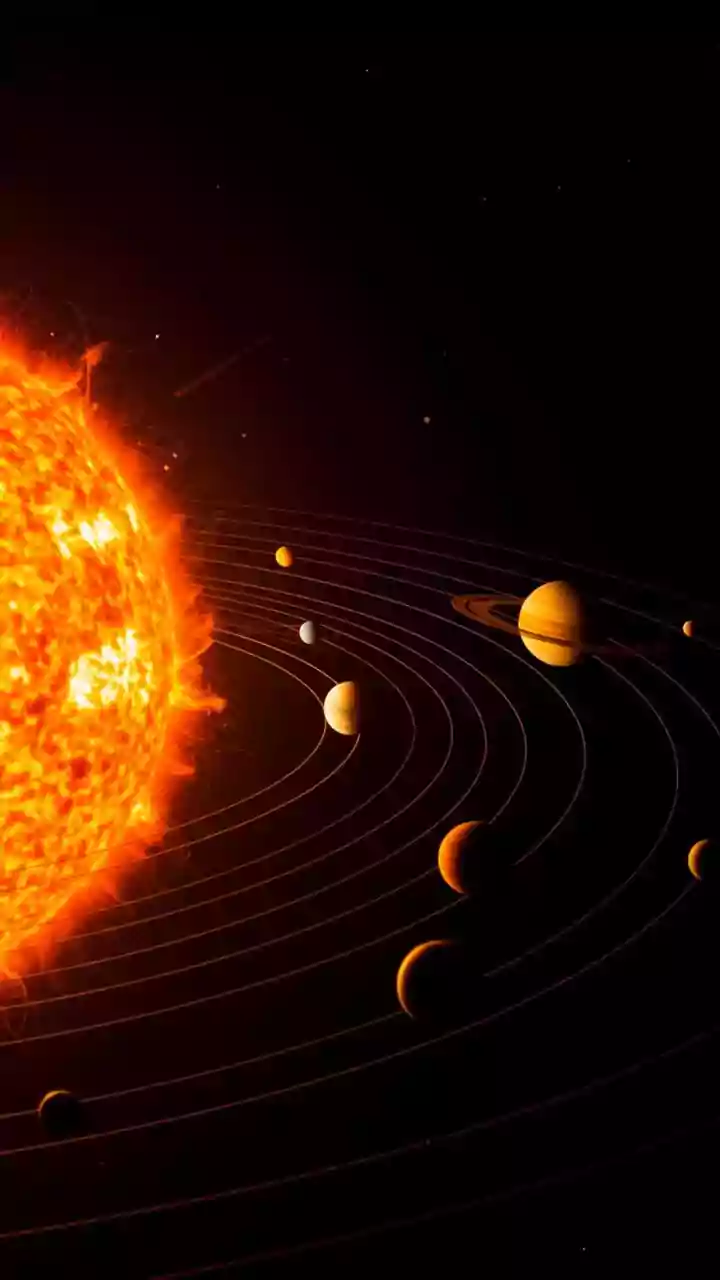
on its own axis. For Earth, that’s about 24 hours. These two motions—orbiting and spinning—are completely independent. Think of a spinning top gliding across a table. The time it takes to do a full spin is its ‘day,’ and the time it takes to cross the table is its ‘year.’ On Earth, the spin is much, much faster than the orbit, giving us hundreds of days in a single year. On Venus, the balance is wildly different.
The Bizarre Venusian Calendar
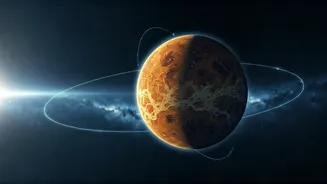
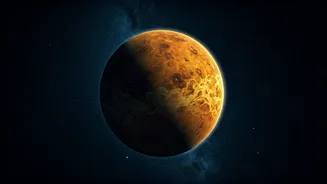
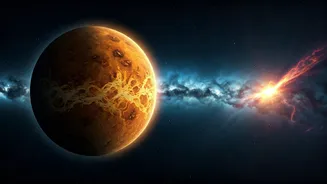
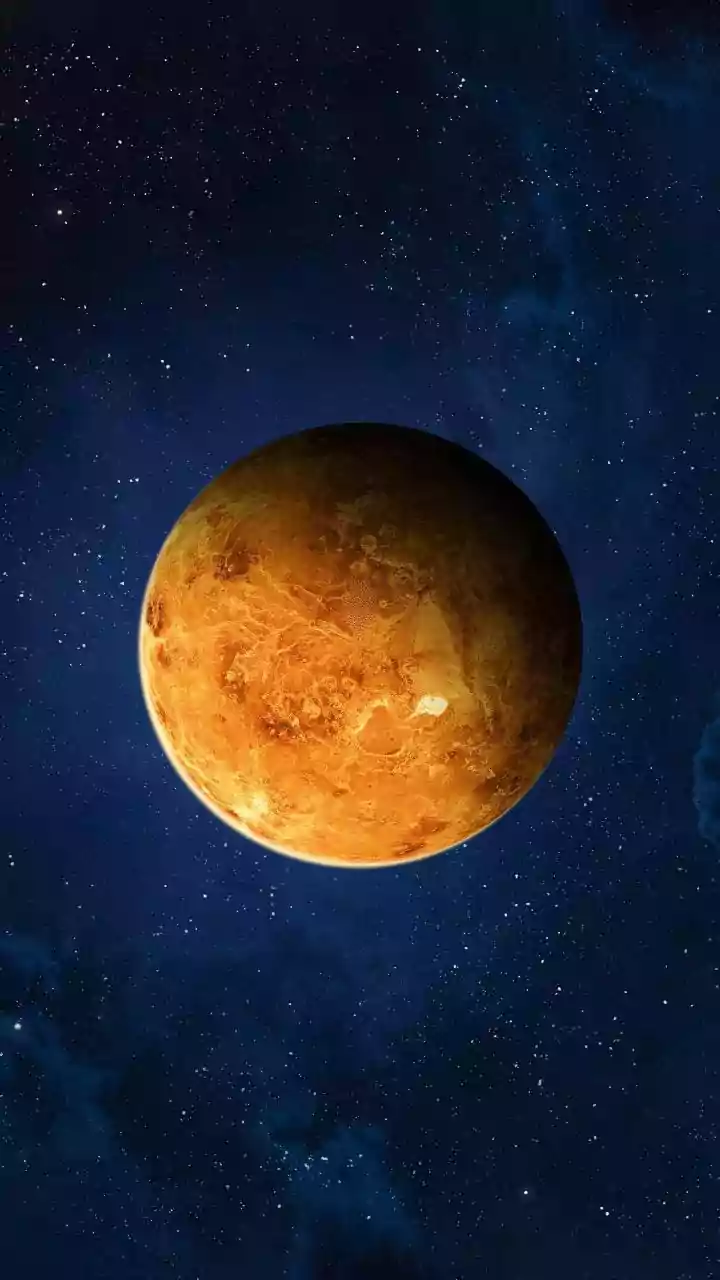
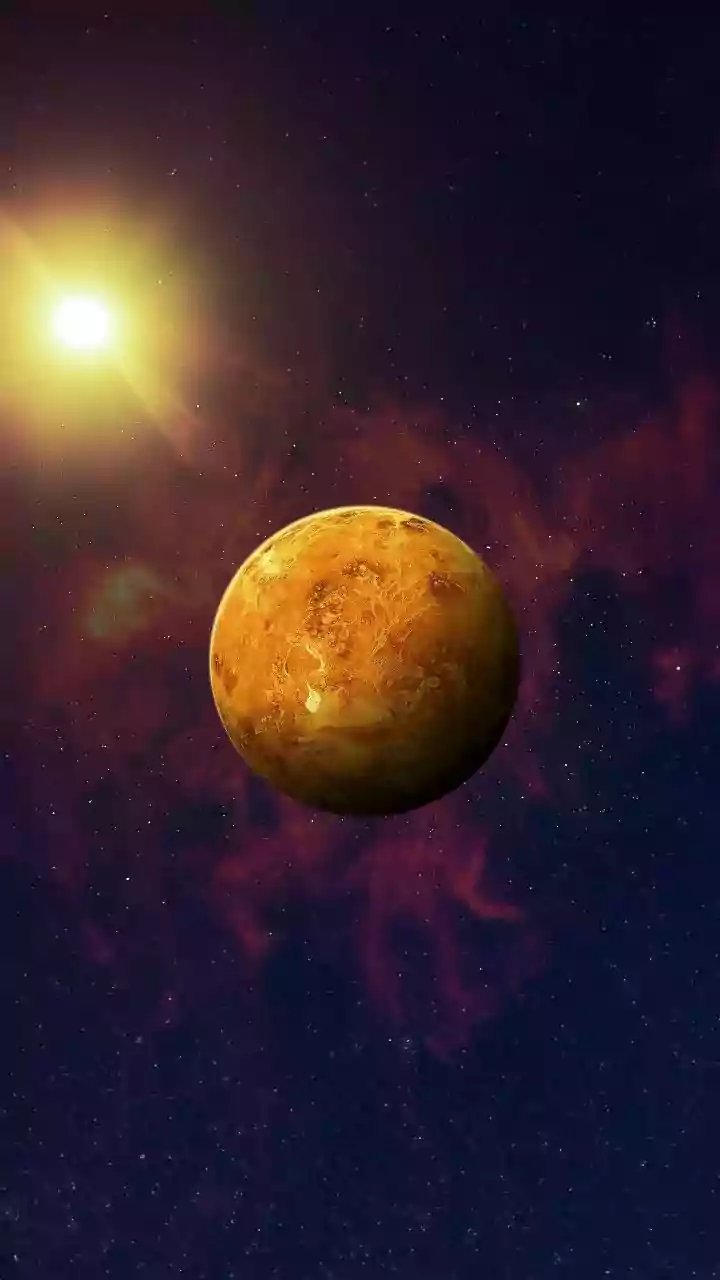
Here are the numbers that make Venus so strange. It takes Venus about 225 Earth days to complete one orbit around the Sun. So, one Venusian year is 225 Earth days long. No big deal so far. The shock comes from its rotation. Venus spins incredibly slowly. It takes 243 Earth days to complete just one rotation on its axis. So, a single Venusian day (243 Earth days) is longer than a Venusian year (225 Earth days). You would celebrate your first birthday on Venus before you’d even lived through a full day-night cycle. It’s the only planet in our solar system where this happens.
But It Gets Even Weirder: Retrograde Rotation
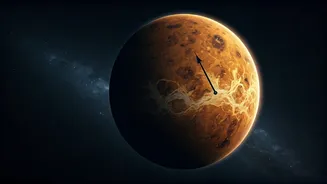
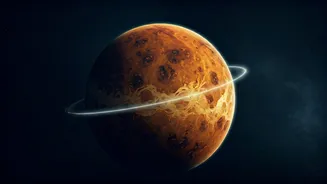
As if being the solar system’s slowest spinner wasn’t enough, Venus also spins backward. Almost every planet, including Earth, spins counter-clockwise on its axis (a prograde rotation). Venus spins clockwise, a motion known as retrograde rotation. Uranus is the only other planet with a similarly strange rotation, though it spins on its side. This backwards spin has a strange effect on the sun’s path. If you could stand on the surface of Venus (which you can’t, due to the crushing pressure and 460°C heat), you would see the Sun rise in the west and set in the east. It's the complete opposite of what we experience on Earth.
So, Why is Venus Like This?
Scientists don't have a single, confirmed answer, but there are two leading theories. The first involves a colossal impact. Early in its history, Venus may have been struck by a massive planet-sized object that was powerful enough to not just slow its rotation to a crawl, but to actually reverse it. Our own Moon is thought to have been formed by a similar giant impact with early Earth. The second theory suggests a more gradual process. Venus has an incredibly thick, dense atmosphere—about 90 times thicker than Earth’s. Over billions of years, the gravitational pull of the Sun on this heavy, churning atmosphere, combined with friction between the atmosphere and the planet’s surface, may have acted as a powerful brake, slowing Venus’s spin and eventually flipping its rotational direction.
What a Venusian ‘Solar Day’ Feels Like
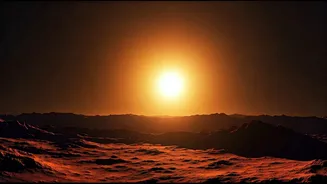
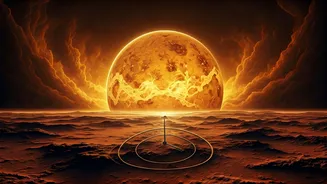
While a single rotation (a sidereal day) is 243 Earth days, the time from one sunrise to the next (a solar day) is different because of that backward spin. The slow backward rotation works against the planet's orbit around the Sun, resulting in a solar day that is ‘only’ 117 Earth days long. This means you’d have about two sunrises and sunsets for every Venusian year. Imagine a sunrise that lasts for nearly two Earth months, followed by a sunset of the same length. Days and nights aren’t just cycles; they are epic-length seasons of light and darkness, all taking place under a permanent, oppressive blanket of yellowish sulphuric acid clouds.