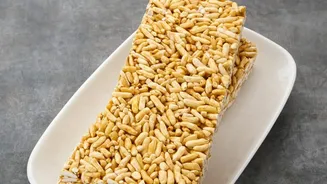







In the endless quest for a crunchy, satisfying, and healthy snack, two contenders often come to mind: traditional puffed ragi and the globally popular popcorn. But which one truly delivers on the nutritional front, especially when it comes to fibre?
The Snack Contenders
On
one side, we have puffed ragi, a snack derived from finger millet, an ancient grain making a huge comeback in Indian kitchens. For centuries, ragi has been a staple food, especially in southern India, valued for its resilience and nutritional density. On the other side is popcorn, a whole-grain snack that has become synonymous with movie nights and casual munching worldwide. Both are light, airy, and provide a satisfying crunch, but their nutritional profiles tell a different story.
The Main Event: Fibre Face-Off
Fibre is a crucial nutrient that aids digestion, helps manage blood sugar levels, and keeps you feeling full for longer. When it comes to this important macronutrient, popcorn takes a surprising lead. A 100-gram serving of air-popped popcorn contains a remarkable 14 to 15 grams of dietary fibre. Puffed ragi snacks, while still a good source, typically offer around 7 to 11 grams of fibre per 100 grams, depending on the brand and preparation. So, if your primary goal is to maximise fibre intake with a high-volume, low-calorie snack, plain popcorn is the clear winner.
Beyond Fibre: The Calorie and Protein Count
While popcorn wins on fibre, the battle gets more complex when we look at the bigger picture. In terms of calories, both are quite similar when prepared simply. Air-popped popcorn has about 387 calories per 100 grams. Puffed ragi snacks can range from 330 to 430 calories per 100g, often because they are lightly sprayed with oil for flavour. For protein, popcorn again has a slight edge with about 12 grams per 100g, compared to ragi puffs' 7 to 9 grams. However, ragi's protein is notable for containing essential amino acids like methionine, which are often lacking in other vegetarian diets.
Ragi's Micronutrient Advantage
This is where ragi truly shines and justifies its 'superfood' status. Ragi is a nutritional powerhouse when it comes to minerals. It is one of the best plant‐based sources of calcium, containing about $344mg$ per $100g$, which is essential for bone health. It is also rich in iron, which helps combat anaemia. Popcorn contains these minerals too, but in much smaller amounts. For instance, popcorn provides only about $7mg$ of calcium per $100g$. Ragi also has a lower glycemic index, meaning it releases sugar into the bloodstream more slowly, making it a better choice for managing blood sugar levels.
Preparation and Processing Matter Most
The healthiness of either snack is ultimately determined by how it's prepared. Air-'popped' popcorn with minimal salt is a very healthy, low-'calorie' option. However,' movie theatre or microwave popcorn loaded with butter,' oil,' and artificial flavourings can quickly turn into a high-'calorie,' high-'fat' indulgence. Similarly,' while traditional ragi can be puffed at home,' many commercial ragi puffs are roasted or lightly fried and seasoned,' which adds fat and sodium.' It is always important to read the nutrition label on packaged snacks to understand what you're truly consuming.