

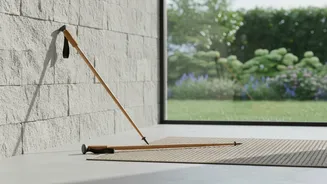
More Than Just a Stroll with Sticks
At first glance, you might mistake Nordic walking for hiking with poles. But it’s a distinct fitness technique with its own origin and purpose. Developed in Finland as a summer training method for cross-country skiers, Nordic walking uses specially designed
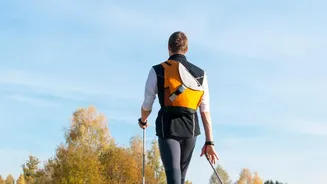
poles to turn a regular walk into a whole-body exercise. The key difference lies in the motion: instead of planting the poles in front for stability, you use them to propel yourself forward, mimicking the movement of skiing. This technique actively engages your upper body with every stride, which is where its unique advantage lies. While regular walking primarily uses muscles below the waist, adding Nordic poles activates muscles all over the body.
The Full-Body, Upper-Body Advantage
The simple act of pushing off with the poles activates a remarkable number of muscles that a normal walk misses. Studies show that Nordic walking engages 80% to 90% of your body's muscles, compared to just 50% with regular walking. This has a profound impact on your upper body. With each arm swing and pole plant, you are working your chest, triceps, biceps, shoulders, and back muscles, including the lats and traps. It also provides a consistent core workout, as your abdominal muscles work to keep you stable. This translates into improved posture, functional strength for daily activities like carrying groceries, and a toned upper body—all while simply going for a walk.
Burn More Calories, Not More Time
Engaging more muscles means your body has to work harder, which boosts your heart rate and calorie burn significantly. Research shows that Nordic walking can increase calorie expenditure by anywhere from 18% to over 45% compared to walking at the same pace without poles. One study found that 30 minutes of Nordic walking could be equivalent to 50 minutes of conventional walking in terms of effort. What’s particularly appealing is the concept of the “perceived exertion gap.” Many people report that while their body is working much harder and burning more calories, it doesn’t feel significantly more difficult than a brisk walk. This makes it a highly efficient way to get more cardiovascular benefit from the time you already dedicate to walking.
A Practical and Accessible Fitness Solution
Perhaps the biggest reason for Nordic walking's shift into everyday fitness is its accessibility. It's a low-impact activity, and the poles help distribute weight, reducing stress on the knees, hips, and back. This makes it an excellent choice for people with joint concerns, varying fitness levels, and all age groups. You don’t need a special facility; a local park, neighbourhood streets, or walking trail will do. The poles provide extra stability, which can boost confidence for those worried about balance on uneven surfaces. It’s a workout that adapts to you, whether you’re looking for a gentle walk or a high-intensity fitness session. This blend of effectiveness and practicality is what makes it a sustainable long-term fitness habit.
Getting Started: Poles and Basic Technique
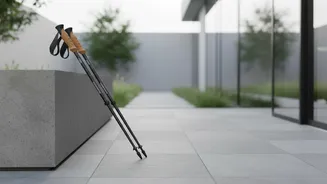
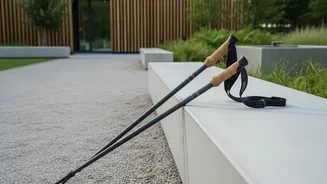
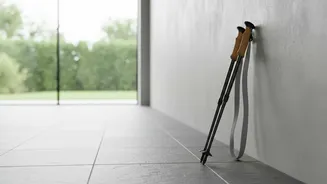
Starting is simple, but choosing the right gear is important. Look for poles specifically designed for Nordic walking, not trekking poles, as they have a different design and strap system meant for propulsion. Poles can be made of lightweight aluminum or even lighter carbon fiber, and many are adjustable, which is great for beginners or for sharing. The correct pole height is crucial; a general rule is that your elbow should be at a 90-degree angle when you hold the grip with the pole tip on the ground. The basic technique involves walking with a natural, long stride and an opposite arm-leg motion—as your left foot steps forward, your right arm swings forward to plant the pole. The pole should be planted at an angle behind you as you push off to propel yourself forward, opening your hand at the end of the push to maintain a fluid motion.