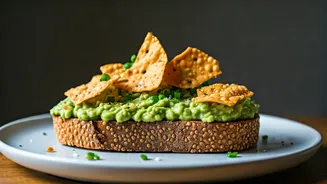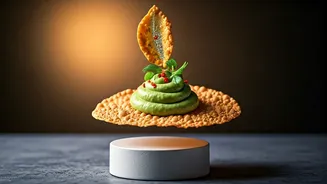






What is 'Papad Toast'?
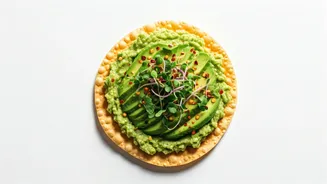
Scroll through your Instagram or TikTok feed, and you might see it: a perfectly roasted, crispy papad, no longer just a sidekick to a thali, but the star of the show. It’s being used as a crunchy, gluten-free base, much like a cracker or a slice of sourdough.
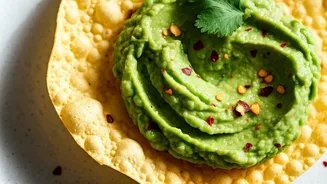
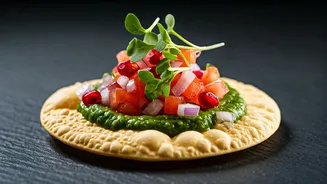
On top sits a generous smear of creamy mashed avocado, often garnished with everything we’ve come to associate with its trendy counterpart: a sprinkle of chilli flakes, a dash of lemon juice, some chopped onions, tomatoes, and perhaps a scattering of fresh coriander. Some creators are even adding a sprinkle of chaat masala for an extra desi kick. It's a collision of two worlds: the timeless Indian kitchen and the global brunch cafe.
The Humble Papad's Enduring Legacy
To understand why this trend is turning heads, one must appreciate the papad's place in the Indian culinary psyche. It is far more than just a wafer. Made from lentil, chickpea, or rice flour, the papad is a constant presence in homes across the country. It’s the quick, crunchy accompaniment to a simple dal-rice meal, the sun-dried summer project of grandmothers, and the reliable snack pulled out for unexpected guests. Whether roasted over an open flame until it blisters and curls or deep-fried to a golden crisp, its savoury, slightly salty flavour is pure comfort. It represents resourcefulness, tradition, and the simple joys of a home-cooked meal. It is, in its own way, a sacred part of our food heritage.
Enter the Global Icon: Avocado Toast
On the other side of this fusion is avocado toast, a dish that has become a global symbol of millennial and Gen Z culture. Once a niche health-food item, it exploded into a worldwide phenomenon over the last decade. It’s the poster child for wellness culture, the star of countless aesthetically pleasing brunch photos, and even a tongue-in-cheek reference in debates about economic anxieties. Its appeal lies in its simplicity, visual charm, and perceived health benefits. The creamy, mild flavour of avocado provides a perfect canvas for a variety of toppings, making it endlessly customisable. It represents modernity, global trends, and a certain kind of aspirational lifestyle.
A Match Made in Flavour Heaven
From a purely culinary standpoint, the combination makes perfect sense. The success of any great dish often lies in a contrast of textures and a balance of flavours. The papad provides an intensely savoury, earthy, and satisfyingly brittle crunch that a slice of bread often lacks. This crunch is the perfect foil for the rich, buttery smoothness of the mashed avocado. The papad's inherent saltiness also beautifully seasons the avocado, while the optional additions of onion, tomato, and chaat masala introduce the tangy, spicy, and fresh notes that are characteristic of Indian street food. It’s essentially a deconstructed, simplified chaat, borrowing the platform of a global food trend.
Creative Fusion or Cultural Cliché?
As with any fusion food, the papad-avocado toast has sparked a conversation. For many, it's a brilliant and creative evolution. It showcases the versatility of Indian ingredients and proves that our traditional foods can be adapted for a modern, global palate. It’s seen as a fun, low-carb, and gluten-free alternative that doesn’t compromise on flavour. However, others view it with a healthy dose of scepticism. The narrative of 'elevating' a traditional food with a Western ingredient can feel tired. Is the humble papad only considered 'cool' or 'trendy' when it's topped with avocado? It taps into a wider debate about culinary appropriation versus appreciation. The line is often blurry, but the conversation itself shows how deeply food is connected to our identity and cultural pride.