






The Loneliest Alarm Clock
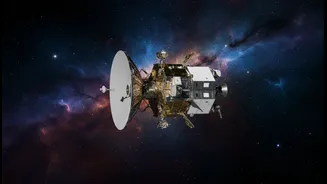
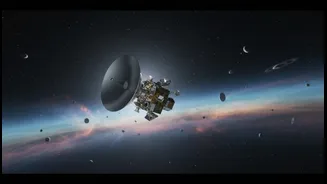
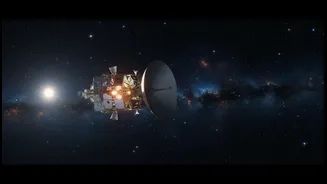
Imagine setting an alarm clock and not knowing if it went off until nine hours later. That’s the reality for engineers at the Johns Hopkins Applied Physics Laboratory who recently roused the New Horizons probe from a 321-day slumber. The spacecraft, famous
for its 2015 Pluto flyby, was placed in hibernation mode—a state of deep sleep where most non-essential systems are powered down—to conserve its limited nuclear battery and reduce operational costs during its long cruise through the Kuiper Belt. This practice is standard for long-haul robotic missions, allowing them to endure the vast, uneventful stretches between cosmic landmarks. The successful wake-up, triggered by commands sent months prior, confirmed the probe was in good health and ready for its next phase of scientific observation. While a remarkable feat of remote engineering, its true significance lies in the lessons it provides for a much bolder objective: sending humans beyond the Moon.
Lessons from a Distant Classroom
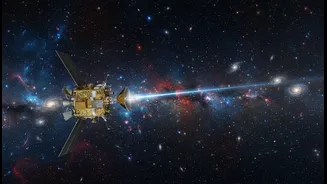
Operating spacecraft decades after their launch turns mission control into a unique kind of classroom. New Horizons, launched in 2006, and the legendary Voyager probes, which have been flying since 1977, are humanity’s longest-running experiments in hardware longevity. Every command sent and every piece of data returned teaches engineers invaluable lessons that cannot be replicated in a lab. They are learning how to manage degrading power systems, troubleshoot with software written by generations of since-retired programmers, and navigate extreme communication delays. In 2025, for instance, NASA engineers successfully fired up a set of Voyager 1’s thrusters that had been dormant for over two decades, a delicate procedure from billions of miles away that helped ensure the craft could keep its antenna pointed at Earth. These experiences build a crucial body of knowledge on how to design and operate systems that must function reliably for decades with no possibility of a physical repair mission.
From Robotic Naps to Human Slumber
The very concept of putting a spacecraft into hibernation is a direct precursor to a strategy being developed for future astronauts. For a human mission to Mars, which could take up to ten months each way, keeping a crew awake and active presents enormous challenges. They would require vast amounts of food, water, and oxygen, while also facing psychological strain and prolonged exposure to harmful space radiation. To solve this, scientists are developing “synthetic torpor,” a medical process to put astronauts into a hibernation-like state. This would dramatically reduce their metabolic rate, slashing resource consumption and shielding their bodies from some of the worst effects of deep space travel, such as muscle atrophy and radiation damage. Research suggests a hibernating crew would be healthier and more mission-ready upon arrival. Just as we power down New Horizons for its long journey, we may one day power down its human successors.
Engineering the Interplanetary Blueprint
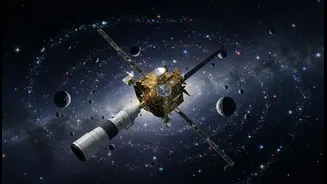
Successfully waking probes like New Horizons does more than prove old hardware still works; it validates the principles of deep-space hibernation, providing a blueprint for designing robust, autonomous systems for human exploration. Each successful cycle of dormancy and revival builds confidence in the ability to create life-support systems and spacecraft that can be reliably paused and restarted. The operational lessons from managing Voyager and New Horizons—from software patches to power management tricks—directly inform the fault-tolerance and redundancy required for a crewed Mars vessel. That spacecraft will need to be a self-sufficient habitat capable of weathering years in space, with systems that can enter a low-power state and awaken flawlessly when needed. The procedures being perfected today on these robotic pioneers are laying the essential groundwork for ensuring the safety of the first human pioneers to venture toward the Red Planet and beyond.