

The Foundation: A Fresh Banana Leaf and Rice
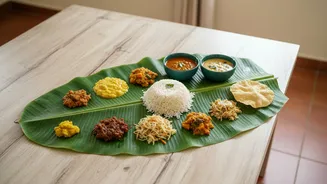
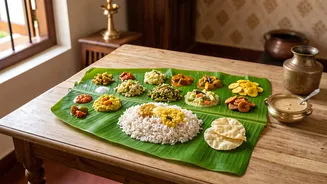
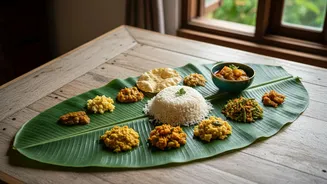
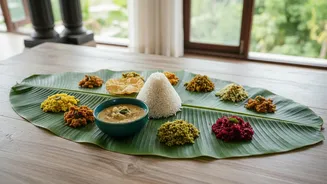
The Sadya experience begins with a banana leaf, or 'thooshanila', which serves as the plate. Traditionally, the tip of the leaf should point to the left of the guest. Not only is this eco-friendly, but the fresh leaf also imparts a subtle aroma when hot
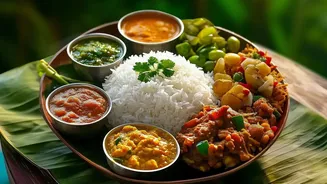
food is served on it. At the centre of the feast is rice, typically Kerala’s par-boiled red rice, known as Matta rice. It is served in the lower half of the leaf, leaving the upper portion for the multitude of side dishes. A small mound is served first, with more added as the meal progresses.
The First Course: Parippu and Sambar
The meal traditionally begins with a serving of Parippu, a comforting curry made from small gram or moong dal, which is topped with a spoonful of ghee. This is followed by Sambar, a quintessential South Indian lentil and vegetable stew seasoned with tamarind and a special blend of spices. It can be made with a wide assortment of vegetables and is a staple in any Sadya. These two dishes form the primary curry base over which the rest of the meal is built.
The Vegetable Ensemble: Avial, Thoran, and Olan
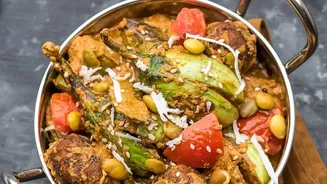
A Sadya is a showcase of vegetables, and a few dishes are absolute must-haves. Avial is a thick mixture of various vegetables, coconut paste, and yogurt, making it a rich and creamy preparation. Thoran is a dry stir-fry, often made with finely chopped vegetables like cabbage or beans, mixed with grated coconut. Olan provides a milder contrast, a delicate curry of ash gourd and cowpeas simmered in coconut milk. Together, these dishes represent a variety of textures and flavours.
The Sour and Savoury Sides
To balance the richness, tangy yogurt-based dishes are essential. Kalan is a thick, sour curry made with yam or raw banana and yogurt. Pachadi and Kichadi are similar yogurt-based sides; Pachadi is often sweeter, using ingredients like pineapple, while Kichadi is tangier. Another key component is Pulissery, a flavourful curry made from curd and a vegetable or fruit like mango or pineapple. These dishes cleanse the palate and add a refreshing sharpness to the meal.
The Accompaniments: Pickles and Crunch
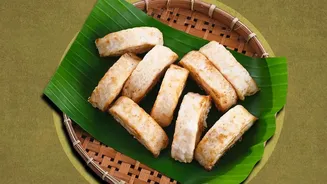
No Sadya is complete without its array of small but potent accompaniments. An assortment of pickles, or 'achar' (mango and lime are common), along with a sweet and tangy ginger-tamarind sauce called Puli Inji, are served on the upper left corner of the leaf. For crunch, there is Pappadam, a crispy wafer made from lentil flour, and banana chips—both the salted 'upperi' and the sweet jaggery-coated 'sharkara varatti'. A banana is also traditionally served.
The Sweet Finale: Payasam
The meal concludes with dessert, the much-awaited Payasam. A Sadya often features more than one type. Common varieties include Palada Pradhaman, made with rice flakes and milk, and Parippu Pradhaman, a richer version made with lentils, jaggery, and coconut milk. This sweet pudding is often poured directly onto the banana leaf, sometimes mixed with a crushed banana and pappadam for a unique blend of flavours and textures.
The Art of Serving and Eating
There is a specific order for serving the Sadya. Accompaniments like pickles and chips are placed on the top half of the leaf, starting from the left. The main vegetable dishes are served next to them. Rice is placed on the lower half. The meal is eaten in courses, starting with rice and parippu, moving to sambar, and then rasam, a thin, peppery soup that aids digestion. The meal traditionally ends with a glass of spiced buttermilk called Sambharam. The entire feast is designed to offer a balance of all six tastes: sweet, sour, salty, bitter, pungent, and astringent.