

What Am I Looking For?
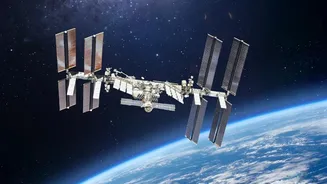
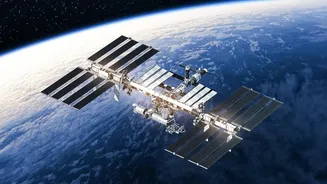
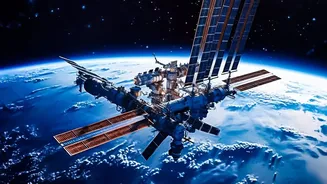
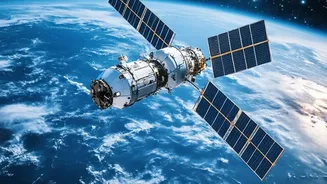
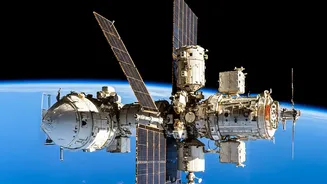
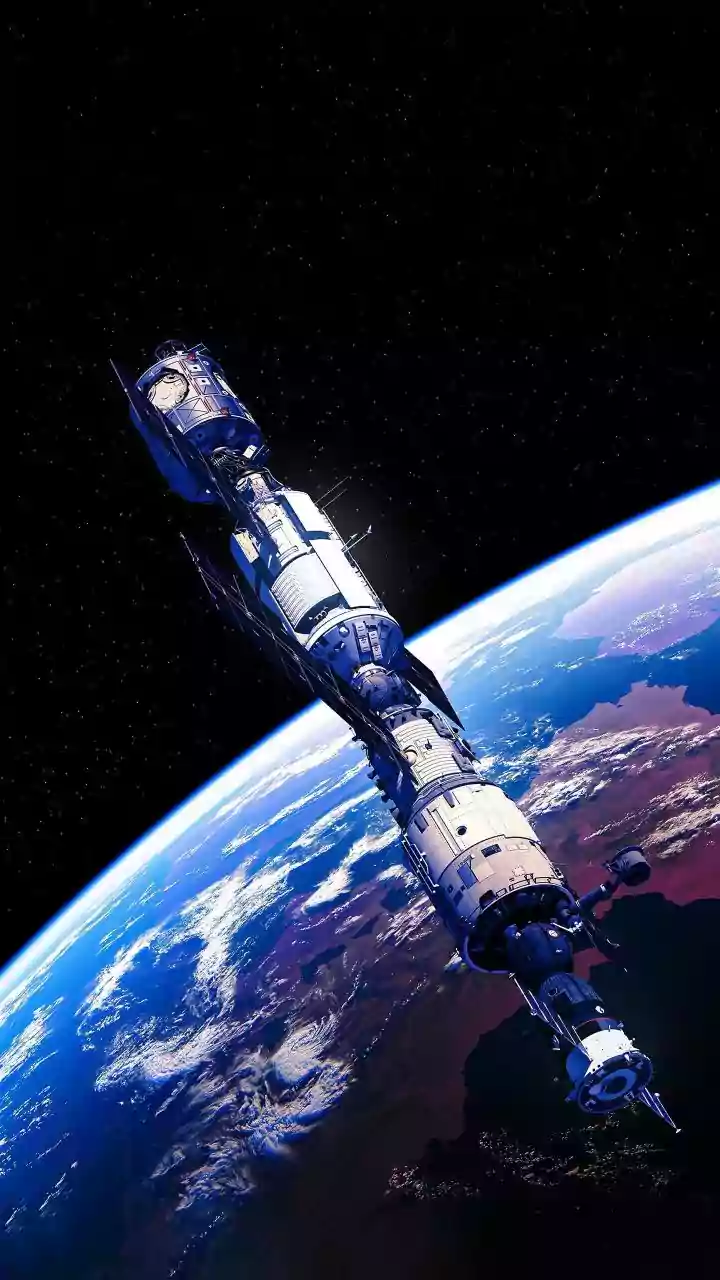
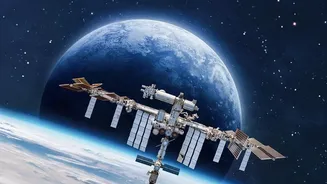
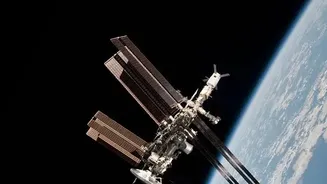
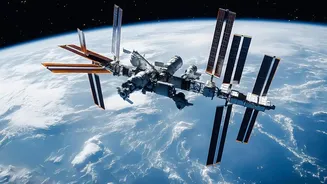
Forget what you think you know about spotting objects in space. The ISS doesn’t look like a distant, twinkling star. Instead, it appears as a very bright, steady point of light moving smoothly and quickly across the night sky. It looks like an airplane,
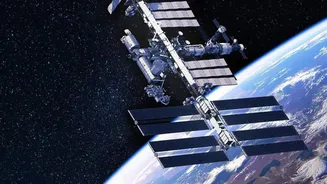
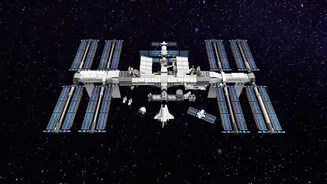
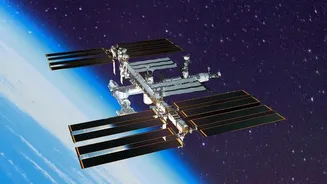
but it travels much faster and, crucially, it doesn't have flashing lights. Its brightness comes from its massive solar arrays reflecting sunlight back down to Earth. On a good night, the ISS can be the third brightest object in the sky, after only the Sun and the Moon, making it visible even from light-polluted cities.
Timing Is Everything
You can't just walk outside at any time and expect to see the ISS. The magic moments for spotting the station are in the hours shortly after sunset or before sunrise. This period is often called twilight. It’s the only time when it's dark enough on the ground for the sky to be clear, but the ISS, at its high altitude, is still bathed in sunlight. The station orbits the Earth about every 90-93 minutes, meaning it circles our planet around 16 times a day. However, it will only be visible from your specific location in India when its path, the lighting, and the time of day all align perfectly.
Essential Tools: Apps and Websites
The key to a successful sighting is knowing exactly when and where to look. Thankfully, several free and reliable tools do the hard work for you. The most popular is NASA's official "Spot The Station" website and app. You can sign up with your location—say, Delhi, Mumbai, or Bengaluru—and receive email or mobile alerts a few hours before a good viewing opportunity. Other highly-rated apps for both Android and iOS include ISS Detector and Heavens-Above. These apps not only provide precise times but often include a compass or an augmented reality (AR) view to help you point your phone at the sky and see the exact path the station will take.
Decoding the Sighting Alert
When you get an alert, you'll see a few key pieces of information. 'Time' is when the pass begins. 'Visible' tells you how long it will last, typically between three to seven minutes. 'Max Height' is crucial; it's measured in degrees and tells you how high the ISS will be from the horizon at its peak. A 90-degree pass means it will go directly overhead, while a 10-degree pass will be very low on the horizon. For city dwellers, higher passes are better as they are less likely to be obscured by buildings. 'Appears' and 'Disappears' will give you the compass directions (e.g., SW for southwest, NE for northeast) where the station will enter and exit your field of view.
Your First Sighting: A Step-by-Step Plan
Ready to give it a try? First, check the weather forecast; clear skies are essential. Once you have a viewing time from your chosen app, head outside about five to ten minutes early to let your eyes adjust to the dark. Face the direction listed under 'Appears' and simply watch. The ISS will emerge over the horizon at the specified time, looking like a bright star on the move. You can then track it with your naked eye as it glides across the sky for several minutes before vanishing into the Earth's shadow. The entire experience is a quiet, awe-inspiring moment.
Tips for Viewers in India
India's geographic location makes it an excellent place for ISS sightings. However, viewers in major metropolitan areas face the challenge of both light pollution and, during certain seasons, monsoon clouds. To improve your chances, try to find an open space like a park, a rooftop, or an area on the outskirts of the city with an unobstructed view of the horizon. While any time of year can offer good viewings, summer evenings generally provide a longer twilight window. Be patient, as some passes are brighter and higher than others, and a little planning can lead to a truly spectacular sight.