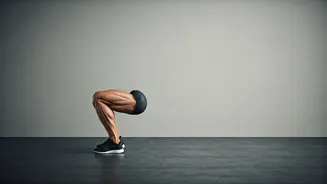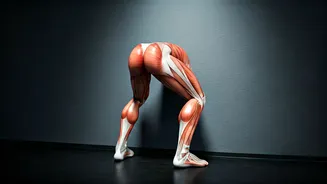





Why The Wall Squat Works
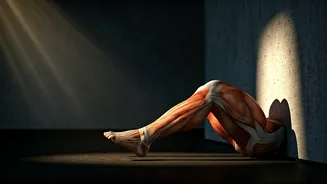
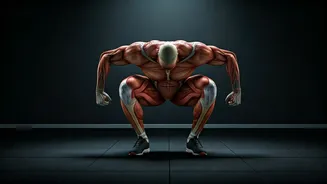
The wall squat is an isometric exercise, meaning you hold a static position for a set duration. Unlike dynamic exercises like running or jumping, isometric holds force your muscles to stay contracted, building muscular endurance and stability. This is particularly
great for the major muscles of your legs: the quadriceps (front of the thighs), hamstrings (back of the thighs), and glutes. Because it’s a low-impact exercise, it puts minimal stress on your knees, ankles, and back, making it a safe option for many fitness levels. All you need is a flat wall and a bit of determination. It’s the perfect move to slot into a busy day, whether you’re at home or taking a quick break at the office.
Your Step-by-Step Guide to Proper Form
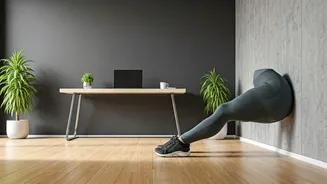
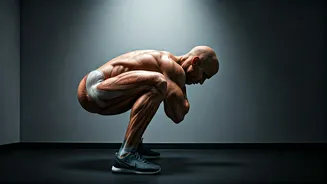
Executing the perfect wall squat is all about alignment. Poor form not only reduces the effectiveness of the exercise but also increases the risk of strain. Follow these steps to get it right: 1. **Find Your Position:** Stand with your back flat against a sturdy, smooth wall. Your feet should be shoulder-width apart and about two feet away from the wall. 2. **Slide Down:** Slowly slide your back down the wall until your thighs are parallel to the floor, as if you’re sitting in an invisible chair. Your knees should be directly above your ankles, forming a 90-degree angle. Never let your knees extend past your toes. 3. **Check Your Posture:** Keep your back, shoulders, and head pressed firmly against the wall. Engage your core by pulling your belly button in towards your spine. This helps stabilize your body and protect your lower back. 4. **Hold It:** Breathe steadily and hold this position. Your focus should be on keeping your thighs parallel to the ground and your form intact. You will feel your quadriceps start to burn—that’s a sign it’s working!
Common Mistakes to Avoid
To get the most out of your wall squats and prevent injury, watch out for these common errors. * **Sliding Too Low:** Going below parallel (where your hips are lower than your knees) can put unnecessary strain on your knee joints. Aim for that perfect 90-degree angle. * **Not Going Low Enough:** If your thighs aren’t parallel to the floor, you aren't fully engaging your muscles. If you can’t get that low yet, that’s okay—hold a higher position and work your way down over time. * **Letting Knees Cave In:** Keep your knees aligned with your feet. Allowing them to fall inward can stress the ligaments. Focus on pushing them slightly outward. * **Leaning Forward:** Ensure your entire back, from your shoulders to your lower back, stays in contact with the wall. Leaning forward takes the load off your legs and puts it on your back.
Conquering the Two-Minute Challenge
Holding a wall squat for two minutes is a significant fitness milestone that requires building up endurance. Don’t expect to nail it on your first try. The key is progressive overload. Start with a manageable goal, such as holding the squat for 30 seconds. Once you can comfortably hold it for three sets of 30 seconds with a short rest in between, increase your hold time. A good progression plan might look like this: * **Week 1:** 3 sets of 30-second holds. * **Week 2:** 3 sets of 45-second holds. * **Week 3:** 2 sets of 60-second holds. * **Week 4:** 2 sets of 75-second holds. Listen to your body. If the burn becomes a sharp pain, stop. Consistency is more important than hitting a specific number on any given day. Before you know it, that two-minute hold will be within your grasp.
Ways to Modify Your Squat
Once you’ve mastered the standard wall squat, you can add variations to keep challenging yourself. If you're just starting, you may need to make it a bit easier. * **To Make It Easier:** Don't slide down as far. Hold the squat at a 45-degree angle instead of 90 degrees. This reduces the load on your quads, allowing you to build strength gradually. * **To Make It Harder:** Add weight. Hold a dumbbell or weight plate on your lap. Alternatively, you can try a single-leg wall squat by extending one leg straight out in front of you while holding the position. Another challenge is to place a yoga block or ball between your knees and squeeze it to engage your inner thighs.