
The Challenge of Finding a Needle in a Haystack
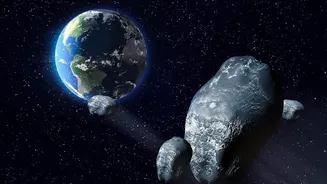
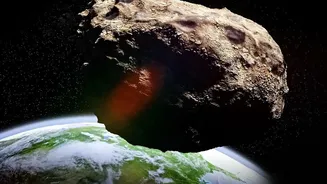
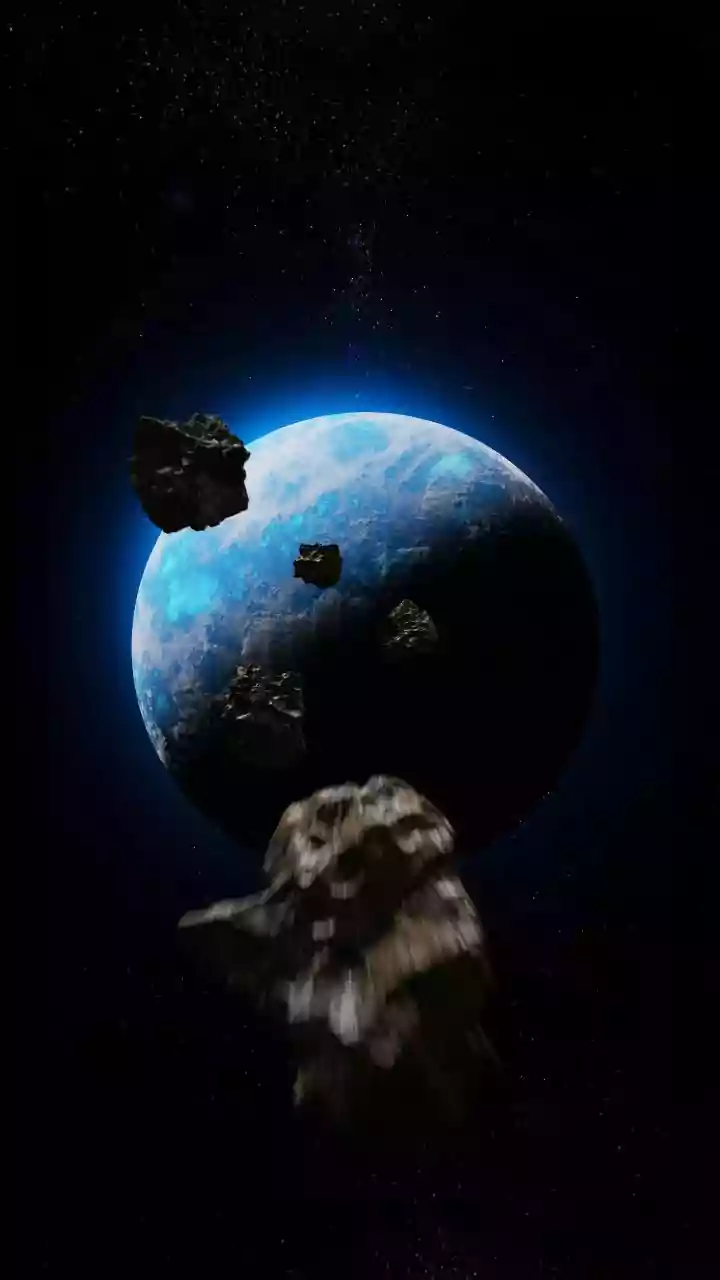
Detecting a near-Earth asteroid is incredibly difficult. These objects are often small, sometimes no bigger than a car, and they don't produce their own light. We can only see them because they reflect sunlight. But because they are often made of dark,
non-reflective rock and are millions of kilometres away, the amount of light that reaches our telescopes is astonishingly faint. This tiny trickle of photons is the 'faint light signal' that astronomers are hunting for. It’s like trying to spot a piece of coal from kilometres away using only the faint light it reflects. This is why simply having a powerful telescope isn't enough; you need a system designed specifically for this cosmic detective work.
The Eyes on the Sky
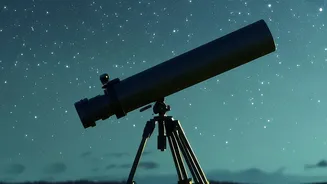
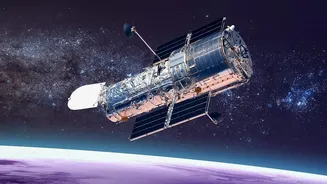
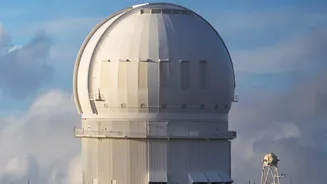
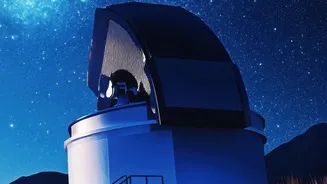
The hunt for asteroids is led by dedicated survey telescopes that act as our planet's early-warning system. Projects like the Catalina Sky Survey in Arizona and the Pan-STARRS observatory in Hawaii are at the forefront. These aren't like the Hubble, which stares intently at one small patch of sky. Instead, they are wide-field instruments designed to scan huge sections of the night sky over and over again. Pan-STARRS, for instance, can photograph the entire visible sky from its location multiple times a month. The strategy is to take a rapid series of images of the same area, typically just a few minutes apart. By doing this, astronomers create a time-lapse of the heavens, setting the stage to spot anything that moves.
Capturing Photons with Digital Precision
At the heart of these telescopes are massive digital cameras equipped with Charge-Coupled Devices, or CCDs. A CCD is a silicon chip divided into millions of light-sensitive squares called pixels. You can think of each pixel as a tiny bucket. As the telescope stares at the sky, photons (particles of light) from distant objects fall into these buckets. Brighter objects fill the buckets faster, while faint asteroids only contribute a few photons over the course of an exposure. Because CCDs are integrating detectors, they can accumulate light over time, allowing incredibly faint objects to become visible. Once the exposure is complete, the camera's electronics measure the charge in each bucket, converting the pattern of light into a detailed digital image.
A High-Stakes Game of Spot the Difference
With hundreds of images captured each night, it would be impossible for humans to check them all manually. This is where sophisticated software comes in. The process is essentially a digital version of the 'blink comparator' technique used in the 20th century. An algorithm takes the series of images from the same patch of sky and perfectly aligns them so that the background stars are stationary. The software then digitally 'blinks' between the frames, or subtracts one from another, to automatically flag any point of light that has moved. A fixed star will remain in the same place, but an asteroid, being much closer and orbiting the Sun, will have shifted its position between exposures. This moving dot is a potential asteroid candidate.
Confirming the Catch
Finding a moving dot isn't the end of the story. The software checks the object’s path against a massive database of all known asteroids and comets, maintained by the Minor Planet Center. If there’s no match, it could be a new discovery. At this point, alerts are often sent to other astronomers around the world—both professional and amateur—who conduct follow-up observations. These extra data points are crucial. With observations over several nights, scientists can precisely calculate the object's orbit and determine if it is indeed a near-Earth object. Systems like NASA's Scout can then analyze this trajectory to assess whether it poses any future impact risk to Earth.