

A Glimpse into Our Sun’s Future
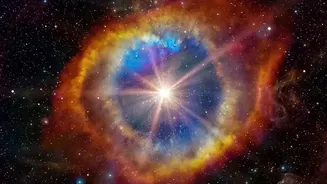
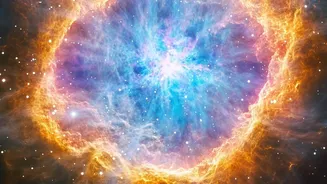
The Helix Nebula isn't just another pretty picture; it's a preview of our own sun’s distant fate. This celestial object is a planetary nebula, the glowing, expanding shell of gas shed by a star like our own at the end of its life. After exhausting its nuclear
fuel, the star cast off its outer layers into space. At the center of it all lies a white dwarf—the tiny, super-dense core left behind. This blazing stellar remnant unleashes intense radiation, lighting up the gas it previously expelled and creating the intricate structure we see. By studying the Helix Nebula, which is one of the closest planetary nebulae to Earth, astronomers get a front-row seat to the final act of a sun-like star, a process our own solar system will undergo in about five billion years.
What Webb’s New Image Reveals
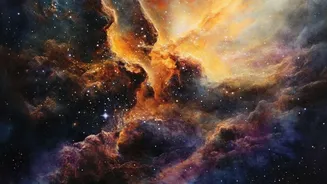
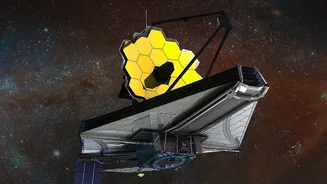
Previous telescopes, including Hubble, have captured the Helix Nebula’s ethereal beauty, but Webb’s infrared vision cuts through the haze to reveal stunning new details. The image, taken with Webb’s Near-Infrared Camera (NIRCam), focuses on the inner edge of the nebula's ring, highlighting thousands of previously unseen structures. Most striking are the countless comet-like knots—dense clumps of gas and dust, each with a mass comparable to Earth's, that are being sculpted by the forces at play. These aren't peaceful clouds drifting through space; they are the result of a violent collision. Webb's view brings these features into sharp focus, showing them as dense pillars with long, streaming tails pointing away from the central star.
The Science of a Cosmic Collision
The headline-making “stellar winds” are the key to understanding this new image. The central white dwarf is incredibly hot, unleashing a torrent of fast-moving gas, or stellar wind. This high-speed wind travels much faster than the gas the star shed in its earlier death throes. As the fast wind slams into the slower, cooler, and denser material, it creates shockwaves and carves the gas into the intricate filaments and knots that Webb has so clearly resolved. Think of it like a cosmic leaf blower hitting a pile of damp leaves—the force of the air sculpts the pile into complex streams and clumps. This process shapes the entire nebula, creating a dynamic environment where temperature and density change dramatically across small distances.
Infrared Vision and Cosmic Recycling
Webb’s power lies in its ability to see in infrared light, which is invisible to the human eye. This allows it to detect the cooler, fainter molecular gas that makes up much of the nebula's structure. The colors in Webb's image represent different temperatures and chemical compositions. Hotter, ionized gas closest to the star appears bluer, while cooler molecular hydrogen farther out is rendered in yellows and reds. These observations do more than just create a pretty picture; they help scientists understand a crucial part of the cosmic life cycle. The material shed by dying stars, enriched with heavy elements forged inside the star, gets blasted back into the galaxy. This recycled gas and dust will eventually clump together to form the next generation of stars and planets, making images like this a window into both a stellar death and a cosmic rebirth.