



An Enduring Solar Puzzle
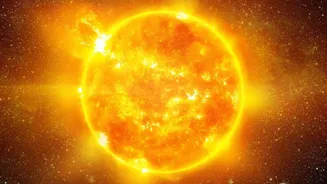
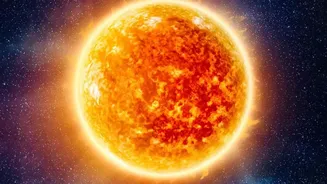
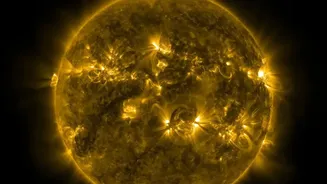
For nearly a century, astrophysicists have been stumped by a fundamental solar paradox. The surface of the sun, known as the photosphere, burns at a scorching but understandable 5,500 degrees Celsius. Logic dictates that temperatures should cool as you
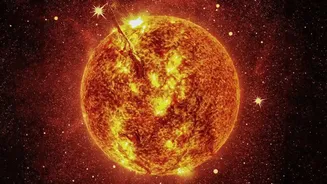
move away from this heat source. Yet, the sun’s outer atmosphere, the corona, blazes at a staggering one to two million degrees Celsius. This counterintuitive superheating, known as the coronal heating problem, has been one of the greatest unsolved mysteries in solar physics since it was first identified in 1939. How is energy bypassing the cooler surface to intensely heat the atmosphere far above it? Scientists have long suspected some unseen mechanism was at work, pumping energy upwards. Now, thanks to the world's most powerful solar telescope, they may have finally seen it in action.
The Elusive Twisting Wave
Recent observations have provided the first direct evidence of a specific type of magnetic wave known as a torsional Alfvén wave. First theorized in 1942 by Nobel laureate Hannes Alfvén, these waves are magnetic disturbances that travel through the sun's superheated, electrically charged gas, called plasma. You can think of them as vibrations traveling along the sun's magnetic field lines, much like a plucked guitar string. While larger, more dramatic waves have been seen before, usually linked to massive solar flares, this smaller, constantly twisting variety had remained hidden. Using the Daniel K. Inouye Solar Telescope in Hawaii, researchers were able to detect the subtle, corkscrew-like motion of these waves twisting the sun's magnetic field lines, a motion too faint to be seen directly in images but detectable by measuring how the plasma moves.
A Highway for Energy
The discovery of these ever-present, twisting waves is a game-changer because they appear to act as a persistent energy transport system. The observations show that even in the quietest regions of the sun, the corona is filled with these torsional Alfvén waves. They are seen constantly carrying energy upward from the sun's lower atmosphere into the corona. It's here, in the tenuous outer atmosphere, that the energy is believed to be released as heat. This process could provide the missing energy needed to explain the corona's extreme temperatures. The discovery helps validate decades of theory suggesting that waves and turbulence are responsible for heating the corona. It's as if scientists have finally found the hidden network of pipes feeding the solar atmosphere's furnace.
Why This Matters for Earth
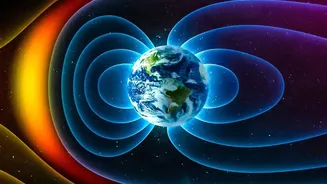
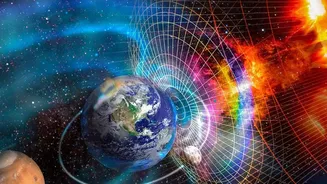
The coronal heating puzzle isn't just an academic exercise; it has profound practical implications for life on Earth. The same magnetic forces that heat the corona also power solar flares and coronal mass ejections (CMEs)—colossal explosions of plasma and energy from the sun. When aimed at Earth, these events create 'space weather' that can have serious consequences. Powerful solar storms can disrupt our satellites, jeopardise GPS navigation, cripple power grids, and interfere with vital communication systems. By understanding the fundamental processes of how energy is transported and released in the sun's atmosphere, scientists can build better models to predict these explosive events. Observing the mechanisms that transfer energy upward, like these newly seen waves, provides a crucial piece of the puzzle, potentially improving our ability to forecast dangerous space weather and protect our increasingly technology-dependent world.