





First, What Is a 'Terminal Kitchen'?
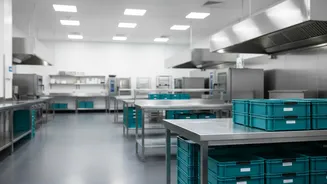
While you won't find "terminal kitchen" as an official category in most regulations, it's a term used to describe a crucial component of the modern food industry. Think of it as a central production hub. This includes cloud kitchens, also known as ghost
or dark kitchens, which exist solely for delivery orders without any dine-in facility. It also covers the large, centralized kitchens that prepare food or semi-prepared ingredients for a chain of restaurants or multiple brands operating under one parent company. These facilities are the backbone of many food delivery platforms and quick-service restaurant chains, preparing food at scale before it reaches smaller outlets or the final consumer.
The Old System: A Licensing Grey Area
Previously, the type of FSSAI license a food business needed was determined primarily by its annual turnover and geographical scope. Generally, businesses with a turnover between ₹12 lakh and ₹20 crore operated on a State License, while those exceeding ₹20 crore or operating in multiple states required a Central License. This created a grey area for terminal kitchens. A large central kitchen could be located in one state and supply dozens of outlets within that same state, all while potentially falling under the ₹20 crore threshold for a Central License. This led to regulatory ambiguity, where kitchens with a wide distribution network and significant impact on public health were governed by varied state-level rules rather than a single, unified standard.
The New Order: Shifting Focus to Business Model
The latest clarification from the Food Safety and Standards Authority of India (FSSAI) addresses this gap directly. The new directive shifts the focus from just turnover to the very nature of the operation. Now, any food business that prepares food and supplies it to other FSSAI-licensed outlets will likely fall under the purview of a Central License, regardless of its turnover or whether it operates in more than one state. This is a significant change. It means that if a kitchen functions as a supplier to other businesses—be they restaurant outlets, delivery-only brands, or other caterers—it is considered a large-scale operation deserving of central oversight. This aligns terminal kitchens with manufacturers and large processors who already require this level of licensing.
What This Means for Food Businesses
For many operators of cloud and central kitchens, this change will necessitate an upgrade from a State to a Central License. This involves a more comprehensive application process and adherence to stricter compliance and safety management systems. While this may increase initial paperwork and operational costs, it also offers substantial benefits. A Central License streamlines the process for national expansion, making it easier to open new outlets or supply partners across state borders without needing separate state-level approvals. Furthermore, holding a Central License is often a prerequisite for partnering with major food aggregators and can enhance a brand's credibility with investors and consumers alike.
A Clearer Path to Consumer Safety
Ultimately, this move is designed to bolster consumer confidence and food safety in the digital age. When a single kitchen is responsible for the food served across dozens of locations, any lapse in hygiene or quality control can have a widespread impact. Centralized licensing ensures that these crucial hubs are held to the highest and most uniform standards of food safety, from raw material sourcing to preparation and dispatch. For the average person ordering a meal online, this means better traceability and the assurance that the food, regardless of which brand or outlet it comes from, originates from a facility under stringent regulatory supervision. This builds trust in an industry where the kitchen is often out of the customer's sight.