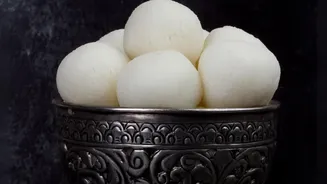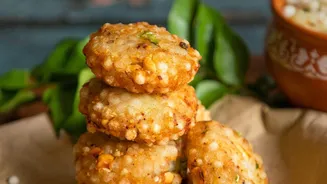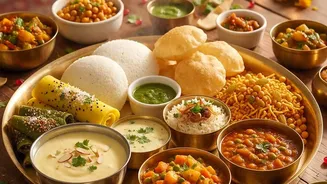



From the intricate folds of the ukdiche modak to the sweet, spiced filling of Puran Poli, Maharashtrian festive foods are an increasingly familiar sight across India. But how did these regional delicacies travel so far from their home state?
The Sweet Symbols of Celebration
At the heart
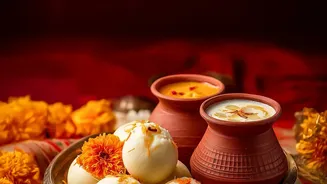
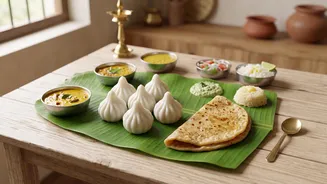
of this culinary expansion are two iconic dishes: the modak and Puran Poli. The modak, a steamed or fried dumpling with a sweet filling of coconut and jaggery, is famously considered the favourite sweet of Lord Ganesha. This mythological connection has made it an indispensable part of Ganesh Chaturthi celebrations. Puran Poli, a soft flatbread stuffed with a sweet lentil filling, is another festive staple, essential during Holi, Gudi Padwa, and, of course, Ganesh Chaturthi. Food historians note that these dishes are not just food; they are powerful cultural symbols. In Maharashtrian tradition, offering Puran Poli to a guest is a sign of great hospitality and respect, a sentiment that now extends to the deity during festivals. Their deep-rooted significance in some of India's most visible festivals laid the groundwork for their journey into the national consciousness.
A Journey Fueled by People
The most fundamental driver of this culinary migration, according to historians, is human migration itself. For centuries, Indian cuisines have travelled with people, and the spread of Maharashtrian food is no different. As Maharashtrians moved to other parts of India for education, work, and opportunity, they carried their food traditions with them. In cities like Bengaluru, Delhi, Chennai, and Hyderabad, these communities established cultural footholds. Initially, festive foods were prepared in homes, a way to maintain cultural identity and pass on traditions to the next generation. This created small, localised pockets of authentic Maharashtrian culture across the country. Over time, these home kitchens became the first point of introduction for neighbours and friends from different backgrounds, creating the initial sparks of curiosity and appreciation for these unique festive flavours.
The Ganesh Chaturthi Phenomenon
No single event has propelled Maharashtrian festive food onto the national stage more than the expansion of Ganesh Chaturthi. Originally a more regional festival, it was popularised as a large-scale public celebration in the 1890s to foster community. In recent decades, its popularity has exploded across India. As the festival travelled, its core culinary traditions travelled with it. The modak, as Lord Ganesha's symbolic sweet, became the festival's edible ambassador. The visual and devotional power of the festival, amplified by media and social media, meant that people from Gujarat to West Bengal began associating Ganesh Chaturthi with this specific delicacy. Food historians view this as a classic case of a festival acting as a cultural vehicle, carrying its associated foods to new and receptive audiences who wish to participate in the celebration authentically.
From Home Kitchens to National Retail
While migration and festivals planted the seeds, commercialization is what made Maharashtrian festive food truly accessible nationwide. What was once a complex, homemade preparation is now a commercial product. The sweets and snacks market in India is enormous, and Ganesh Chaturthi represents one of the biggest sales periods. Food businesses, from local sweet shops to large-scale FMCG companies, have capitalised on the growing demand. Today, you can find everything from ready-to-eat Puran Poli and packaged modak flour to frozen ukdiche modak in supermarkets far from Maharashtra. Restaurants specializing in Maharashtrian cuisine have also emerged in major metropolitan areas, offering festive thalis that give diners a complete cultural experience. This commercial availability has removed the barrier of complex preparation, allowing anyone, anywhere, to easily incorporate these dishes into their own festive celebrations.
A Story of Cultural Exchange
So,
how do food historians ultimately view this trend? Overwhelmingly,
they see it not as a dilution of regional identity,
but as a positive and natural evolution of a living culinary culture.
The story of Maharashtrian food's national journey is a story of adaptation and acceptance.
It mirrors the broader narrative of modern India,
where regional lines are blurring and a more integrated national palate is emerging.
The fact that a family in Kolkata can celebrate Ganesh Chaturthi with a modak,
or a household in Delhi can enjoy Puran Poli for Holi,
is seen as a sign of cultural enrichment.
It’s a testament to the idea that food is one of our most powerful tools for connection,
allowing us to share in the joy and devotion of traditions that may not have originated in our own homes,
but are now a welcome part of our collective festive landscape.