


The Sun’s Turbulent Temper
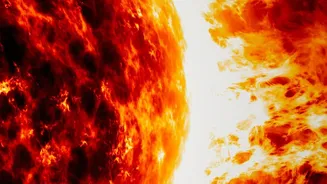
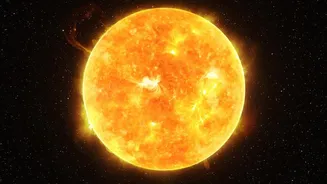
The Sun, our life-giving star, has a volatile side. It periodically unleashes enormous bursts of energy and matter known as space weather. The two main culprits are solar flares and coronal mass ejections (CMEs). A solar flare is an intense explosion
of radiation travelling at the speed of light, reaching Earth in about eight minutes. A CME is a much larger event, an explosive outburst of a billion tons of magnetised plasma from the Sun's corona, or outer atmosphere. These clouds of charged particles travel slower, taking one to four days to reach Earth, but their impact can be far more significant. During periods of high solar activity, which follow an approximate 11-year cycle, the Sun can produce multiple CMEs per day.
A Threat to Our Digital World
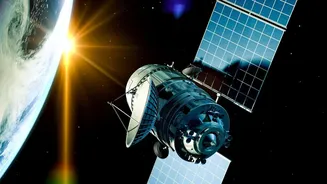
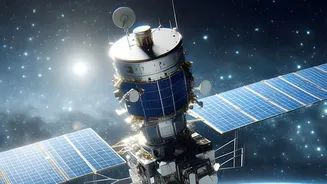
When a powerful CME collides with Earth's magnetosphere—our planet's protective magnetic shield—it can trigger a geomagnetic storm. These storms are not just responsible for beautiful auroras; they pose a severe risk to our technology-dependent society. They can induce powerful electrical currents in long conductors on the ground, potentially overloading and damaging transformers in power grids, leading to widespread and long-lasting blackouts. In space, the storm's energetic particles can damage satellite electronics, degrade solar panels, and increase atmospheric drag, causing satellites to lose altitude. This directly threatens the Global Navigation Satellite System (GNSS), including GPS, which is vital for everything from aviation and shipping to financial transactions. High-frequency radio communications can also be blacked out as the storm alters the Earth's ionosphere.
Our Vigilant Eyes on the Sky
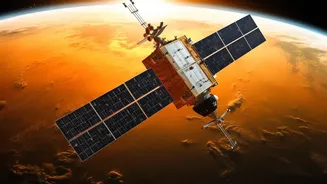
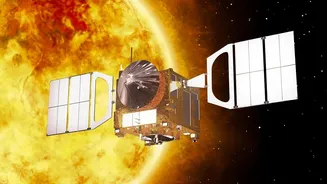
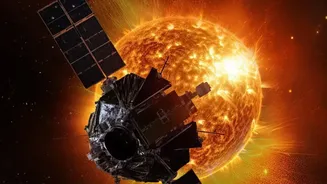
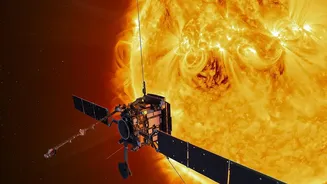
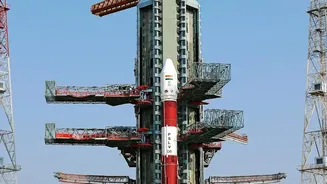
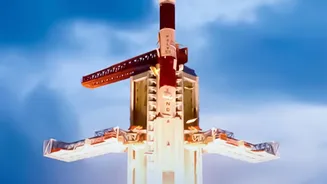
To counter this celestial threat, a global network of space agencies and observatories constantly monitors the Sun. Agencies like the US National Oceanic and Atmospheric Administration's (NOAA) Space Weather Prediction Center (SWPC) act as official forecasters, using satellites and ground-based telescopes to issue watches and warnings, much like a weather service for storms on Earth. A key player in this global effort is the Indian Space Research Organisation (ISRO). In 2023, ISRO launched its first dedicated solar observatory, Aditya-L1. Positioned 1.5 million kilometres from Earth at a special vantage point called Lagrange Point 1 (L1), Aditya-L1 has an uninterrupted view of the Sun. Its suite of seven instruments observes the Sun's atmosphere and measures the solar wind, providing crucial data to understand and predict solar events like CMEs.
From Prediction to Protection
Early warnings from observatories like Aditya-L1 and those run by NASA and ESA are critical. In fact, recent findings from Aditya-L1 have identified small, short-lived brightenings that occur hours before a major solar flare erupts, a breakthrough that could significantly improve forecasting. Once a warning is issued, operators of critical infrastructure can take protective measures. Satellite operators can put their spacecraft into a 'safe mode,' shutting down non-essential systems to protect sensitive electronics. Power grid managers can take steps to balance the load and prevent surges that could damage transformers. Airlines can reroute flights that travel over polar regions, where the Earth's magnetic protection is weaker and radiation exposure is higher during a solar storm. These proactive steps are essential to mitigate the potentially catastrophic impact of a severe space weather event, which could otherwise cause trillions of dollars in economic damage.