






The End of an Era
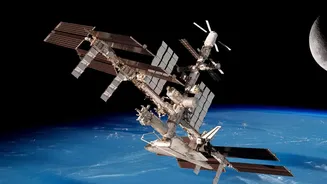
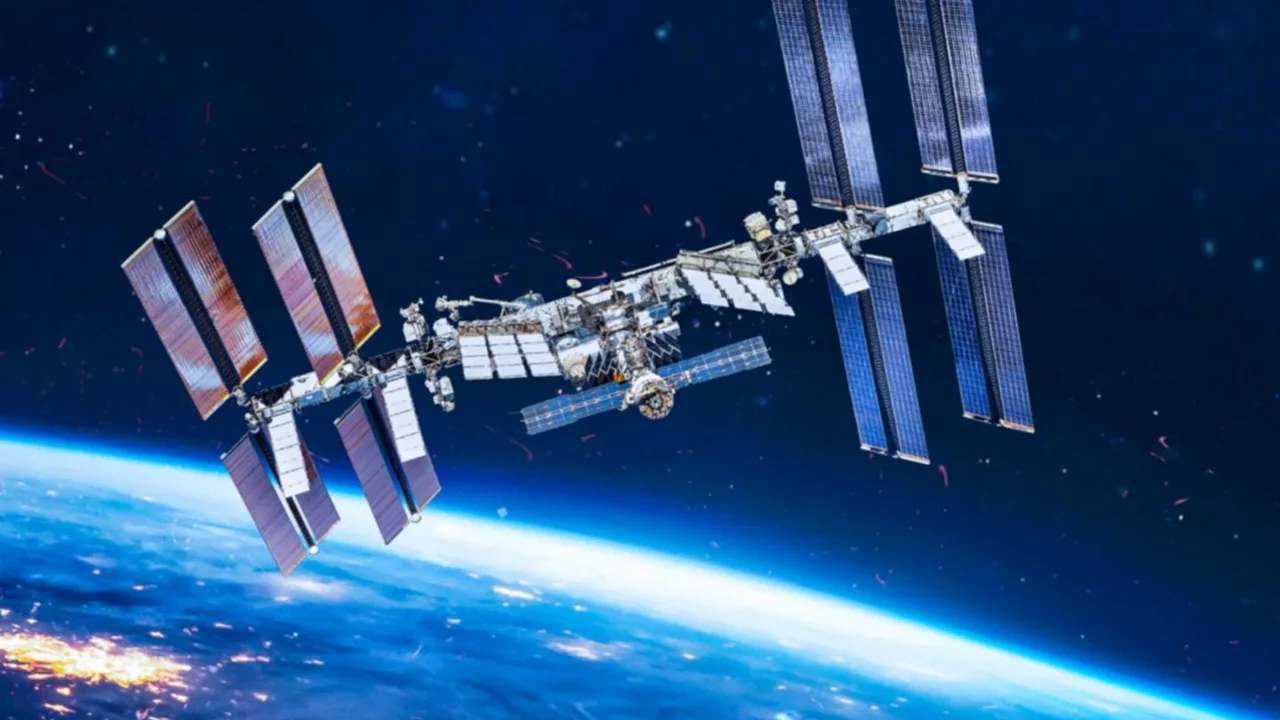
The International Space Station stands as a monumental achievement in global cooperation and scientific endeavor. Since 2000, it has hosted more than 270 astronauts from over 20 countries, enabling breakthroughs in medicine, materials science, and our
understanding of long-duration spaceflight. However, the aging orbital laboratory is expensive to maintain and is approaching the end of its structural life. NASA and its international partners have agreed to operate the ISS through 2030, after which it will be carefully deorbited over a remote part of the Pacific Ocean. This planned retirement creates a critical gap: without a replacement, access to a dedicated microgravity research environment would cease, potentially stalling scientific and technological progress. This is where the private sector steps in, spurred by NASA's own strategic pivot to becoming a customer rather than an owner.
The New Constellation of Players
To ensure continuous human presence in low-Earth orbit (LEO), NASA initiated the Commercial LEO Destinations (CLD) program. This program provides funding and technical support to private companies developing their own space stations. Several key players have emerged. Axiom Space is perhaps the furthest along, with a unique plan to first attach its modules to the ISS starting as early as 2027. Once the ISS is retired, Axiom's segment will detach and become a free-flying independent station. Then there is the ambitious Orbital Reef, a joint venture between Blue Origin and Sierra Space, envisioned as a "mixed-use business park" in space. It aims to offer services for research, manufacturing, and tourism, built around Sierra's large, inflatable LIFE habitats. Other significant contenders include Starlab, a venture from Voyager Space and Airbus, and Vast, which aims to launch its own single-module station.
A Laboratory and Factory in the Sky
These new commercial stations are far more than just orbital hotels for space tourists, though that is part of the business model. Their primary purpose is to provide a platform for cutting-edge research and in-space manufacturing. The microgravity environment allows for processes impossible on Earth. This includes growing flawless protein crystals for drug development, creating purer fiber optic cables, and bio-printing human tissues and organs. Companies will be able to rent space and resources to conduct proprietary research, a significant shift from the government-vetted experiments aboard the ISS. Orbital Reef, for instance, plans state-of-the-art labs for everything from materials science to botany. This opens the door for a new industrial revolution, where discoveries made in orbit can lead to new products and technologies back on Earth.
The Business of Living and Working in Orbit
The success of these ventures hinges on a robust business case. Who will the customers be? The primary and most important client, at least initially, will be NASA itself. The agency plans to buy services and crew time on these commercial stations to continue its own research, effectively becoming an anchor tenant. Beyond NASA, customers will include other national space agencies from around the world, who may find it more cost-effective to use commercial facilities than to build their own. Private companies from the pharmaceutical, technology, and manufacturing sectors are another key market. Finally, there is the high-profile market of space tourism, with private astronauts paying for the experience of a lifetime. By diversifying their customer base, these companies aim to create a self-sustaining economy in low-Earth orbit, independent of any single government's budget.
Implications for Global Space Ambitions
The emergence of commercial LEO destinations has profound implications for spacefaring nations, including India. For a country with a rapidly growing space program like ISRO, access to these private stations could offer a flexible and potentially more affordable alternative to developing a national space station from scratch. It would allow Indian scientists and astronauts to gain more frequent access to a microgravity environment, accelerating research and human spaceflight experience that complements the Gaganyaan programme. This new model democratizes access to space; nations and private entities that previously could not afford the massive upfront investment of a space station can now simply purchase the services they need. This shift frees up national agencies like NASA to focus their resources on more ambitious deep-space exploration goals, like returning to the Moon and venturing on to Mars, building on the commercial infrastructure established closer to home.