


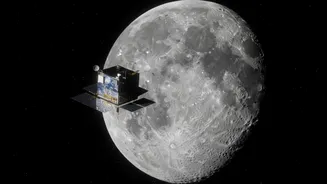


What is CAPSTONE?
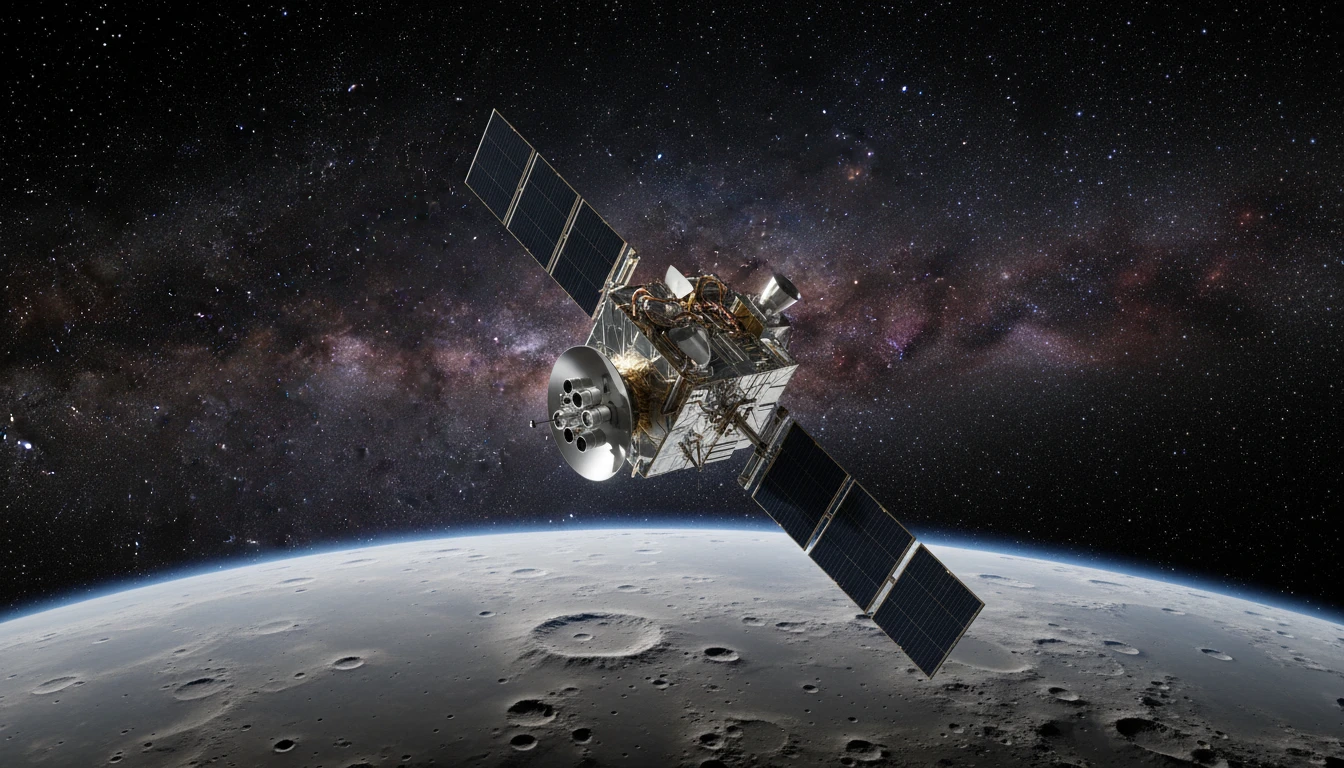
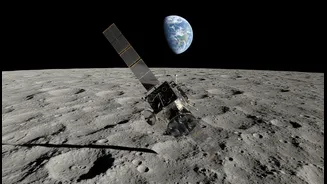
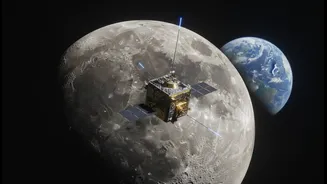
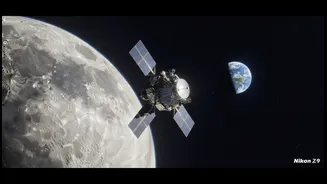
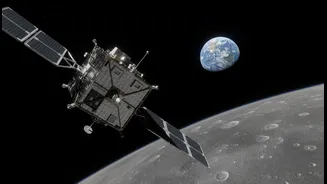
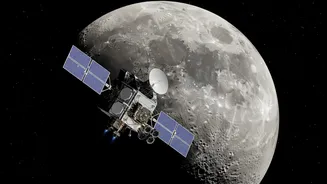
CAPSTONE, short for Cislunar Autonomous Positioning System Technology Operations and Navigation Experiment, is a small spacecraft about the size of a microwave oven. Launched in June 2022, its primary job was to serve as a trailblazer. Owned and operated
by commercial partner Advanced Space, it became the first spacecraft to fly in a unique, fuel-efficient path around the Moon called a near-rectilinear halo orbit (NRHO). This is the same orbit planned for Gateway, the future lunar space station that will support NASA's Artemis missions. By flying this path first, the 55-pound CubeSat helped verify that the orbit is as stable and reliable as computer models predicted, reducing risk for the much larger and more complex Gateway.
Cutting the Cord from Earth
For decades, spacecraft have relied on the Deep Space Network—giant radio antennas on Earth—to know where they are and where they're going. This is a bottleneck, as more and more missions compete for limited time on the network. CAPSTONE's key experiment was to test a smarter method: an autonomous navigation system that works without ground control. The system, called Cislunar Autonomous Positioning System (CAPS), allows a spacecraft to determine its own position. To do this, CAPSTONE communicated directly with NASA's Lunar Reconnaissance Orbiter (LRO), which has been circling the Moon since 2009. By sending signals back and forth, CAPSTONE could measure its distance and speed relative to LRO, effectively triangulating its own position in space. This spacecraft-to-spacecraft navigation is a game-changer, proving that future lunar missions can operate more independently.
The Benefits of Going Autonomous
This new capability is about more than just convenience; it’s about building a sustainable and scalable presence at the Moon. Relying less on Earth-based tracking frees up the Deep Space Network for other critical deep-space missions to Mars and beyond. It also reduces mission costs and complexity. More importantly, it enables a future where dozens of spacecraft—from NASA, international partners, and commercial companies—are operating around the Moon simultaneously. Just like GPS created an entire ecosystem of location-based services on Earth, an autonomous navigation network at the Moon could unlock a new era of lunar science and commerce. The system also tested delay-tolerant networking, which stores data when a connection is lost and forwards it automatically when communications are restored, a crucial feature for deep-space operations.
Paving the Way for Artemis and Gateway
The success of CAPSTONE is a direct boost for NASA’s Artemis program, which aims to establish a long-term human presence on the Moon. The mission confirmed the stability of the orbit for the Gateway space station, a critical outpost that will serve as a staging point for missions to the lunar surface. By demonstrating autonomous navigation, CAPSTONE has proven a key technology that will make operating Gateway and other Artemis missions safer and more efficient. After its primary mission, CAPSTONE's life was extended, turning it into a flexible testbed for other advanced technologies, including real-time image processing and autonomous maneuver planning. NASA officially concluded its activities with the spacecraft in June 2026, having achieved all its primary and extended goals, but its commercial operator, Advanced Space, will continue using it to test new technologies.