







Go Straight to the Source: IMD Official Apps
For the most authoritative information, the India Meteorological Department (IMD) is your best bet. The official 'MAUSAM' app provides weather forecasts, radar images, and timely warnings for severe weather events across the country. The app is a one-stop
shop for reliable data, including alerts for cyclones and heavy rain. For more specific threats, the IMD also offers the 'DAMINI' app, which provides early warnings for lightning strikes within a 20-40 km radius, a crucial tool for personal safety during thunderstorms. Another government app, 'Meghdoot,' is tailored for farmers but its crop-specific advisories based on weather forecasts can be useful for anyone wanting detailed local insights.
Know the Colours: Understanding IMD Alerts
The IMD uses a simple colour-coded system to issue warnings, making it easy to understand the severity of the forecast at a glance. A 'Green' alert means no warning is in effect. A 'Yellow' alert serves as a 'watch' or 'be aware' signal, suggesting you should stay updated as weather conditions might change. An 'Orange' alert means 'be prepared,' as it signals a high likelihood of bad weather that could disrupt travel and daily life. The highest level is a 'Red' alert, which means 'take action.' This is issued for extremely severe weather conditions that pose a significant threat to life and property, often involving extremely heavy rainfall and potential flooding.
The Best of Private Forecasting: Skymet and More
Alongside official sources, private weather forecasters offer robust alternatives, often with user-friendly interfaces and hyperlocal data. Skymet Weather is a popular 'made in India' app known for its accurate monsoon tracking and detailed forecasts for over 7,500 locations in India. It leverages a vast network of over 7,000 automated weather stations to provide real-time data on temperature, rain probability, and wind speed. Other widely-used international apps like AccuWeather and The Weather Channel also perform very well in India. They are known for features like minute-by-minute precipitation forecasts, which can tell you exactly when the rain is expected to start and stop in your specific area, making them incredibly useful for planning a quick commute.
Real-Time Updates: Traffic and Social Media
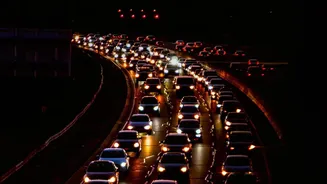
A weather forecast tells you about the rain, but it doesn't always tell you about the consequences. During heavy downpours, waterlogging and traffic jams are the real hurdles for commuters. Before leaving, use navigation apps like Google Maps or Waze, which provide real-time traffic data, including road closures and congestion caused by flooding. Many city traffic police departments are active on social media platforms like X (formerly Twitter), providing instant updates on waterlogged areas and alternative routes. Following the official IMD and local disaster management handles can also provide critical, on-the-ground information that a standard weather app might miss.
Putting It All Together: A Smart Commute Routine
The key to a stress-free monsoon commute is a simple, multi-step check before you walk out the door. Start with the MAUSAM or Skymet app to get a sense of the day's forecast and check for any Orange or Red alerts. About 30 minutes before you plan to leave, switch to an app with minute-by-minute forecasts like AccuWeather to check for immediate rain spells. Finally, just before you step out, open a traffic app to see how the roads are faring. This layered approach gives you a complete picture of not just the weather, but its impact on your journey. Taking these few minutes to prepare can save you hours of being stuck in traffic or, worse, stranded in a flood.