






What is This 'National Deficit'?
First, let's clarify: the 'national deficit' mentioned here is not financial. It refers to the nationwide rainfall deficit, a critical measure of how much less rain India has received compared to the long-period average (LPA). When meteorologists from
the India Meteorological Department (IMD) or private agencies like Skymet talk about a deficit, they are flagging a shortfall in the monsoon, the lifeblood of India's agriculture, economy, and water security. A figure as high as 46% typically refers to a specific, crucial period, such as the initial phase of the monsoon season, or a particularly hard-hit region, rather than a full-season average for the entire country. However, such a stark number, even if temporary, acts as a powerful warning shot. It highlights the increasing volatility and unpredictability of the weather patterns we have long relied upon.
How Severe is a 46% Shortfall?
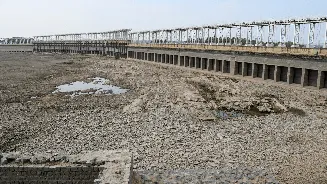
To put it in perspective, a nationwide monsoon deficit of just 10% is classified as a 'drought year'. A 46% deficit, even over a few weeks, is exceptionally severe. It means that reservoirs do not get recharged, soil moisture is critically low for sowing crops like rice, soybean, and cotton, and drinking water supplies for major cities come under immense stress. Farmers, who plan their entire year around the monsoon's arrival, are left in a precarious position. A delayed or weak start to the monsoon has a domino effect: it delays sowing, shrinks the cultivation area, and ultimately threatens crop yields. This isn't just a rural problem; it directly impacts food inflation and the wider economy, affecting every household in the country.
The Link to a 'Major Climate Shift'
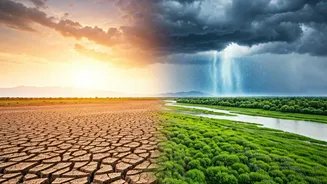
A single weak monsoon can be attributed to cyclical weather patterns like El Niño. However, recurring and extreme deficits are increasingly being seen by climatologists as symptoms of a more permanent, structural change in our climate. The term 'climate shift' refers to a fundamental alteration in long-term weather patterns. For India, this means the monsoon is not just weakening; it's becoming more erratic. We are witnessing longer dry spells punctuated by short, intense bursts of extreme rainfall that cause floods. So, we swing from drought-like conditions to deluge, neither of which is good for agriculture or infrastructure. This volatility is a classic fingerprint of global warming. Warmer ocean temperatures disrupt the atmospheric and oceanic currents that drive the steady, reliable monsoon India has known for centuries.
Why the Focus on 2026?
The year 2026 isn't a magical doomsday date but a symbolic marker used by some analysts and climate models to indicate a tipping point. Projections from various climate science bodies suggest that by the mid-to-late 2020s, the effects of climate change will become not just more frequent but potentially irreversible. The 'shift' by 2026 implies that the erratic monsoon patterns we see now could become the new, challenging normal. It serves as a deadline to highlight the urgency of the situation. Experts warn that if global and national emissions are not curbed and adaptive measures are not implemented on a war footing, the period around 2026 could be when India begins to consistently experience the severe climate disruptions that were once considered rare events. It's a call to action, framing the next few years as a critical window to build resilience.
What Are the Consequences for India?
The consequences are far-reaching. Agriculturally, it threatens our food security and the livelihoods of over half our population. Economically, it can shave points off our GDP, drive up inflation, and strain government resources through relief efforts. Socially, it can lead to water conflicts between states, distress migration from rural to urban areas, and a public health crisis due to water scarcity and vector-borne diseases. Our infrastructure—dams, canals, and urban drainage systems—was built for a different, more stable climate. Adapting to this new reality requires a monumental effort in water management, agricultural innovation (like drought-resistant crops), and a fundamental rethinking of our urban planning and energy policies.