









Your Assistant, Not Your Author
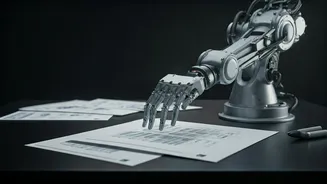
The most significant shift in using AI effectively is a mental one: treat it as a junior assistant, not a ghostwriter. [5] AI is a powerful tool for accelerating research, generating initial drafts, and overcoming writer's block, but it should be a starting
point, not the final word. [12] Many professionals are growing weary of content that is obviously robotic. [12] The most successful creators use AI to handle the grunt work, freeing them up to focus on the strategic and creative tasks that only a human can perform, such as injecting personal stories, humour, and a unique perspective. [3, 9] The goal is to augment your creativity, not replace it. [6] Think of it as a collaborator that can handle the divergent phase of ideation—generating many possibilities—while you handle the convergent phase of selecting and refining the best ones. [6]
Master the Art of the Prompt
Vague prompts lead to bland, generic output. [7] To get nuanced results that align with your style, you need to provide specific, detailed instructions. This is often called prompt engineering. [20] Instead of asking AI to simply “write about a topic,” provide context, define a persona, specify the task, and describe the desired format. [14] For example, a weak prompt would be, “Write about creativity.” A much stronger prompt is: “Act as a seasoned creativity coach. Write three paragraphs for a blog post aimed at burnt-out artists. Explain the concept of 'creative fallow periods' using a gardening metaphor. The tone should be empathetic and encouraging.” [14] You can even provide the AI with examples of your own writing to help it learn and mimic your preferred tone and sentence structure. [3, 15, 17]
An Engine for Brainstorming and Structure
One of the lowest-risk, highest-reward uses for AI is in the early stages of creation: brainstorming and outlining. [1] When you're facing a blank page, AI can be an invaluable partner. Ask it open-ended questions, have it generate lists, or use it to create a mind map structure for your ideas. [4, 7] For example, you could ask for “ten unconventional ways to start a fantasy novel” or “a list of 20 potential names for a geology-themed rock band.” [4] Even if the suggestions are mediocre, they can spark better human ideas. [6] Similarly, you can use AI to create a logical outline or scaffold for an article or story, which you then fill in with your own words, examples, and personality. [3] This lets you leverage AI's speed for organization without letting it touch the final expression of your ideas.
A Super-Powered Editor, With a Catch
AI tools can be incredibly effective for polishing your work. They can check for grammar, punctuation, sentence clarity, and repetition, often providing explanations for the suggested changes. [2] However, there is a risk. Simply accepting all changes or using broad commands like “improve this” can strip away the nuances of your voice. [15, 19] A better approach is to make targeted requests, like “make this more concise without losing the deliberate understatement” or “suggest alternative phrasings while maintaining a measured tone.” [15] Always review suggestions carefully and never blindly accept every change. [2] Some writers save their original draft and compare it side-by-side with the AI's version, cherry-picking only the edits that truly improve clarity without sacrificing personality. [3] Remember, the goal is to polish, not replace. [18]