


The Ultimate Lifeboat in the Sky
Imagine travelling faster than the speed of sound, strapped to a powerful rocket, when something goes wrong. This is the nightmare scenario ISRO engineers must prepare for. The Gaganyaan mission’s Crew Escape System (CES) is the astronauts' high-tech
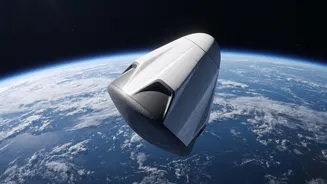
lifeboat. It is a specially designed system that can physically pull the Crew Module—the capsule carrying the astronauts—away from a failing launch vehicle in milliseconds. This capability is most critical during the ascent phase, when the rocket is under immense stress. A successful abort requires the module to separate cleanly and powerfully, especially at transonic (near the speed of sound) and supersonic speeds, where aerodynamic forces are at their most violent.
Recreating Supersonic Emergencies
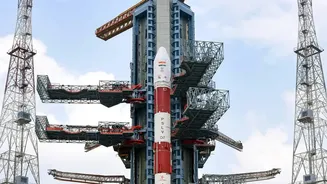
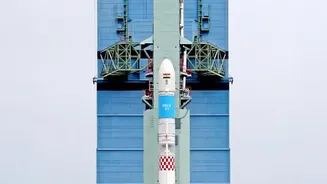
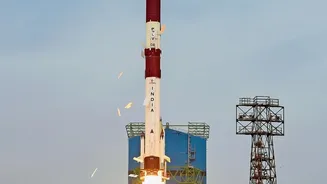
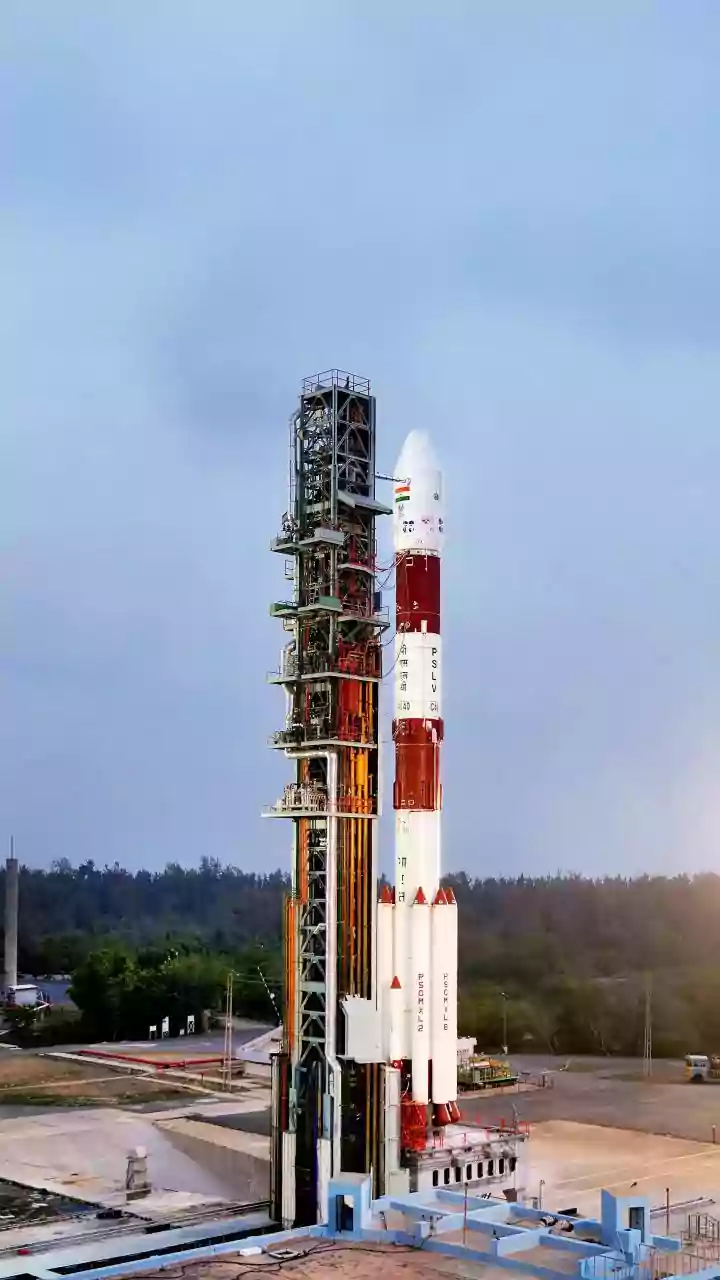
You can't just wait for a real launch to fail to see if the escape system works. Engineers must create these dangerous conditions in a controlled setting. To do this, ISRO uses specially designed, cost-effective rockets called Test Vehicles. One such mission, the Test Vehicle Abort Mission-1 (TV-D1), was specifically designed to simulate an in-flight abort. The test rocket carried a full-size, unpressurised version of the Gaganyaan Crew Module to a specific altitude and speed—around 17 km high and travelling at Mach 1.2 (slightly faster than the speed of sound). At that precise moment, the on-board computers initiated an abort, triggering the escape sequence just as it would in a real emergency.
The Anatomy of a High-Speed Escape
When the abort is triggered, a series of explosive and propulsive events happen in perfect harmony. First, quick-acting, high-thrust solid motors on the Crew Escape System fire with immense force, pulling the Crew Module away from the test rocket. This system acts like an escape tower, a concept used in historic missions like Apollo. Simultaneously, pyrotechnic devices sever the mechanical connections holding the module to the rocket. Once the module is a safe distance away, another separation event occurs: the escape system itself detaches from the Crew Module. The module is then on its own, tumbling through the upper atmosphere before the next critical phase begins. The entire separation happens in a flash, designed for maximum speed and reliability when every second counts.
From Supersonic to a Gentle Splash
Getting away from the rocket is only half the battle. The Crew Module is still travelling at high speed and must be slowed down for a safe landing. This is where a complex parachute system comes into play. The sequence begins with the deployment of smaller drogue parachutes, which are designed to stabilize the capsule and reduce its speed from supersonic to subsonic. Following this, a set of main parachutes are deployed to slow the module down further, ensuring a gentle splashdown in the ocean at a safe terminal velocity. In total, the system uses ten parachutes of different types, all deploying in a precise, pre-defined sequence to manage the extreme forces of deceleration.
Testing on the Ground and from the Air
Besides full-scale rocket tests, ISRO engineers conduct a battery of other trials. Integrated Air Drop Tests (IADT) involve dropping a simulated Crew Module from a heavy-lift helicopter, like a Chinook, from a significant altitude to test the parachute deployment sequence from start to finish. Other ground-based tests validate every component. For instance, engineers test the flotation system that ensures the capsule stays upright after splashing into the sea and the mechanisms that disconnect the umbilicals linking the Crew and Service modules just before re-entry. Each test provides thousands of data points, allowing engineers to verify that every system performs exactly as designed, with enough margin for safety.