


Craving that rich, intense flavour of a café espresso but not the hefty price tag of a high-end machine? You're in luck. Making a potent, satisfying, espresso-style coffee at home is easier and more accessible than you might think.
Espresso vs. Espresso-Style: What's the Difference?
First, let's clarify
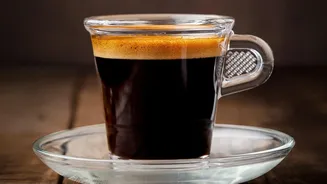
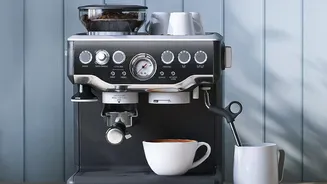
the terms. True espresso is a specific brewing method where hot water is forced through finely-ground, compacted coffee at very high pressure—typically 9 bars or more. This pressure is what creates the signature thick texture and the stable, golden-brown foam on top, known as crema. Without a specialised machine, replicating that exact pressure at home is nearly impossible. However, 'espresso-style' coffee aims to mimic the result: a small volume of highly concentrated, intense coffee. Methods like the Moka pot or AeroPress use lower pressure but still produce a bold, rich brew that serves as an excellent base for drinks like lattes and Americanos.
The Foundation: Choosing Your Beans and Grind
The journey to a great cup starts with the right beans. While any coffee can be used, medium-dark to dark roasts are often preferred for espresso-style drinks because they provide a classic, bold flavour profile with notes of chocolate and caramel. Freshness is crucial; beans that are more than a few weeks past their roast date will have lost much of their carbon dioxide, which is essential for creating any kind of foam or crema. The grind size is equally important and depends entirely on your brewing method. A Moka pot requires a fine grind, similar to table salt, while an AeroPress can be more forgiving. Using a burr grinder will give you the most consistent results, which is key to a balanced extraction.
Method 1: The Moka Pot (Stovetop Espresso)
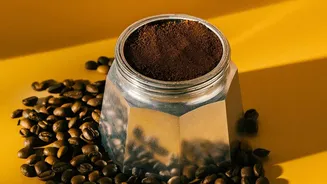
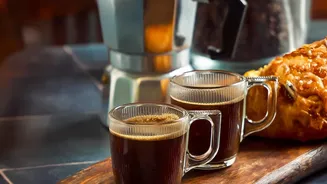
The Moka pot is the classic Italian stovetop brewer and perhaps the most popular way to make espresso-style coffee at home. It uses steam pressure (around 1.5 bars) to push water up through the coffee grounds. To get the best results, start by filling the bottom chamber with hot, not boiling, water up to the fill line just below the safety valve. This prevents the coffee grounds from 'cooking' on the heat while the water warms up, which can cause bitterness. Fill the filter basket with finely ground coffee, but do not tamp it down like you would with an espresso machine. Screw the top on tightly and place it on the stove over medium-low heat. Remove the pot from the heat as soon as it begins to gurgle and sputter to avoid a burnt taste. The result is a strong, rich, and aromatic coffee.
Method 2: The AeroPress (Concentrated & Clean)
The AeroPress is a modern, versatile brewer loved for its speed and forgiving nature. It uses manual pressure to push water through the grounds, creating a clean, low-bitterness concentrate. For an espresso-style shot, you'll want to use a finer grind and a more concentrated coffee-to-water ratio, such as 1:4. A popular technique is the 'inverted' method, where you assemble the AeroPress upside down. Add your coffee grounds, pour in water just off the boil (around 93°C), and stir for about 10 seconds. After steeping for 60-90 seconds, secure the filter cap, flip the entire device onto a sturdy mug, and press the plunger down firmly and steadily. This method gives you excellent control and produces a smooth, rich shot that highlights the bean's flavour.
Method 3: A Strong French Press
While typically used for a milder brew, a French press can be adapted to create a stronger, more robust coffee that serves as a decent espresso substitute. The key is to adjust your technique. Instead of the standard 1:15 ratio of coffee to water, try a much tighter ratio, like 1:10 or 1:12. Use a slightly finer grind than you normally would for a French press, though still coarser than for a Moka pot, to increase extraction. After adding hot water, let it steep for the usual 4 minutes before slowly and steadily pressing the plunger all the way down. Because the metal filter allows coffee oils and fine particles into the cup, this method produces a heavy-bodied brew with a rich texture, perfect for those who enjoy a more rustic and full-flavoured coffee.