
The Golden Rule of Reachability
The fundamental principle of efficient organization is simple: keep the items you use most often within easy reach. This 'prime real estate' is the space between your shoulders and your knees. Your everyday plates, your go-to spices, the work files you access
daily—these deserve front-and-center placement. Conversely, anything that isn't part of your daily or weekly routine belongs in the less accessible spots. Upper shelves are the perfect home for things you need, but not right now. Adopting this mindset transforms your shelves from cluttered afterthoughts into a strategic storage system, saving you time and frustration every single day. Before you even begin moving items, take a moment to evaluate what you use constantly versus what's only needed seasonally or for special occasions.
What Belongs on High Shelves?
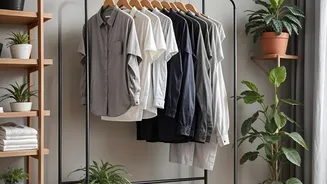
Once you’ve embraced the rule, the next step is identifying what to move up. The answer varies by room, but the logic is the same. In the kitchen, think about the turkey roasting pan you use once a year, the fancy cake stand for birthdays, or bulk supplies of paper towels. In the living room, high shelves can hold board games for family gatherings or photo albums you don't look at daily. In your wardrobe, it's the ideal spot for off-season clothing, like heavy winter coats in July or beachwear in January. The home office can have archived financial records or old project binders stored up high. By consciously moving these occasional-use items upward, you free up valuable, easy-to-access space for the things that power your daily life.
Make High Storage Accessible and Safe
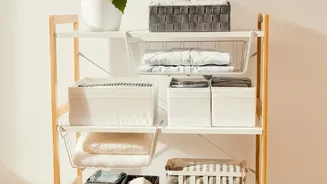
Just because items are out of regular rotation doesn't mean they should be impossible to get. A few simple tools can make accessing your upper shelves both easy and safe. A sturdy, lightweight step stool is non-negotiable; choose one that is easy to store nearby and tall enough for you to reach the top shelf without straining. For smaller items, use clear, labeled bins. This allows you to see what’s inside at a glance without having to pull everything down. For heavier things, like a stand mixer or a large pot, make sure the shelf is properly secured to handle the weight. The goal is to make retrieval a minor inconvenience, not a major, risky operation. Safety should always come first when reaching for items stored above your head.
Extend the Principle Beyond the Kitchen
This vertical storage strategy is a whole-home solution. Take a look at your garage or storage room, where vertical space is often abundant but poorly used. Wall-mounted shelves are perfect for holding holiday decorations, camping gear, and paint cans that are only needed for touch-ups. In a linen closet, the top shelf is perfect for guest bedding or extra-heavy blankets that only come out in the dead of winter. Even in a child's playroom, high shelves can store toys that require adult supervision or craft supplies reserved for specific projects. The key is to apply the 'frequency of use' filter to every storage area in your home, which helps reduce clutter on floors and surfaces.
The Mental Benefits of an Organized System
The payoff for this organizational shift isn't just a tidier home—it’s a clearer mind. When your environment is orderly and predictable, it reduces low-grade friction and decision fatigue. You no longer have to excavate a pile of rarely-used appliances to get to your morning coffee mug. You know exactly where the spare light bulbs are. This sense of order creates a calmer, more controlled living space, allowing you to focus your energy on more important things. By intentionally designing your storage around how you actually live, you create a home that works for you, not against you. It's a small change in habit that delivers an outsized feeling of peace and efficiency.