




A Dusty, Dangerous Problem
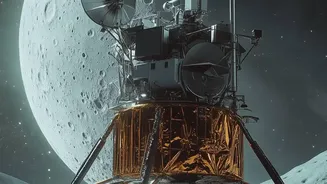
When a spacecraft lands on the Moon, its powerful rocket engines blast the surface, kicking up a high-velocity spray of lunar soil, or regolith. Unlike Earth's weathered dust, lunar regolith is composed of sharp, jagged, and electrostatically charged
particles. During the Apollo missions, this abrasive dust damaged spacesuits, clogged mechanisms, and caused respiratory irritation for astronauts once it was tracked inside the lunar module. For a future Moon base with frequent landings and sensitive equipment like solar panels and habitats, these 'sandblasting' events could be catastrophic, damaging critical infrastructure and endangering missions. Building stable landing pads is therefore not a luxury, but a fundamental requirement for a sustainable lunar outpost.
The Robotic Construction Crew
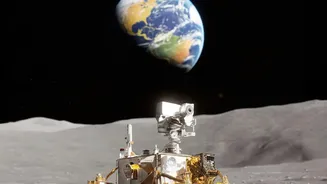
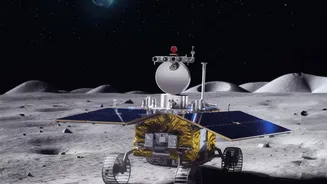
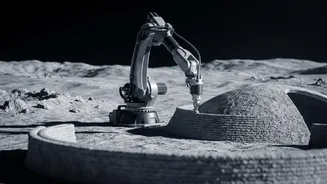
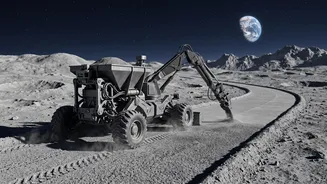
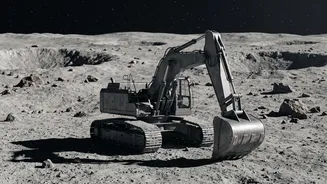
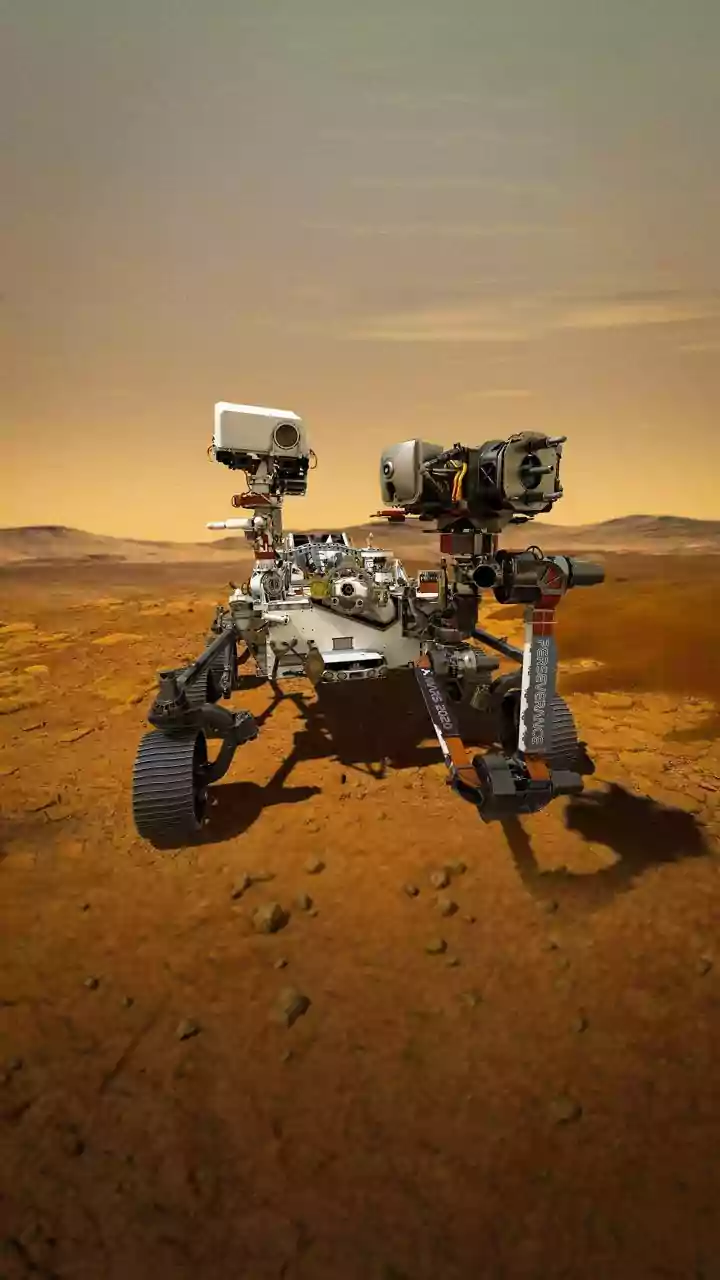
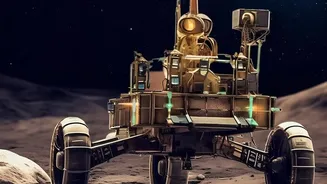
The solution is to build the necessary infrastructure before astronauts even arrive, using autonomous robots. Sending heavy construction materials from Earth is prohibitively expensive, so space agencies like NASA and a growing number of private companies are focused on a concept called in-situ resource utilization (ISRU). This means using local materials—namely, the abundant lunar regolith—to build what's needed on-site. Various plans envision fleets of specialized robots working together. These teams would include rovers for surveying and hauling, excavators for digging, and manufacturing platforms equipped with robotic arms to process the soil and construct the pads layer by layer.
Turning Moon Dust into Runways
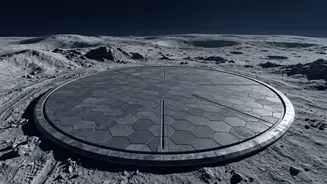
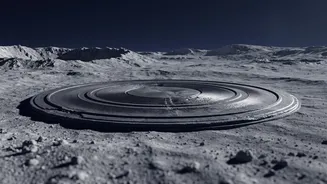
Several ingenious methods for turning loose dust into a solid surface are in development. One leading technique involves using high-powered lasers or microwaves to melt the top layer of regolith, fusing the particles together into a hard, ceramic-like material. This process, known as sintering, could be used to create hexagonal paver-like tiles. Another approach involves creating a form of lunar concrete by mixing the regolith with a binding agent. NASA and its commercial partners, like the construction technology company ICON, are developing advanced 3D-printing systems that can extrude this material to build not just pads, but also roads and habitats. Engineers are also designing unique interlocking paver systems that can be robotically assembled to create an exceptionally stable surface, capable of withstanding the immense forces of a rocket landing.
Who is Leading the Charge?
NASA is heavily invested in this area through programs like the Moon to Mars Planetary Autonomous Construction Technology project (MMPACT). It has partnered with numerous private companies to spur innovation. ICON's Project Olympus, for example, is specifically aimed at developing a large-scale lunar construction system. Other key players include companies like Blue Origin, SpaceX, and Sierra Space, which were selected by DARPA for its LunA-10 study to develop a future lunar economy. Astroport Space Technologies is focusing on creating bricks from regolith, while companies like Vast are leveraging their experience in commercial space stations to propose lunar power systems and habitats that will depend on this robotic groundwork. Even international agencies are involved, with China planning to test 3D-printing with lunar soil via its Chang'e 8 mission.
The Foundation for a Lunar Future
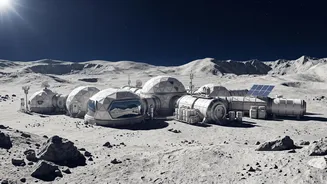
The robotic preparation of landing pads is more than just an engineering challenge; it is the essential first step toward a permanent human foothold on another world. By sending machines to build these critical pieces of infrastructure ahead of time, we can create a safer and more sustainable environment for astronauts. These automated construction techniques will pave the way for more ambitious projects, including habitats shielded from radiation by thick regolith walls, reliable power grids, and a network of roads. This foundational work will reduce the reliance on Earth-based supply chains, dramatically lowering the cost and risk of long-term lunar habitation and scientific research. The robotic builders are, quite literally, laying the groundwork for a future lunar economy and humanity's expansion into the solar system.